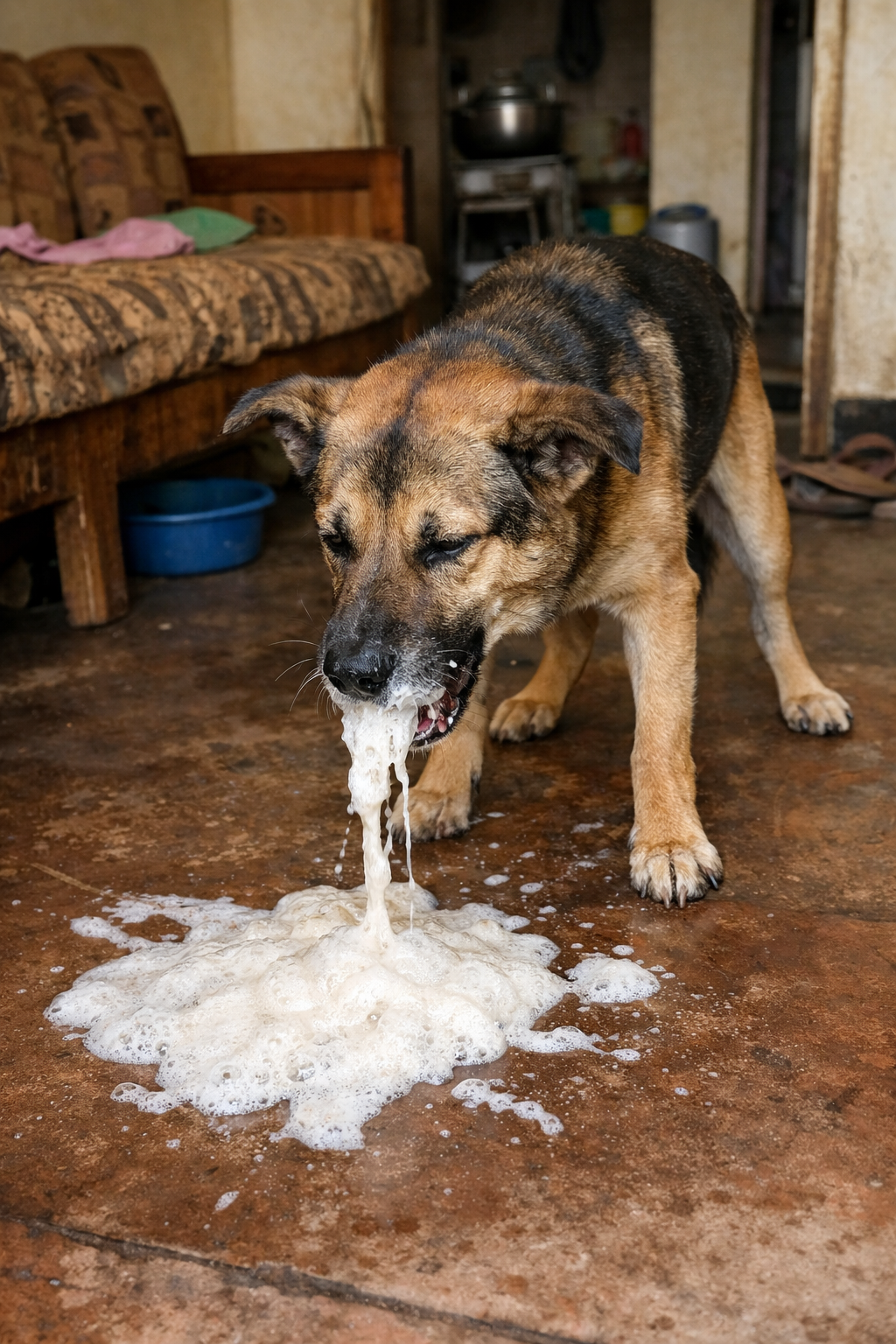
Vomiting in dogs is one of the most common emergencies seen by veterinarians in Uganda—and one of the most dangerous when ignored. While some mild vomiting can occur occasionally, vomiting foam or blood is never normal and should always raise concern.
Many dog owners in Kampala—from Makindye, Ntinda, Kira, Buziga, Najjera, Rubaga, Kawempe to Mukono—often assume vomiting will “stop on its own.” Unfortunately, in Uganda’s environment, this delay can cost a dog its life.
Foamy or bloody vomiting is common but serious locally due to:
- Large populations of stray dogs
- Heavy parasite burden
- Easy access to poisons and chemicals
- Dogs scavenging on roadsides and rubbish pits
The good news is this: early veterinary care saves lives. Dogs brought to the clinic early recover faster, cost less to treat, and avoid life-threatening complications.
Understanding Vomiting Among Dogs In Uganda
Medically, vomiting is the forceful expulsion of stomach or intestinal contents through the mouth. It is the body’s defense mechanism against toxins, infections, irritation, or obstruction.
Many owners confuse vomiting with regurgitation. Vomiting involves nausea, drooling, abdominal contractions, and distress. Regurgitation is passive and usually related to the throat or esophagus. This distinction is important because vomiting is more likely to indicate serious internal disease.
Vomiting once after overeating may not be alarming. However, vomiting more than once in 24 hours, vomiting foam, or vomiting blood is abnormal and dangerous.
Types of Dog Vomit Seen In Kampala and What They Mean
a) White or Yellow Foamy Vomit
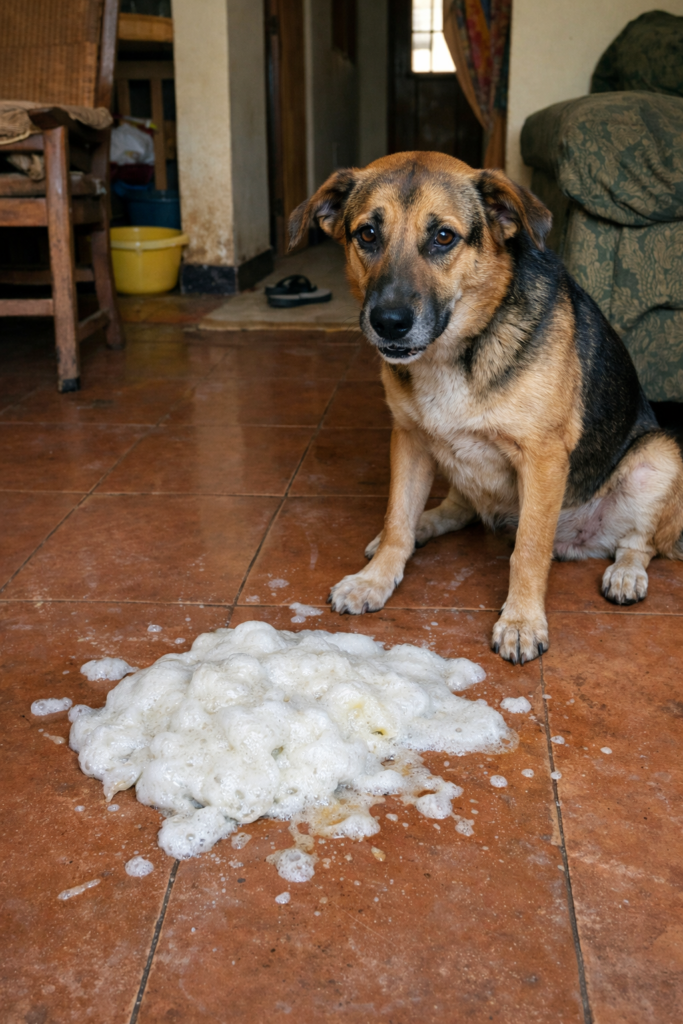
Foamy vomit usually comes from stomach acid and bile, especially when the stomach is empty.
This is common in:
- Dogs that skip meals
- Early gastritis
- Worm infestation (very common in Uganda)
In Kampala, dogs that roam compounds or streets often vomit foam after scavenging or long gaps without food.
⚠️ Emergency signs include repeated foamy vomiting, weakness, refusal to eat, or progression to blood. Foam is often an early warning before a serious condition worsens.
b) Bloody Vomit (Red or Dark Brown/Black)
Bloody vomit is always an emergency.
- Fresh red blood suggests active bleeding in the stomach or throat
- Dark brown or black (“coffee-ground”) vomit indicates digested blood from internal bleeding
This may signal poisoning, parvovirus, stomach ulcers, severe worm infestation, or tick-borne disease. Dogs with bloody vomit are often already critically ill.
Common Causes of Dog Vomiting Foam or Blood in Uganda
a) Intestinal Worms & Parasites
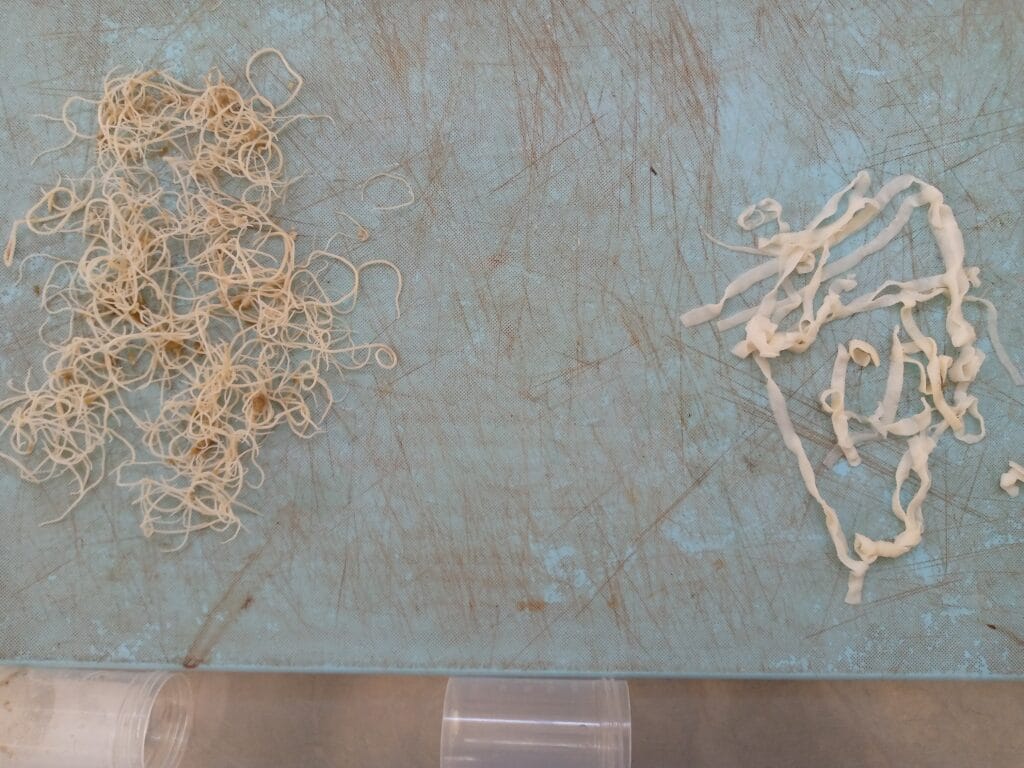
Hookworms and roundworms are extremely common in Ugandan dogs, especially puppies. Poor or irregular deworming allows parasites to damage the stomach and intestines, leading to vomiting foam or blood.
Puppies from areas like Kisenyi, Katanga, Kawempe, and rural Kampala outskirts are particularly vulnerable.
b) Poisoning (Very Common in Uganda)
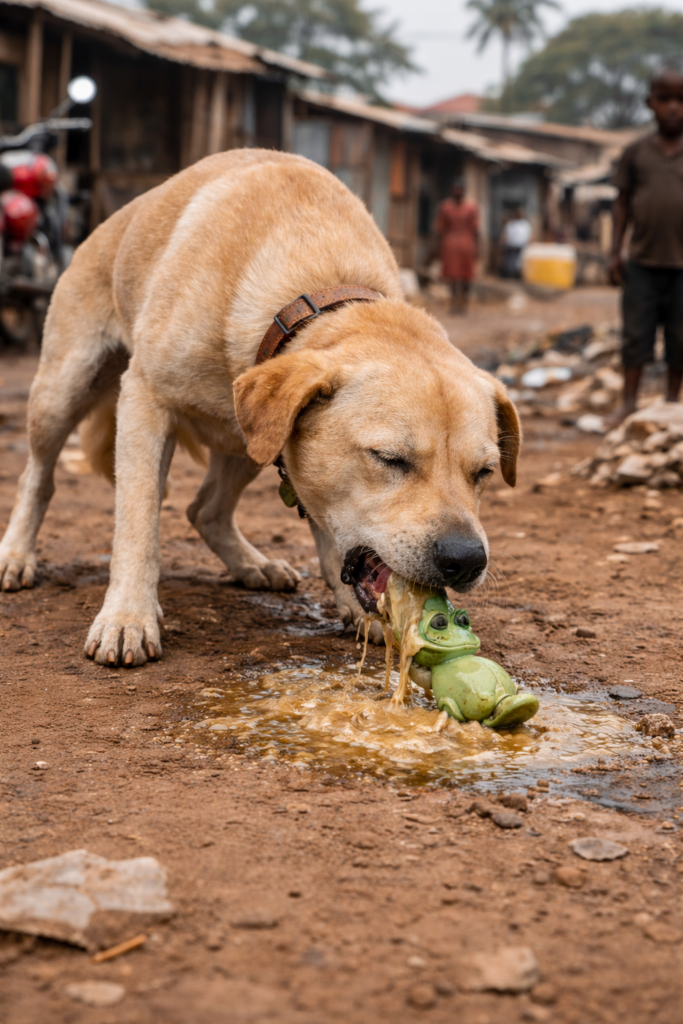
Poisoning is one of the leading causes of sudden vomiting blood.
Common sources include:
- Rat poison
- Agricultural chemicals
- Contaminated food
- Intentional neighbour poisoning
Vomiting foam often appears first, followed by blood, collapse, and death if untreated.
c) Parvovirus (Especially in Puppies)
Parvo remains widespread in Uganda due to incomplete vaccination. Vomiting—sometimes bloody—is often the first sign, followed by diarrhea, dehydration, and weakness.
Unvaccinated puppies in areas like Wakiso, Mukono, and Kampala suburbs are at the highest risk.
d) Foreign Object Ingestion
Dogs commonly swallow:
- Plastic bags
- Bones
- Mango seeds
- Maize cobs
Street scavenging increases this risk. Vomiting foam may occur first as the stomach struggles, then blood as the lining becomes damaged or obstructed.
e) Gastritis & Stomach Ulcers
Often caused by:
- Human painkillers such as diclofenac or ibuprofen
- Spicy or oily leftovers
Many home treatments worsen ulcers, leading to severe bleeding and shock.
f) Heat Stress & Dehydration
Uganda’s hot climate puts dogs at risk, especially those tied in compounds without shade or water. Heat stress irritates the stomach, causing foamy vomiting and dehydration.
g) Tick-Borne Diseases
Babesiosis and ehrlichiosis are common in dogs with heavy tick infestation. These diseases can cause internal bleeding, anemia, and bloody vomiting.
Best Treatment for Dogs Vomiting Blood or Foam in Kampala, Uganda
Treating a dog that is vomiting foam or blood in Kampala requires fast, targeted, and professional veterinary care. In Uganda, many cases worsen quickly due to dehydration, parasites, poisoning, and delayed presentation, so treatment must focus on stabilizing the dog first, then treating the root cause.
The most effective treatment always begins at a veterinary clinic, not at home.
Immediate Stabilization (Life-Saving First Step)
When a dog arrives vomiting foam or blood, the first priority is to prevent shock and organ failure. In Kampala clinics like Superior Animal Clinic, this usually includes:
- IV fluid therapy to correct dehydration, electrolyte imbalance, and blood loss
- Injectable anti-vomiting medication to stop continuous vomiting and protect the stomach
- Pain control using dog-safe medications (never human painkillers)
- Temperature regulation for weak or collapsed dogs
This step alone often saves the dog’s life, especially in poisoning and parvovirus cases.
Cause-Specific Treatment (Targeting the Real Problem)
After stabilization, treatment is tailored to the exact cause—this is what makes veterinary care in Kampala effective.
1. Worm-Related Vomiting
Dogs with heavy hookworm or roundworm infestation are treated with:
- Veterinary-grade dewormers
- Stomach protectants
- Nutritional and blood support if anemia is present
This is common in puppies and free-roaming dogs around Kampala.
2. Poisoning Cases (Very Common in Uganda)
Treatment may include:
- Anti-poison injections
- IV fluids to flush toxins
- Liver and kidney support medications
- Close monitoring for internal bleeding
Early treatment is critical—delayed poisoning cases have a much lower survival rate.
3. Parvovirus Treatment
There is no direct cure, but intensive supportive care saves many puppies:
- Aggressive IV fluids
- Anti-vomiting and gut-protective injections
- Antibiotics to prevent secondary infections
- Strict isolation and monitoring
Early presentation greatly improves survival and reduces cost.
4. Gastritis & Stomach Ulcers
Often caused by human painkillers or oily foods:
- Injectable stomach protectants
- Acid-reducing medication
- Temporary fasting followed by a controlled diet
Home treatment usually makes ulcers worse, which is why veterinary care is essential.

5. Foreign Object Ingestion
If vomiting is caused by swallowed plastic, bones, maize cobs, or mango seeds:
- X-ray or ultrasound (where available)
- Surgical removal if blockage is confirmed
- Post-surgery fluids, antibiotics, and pain control
Delaying surgery can lead to intestinal rupture and death.
6. Tick-Borne Diseases
Treatment includes:
- Specific anti-tick disease injections
- Blood support and fluids
- Tick control medication
Dogs with pale gums and bloody vomit require urgent care.
Hospitalization & Monitoring
Many dogs vomiting blood or foam in Kampala require short-term hospitalization for:
- Continuous IV fluids
- Monitoring of vomiting and hydration
- Repeat medication dosing
This greatly improves recovery compared to home care.
Why Home Remedies Are Dangerous in Uganda
Home remedies such as milk, charcoal, herbs, or human drugs:
- Delay proper treatment
- Worsen bleeding and ulcers
- Increase death risk, especially in puppies
In Uganda, by the time home remedies fail, many dogs are already critically ill.
Best Outcome Comes from Early Treatment
Dogs treated early at a well-equipped clinic like Superior Animal Clinic in Makindye, Kampala, recover faster, require fewer medications, and cost less to treat.
📍 Makindye – Salaama Road, Kampala
📞 Emergency Vet line in Uganda: 0771909946
How to Prevent Vomiting Foam or Blood in Dogs
Prevention includes:
- Regular deworming
- Timely vaccination (especially parvo)
- Tick and flea control
- Proper feeding
- A clean, poison-free compound
- Never giving human medicine
FAQs: Dog Vomiting Foam or Blood in Kampala, Uganda
1. Who is the best vet for treating dogs vomiting foam and blood in and around Kampala?
One of the most trusted veterinarians for treating dogs vomiting foam or blood in and around Kampala is Dr. Ssonko Ronald at Superior Animal Clinic. He has extensive experience handling emergency cases such as poisoning, parvovirus, severe gastritis, worm infestations, and internal bleeding.
📞 Call +256 771 909 946 for urgent veterinary care in Kampala and surrounding areas.
2. I am in Buziga, Kampala. Where can I take my dog that is vomiting blood and foam for treatment?
If you are in Buziga, Kampala, you can take your dog immediately to Superior Animal Clinic, located in Makindye along Salaama Road. The clinic is easily accessible from Buziga, Muyenga, Munyonyo, Ggaba, Nsambya, and Kansanga.
Superior Animal Clinic provides emergency treatment for dogs vomiting foam or blood, including IV fluids, anti-vomiting injections, poisoning management, and parvo care.
3. How much does it cost to treat a dog that is vomiting blood and foam in Uganda?
The cost of treating a dog vomiting blood or foam in Uganda typically ranges between UGX 135,000 to UGX 450,000, depending on several factors. Mild cases caught early cost much less, while severe or emergency cases may cost more due to hospitalization and intensive care.
4. What determines the cost of treating dog vomiting in Kampala?
Treatment cost depends on:
- The cause (worms, poisoning, parvovirus, foreign body, ulcers)
- The size and age of the dog
- Whether hospitalization or IV fluids are needed
- Diagnostic tests such as blood work or parvo testing
Early presentation to a veterinary clinic significantly reduces overall cost.
5. Is vomiting foam or blood in dogs considered an emergency in Uganda?
Yes. In Uganda, vomiting foam or blood is considered a medical emergency due to the high risk of poisoning, parasites, parvovirus, and tick-borne diseases. Dogs showing these signs should be taken to a veterinary clinic immediately.
6. Can I wait and observe my dog vomiting foam before going to a vet?
Waiting is not recommended. Many dogs that start with foamy vomiting progress rapidly to bloody vomiting, dehydration, and collapse. Immediate veterinary assessment in Kampala can save your dog’s life.
7. Do puppies vomiting foam or blood need urgent treatment?
Absolutely. Puppies are at very high risk, especially from parvovirus and worms, which are common in Uganda. Any puppy vomiting foam or blood should be treated as an emergency.
8. Does Superior Animal Clinic treat emergency dog vomiting cases?
Yes. Superior Animal Clinic is well known in Kampala for treating emergency dog vomiting cases, including poisoning, parvo, severe gastritis, and internal bleeding. Dogs are treated daily from areas such as Ntinda, Rubaga, Kawempe, Nakawa, Bweyogerere, Lubowa, and Entebbe Road.
9. What should I do before bringing my vomiting dog to the vet?
Stop feeding food, keep your dog calm, and transport them safely to the clinic. Do not give human medicine, milk, charcoal, or herbal remedies unless directed by a veterinarian.
10. Who should I call for urgent help if my dog is vomiting blood in Kampala?
For urgent veterinary assistance in Kampala, call Dr. Ssonko Ronald at Superior Animal Clinic on +256 771 909 946. Early intervention greatly improves survival and reduces treatment costs.
11. Can poisoning cause a dog to vomit foam or blood in Kampala?
Yes. Poisoning is a very common cause of dogs vomiting foam or blood in Kampala and surrounding areas such as Makindye, Buziga, Rubaga, and Kawempe. Rat poison, agricultural chemicals, contaminated food, and intentional poisoning can irritate the stomach and cause internal bleeding. Immediate veterinary treatment is critical.
12. How fast should I take my dog to a vet if it is vomiting blood in Uganda?
You should take your dog to a veterinary clinic immediately. Vomiting blood is a life-threatening emergency. Delaying even a few hours can lead to severe dehydration, shock, or death, especially in puppies and small dogs.
13. Can worms cause dogs to vomit foam in Uganda?
Yes. Heavy worm infestation is very common in Uganda and can irritate the stomach, causing dogs to vomit white or yellow foam. Puppies and dogs that are not regularly dewormed are at the highest risk. Without treatment, foamy vomiting can progress to bloody vomiting.
14. Is parvovirus a common cause of bloody vomiting in puppies in Kampala?
Yes. Parvovirus is widespread in Kampala and Wakiso districts due to incomplete vaccination. Bloody vomiting is often an early sign of parvo in puppies, even before diarrhea appears. Any unvaccinated puppy vomiting foam or blood should be treated as an emergency.
15. Can heat stress cause a dog to vomit foam in Uganda?
Yes. Uganda’s hot weather can lead to heat stress, especially in dogs left in compounds without shade or clean water. Foamy vomiting is an early sign of dehydration and heat exhaustion and should not be ignored.
16. Should I give charcoal or milk to a dog vomiting blood in Uganda?
No. Giving charcoal, milk, herbs, or home remedies without veterinary guidance can worsen the condition and delay lifesaving treatment. Dogs vomiting blood should be taken directly to a veterinary clinic for proper care.
17. Can tick-borne diseases cause bloody vomiting in dogs in Kampala?
Yes. Diseases such as babesiosis and ehrlichiosis are common in dogs with heavy tick infestation. These illnesses can cause anemia and internal bleeding, leading to bloody vomit. Prompt diagnosis and treatment by a veterinarian are essential.
18. What tests will a vet do for a dog vomiting foam or blood in Uganda?
Veterinarians in Uganda may perform a physical examination, blood tests, parvo testing, stool examination for worms, and imaging such as ultrasound or X-ray where available. These tests help identify the exact cause and guide treatment.
19. Can a dog survive vomiting blood if treated early in Kampala?
Yes. Many dogs recover fully when treated early at a veterinary clinic. Early IV fluids, medication, and supportive care greatly improve survival and reduce treatment costs.
20. I have a sick pet. What is the emergency vet line in Kampala, Uganda?
If you have a sick pet and need urgent veterinary help in Kampala, Uganda, the best emergency vet line to call is +256 771 909 946. This emergency line is operated by Superior Animal Clinic and is answered within one minute by a qualified veterinarian or trained veterinary nurse.
21. Is it safe to wait if my dog vomits foam but is still active?
No. Many serious conditions start with foamy vomiting before worsening. Dogs that appear active can deteriorate suddenly. Early veterinary examination in Kampala is the safest option.
22. Can bones or plastic cause vomiting foam and blood in dogs?
Yes. Foreign objects such as bones, plastic bags, maize cobs, and mango seeds can irritate or block the stomach and intestines, leading to vomiting foam followed by blood. Surgery may be required in severe cases.
23. How can I reduce the risk of my dog vomiting blood in Uganda?
Regular deworming, timely vaccination, tick control, safe feeding practices, and keeping your compound free of poisons greatly reduce the risk of vomiting and other emergencies.
24. Does Superior Animal Clinic treat dogs from outside Kampala?
Yes. Superior Animal Clinic treats dogs from Kampala, Wakiso, Mukono, Entebbe Road, and surrounding areas. Many pet owners travel specifically for emergency care due to the clinic’s experience in treating vomiting and poisoning cases.
25. Who should I contact if my dog starts vomiting blood at night in Kampala?
If your dog vomits blood at night, call Dr. Ssonko Ronald at Superior Animal Clinic on +256 771 909 946 for urgent guidance and emergency care. Acting quickly can save your dog’s life.
When to Visit Superior Animal Clinic
If your dog is vomiting foam or blood, Superior Animal Clinic is one of the most trusted pet hospitals in Uganda.
- 24/7 emergency care
- Experienced veterinarians in dog emergencies
- Located in Makindye along Salaama Road, Kampala
- Call 0771909946 for immediate help
Dogs from all over Kampala—Muyenga, Buziga, Nsambya, Kololo, Ntinda, Lubowa, Rubaga, and beyond—are treated daily for vomiting emergencies.
Conclusion
Vomiting foam or blood in dogs is never something to ignore. In Uganda’s environment, these signs often point to life-threatening conditions. Early veterinary care saves lives, reduces suffering, and lowers treatment costs.
Responsible dog ownership starts with acting fast. If in doubt, seek veterinary help immediately—your dog’s life may depend on it.