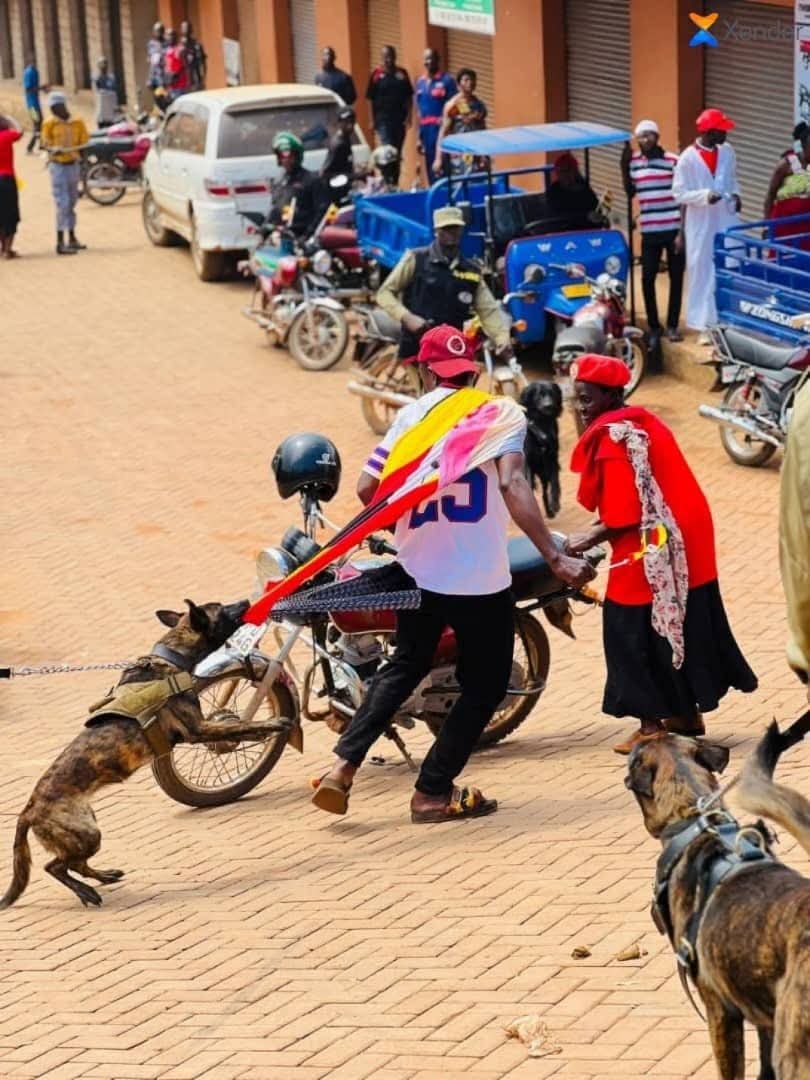
In Kampala, Uganda, guard and security dogs are no longer a luxury — they are a necessity. From residential homes in Muyenga, Buziga and Munyonyo, to warehouses in Nakawa, Namanve and Kyambogo, to offices in Kololo, Nakasero and Bugolobi, security dogs play a critical role in protecting lives and property.
However, a guard dog is only as effective as the care it receives. Proper breed selection, nutrition, training, and professional veterinary care determine whether a dog becomes a reliable protector or a liability. This guide explains everything you need to know about security dogs in Uganda, while recommending Superior Animal Clinic, Makindye, as the leading veterinary facility for security and working dogs in Kampala and beyond.
Best Dog Breeds for Security in Kampala, Uganda
Choosing the right breed is the foundation of effective security. Uganda’s climate, urban environment, crime patterns and living conditions require dogs that are intelligent, alert, heat-tolerant, loyal and physically capable.
1. German Shepherd
Why it’s good for security:
The German Shepherd is the most popular security dog in Uganda because of its intelligence, loyalty and trainability.
Best at:
- Patrol security
- Perimeter guarding
- Police and K9 work
- Intruder detection
When they start guarding:
From 8–10 months, after basic obedience training.
When they retire:
Usually between 8–10 years, depending on health and workload.
German Shepherds perform well in areas like Kololo, Naguru and Lubowa, where they are often used for compound and institutional security.
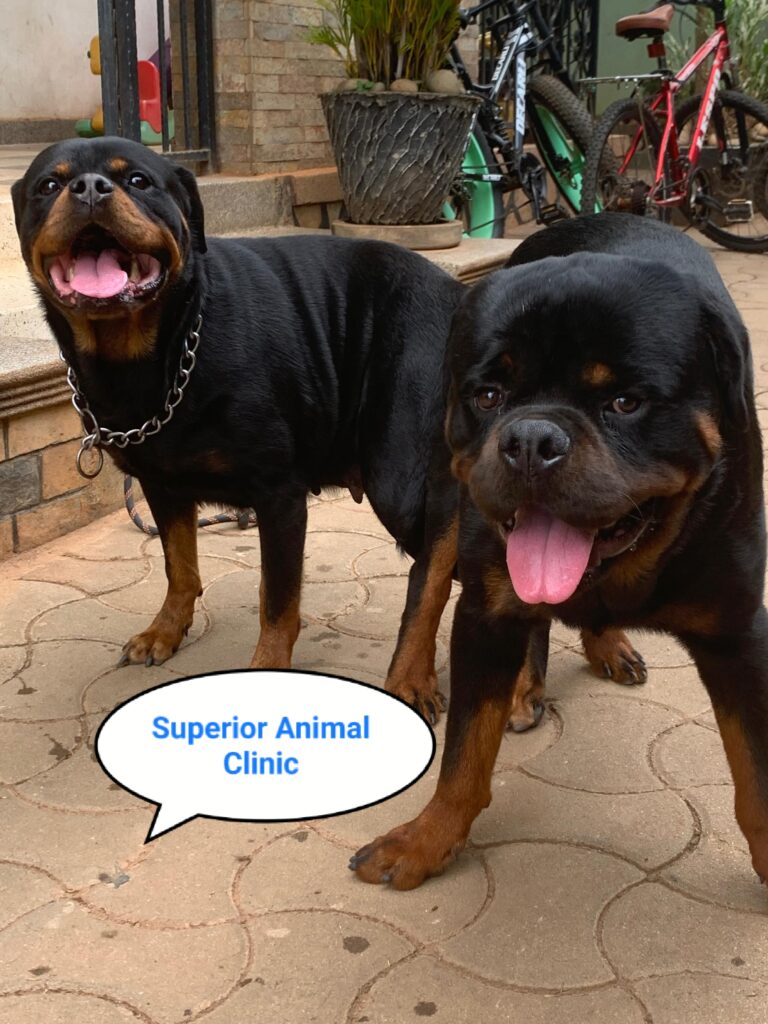
2. Rottweiler
Why it’s good for security:
Rottweilers are powerful, fearless and highly territorial.
Best at:
- Deterrent security
- Compound protection
- Night guarding
When they start guarding:
Around 10–12 months once socialized and trained.
When they retire:
Between 7–9 years.
They are commonly seen guarding high-value homes in Muyenga, Buziga and Ntinda.
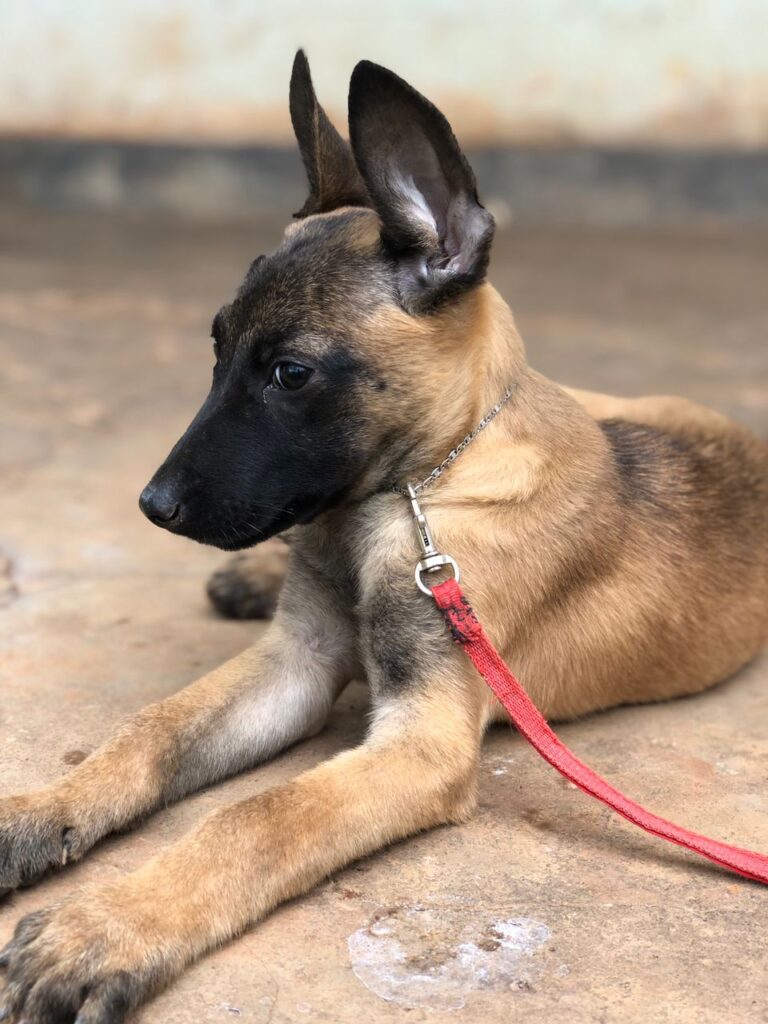
3. Belgian Malinois
Why it’s good for security:
Highly energetic, alert and extremely fast learners.
Best at:
- Rapid response
- Attack and apprehension
- K9 and tactical security
When they start guarding:
As early as 7–9 months.
When they retire:
Around 7–8 years due to high physical demand.
Malinois are ideal for commercial security companies operating in Nakawa, Industrial Area and Namanve.
4. Doberman Pinscher
Why it’s good for security:
Elegant, fast and intimidating, with excellent guarding instincts.
Best at:
- Residential security
- Indoor/outdoor guarding
- Personal protection
When they start guarding:
At about 9–11 months.
When they retire:
Around 7–9 years.
They are popular in Bugolobi, Kololo and Nakasero for both security and companionship.
5. Boerboel
Why it’s good for security:
Large, muscular and extremely territorial.
Best at:
- Farm security
- Warehouse guarding
- Perimeter protection
When they start guarding:
From 10–12 months.
When they retire:
At about 8–10 years.
Boerboels are common in Wakiso, Kira and outskirts of Kampala.
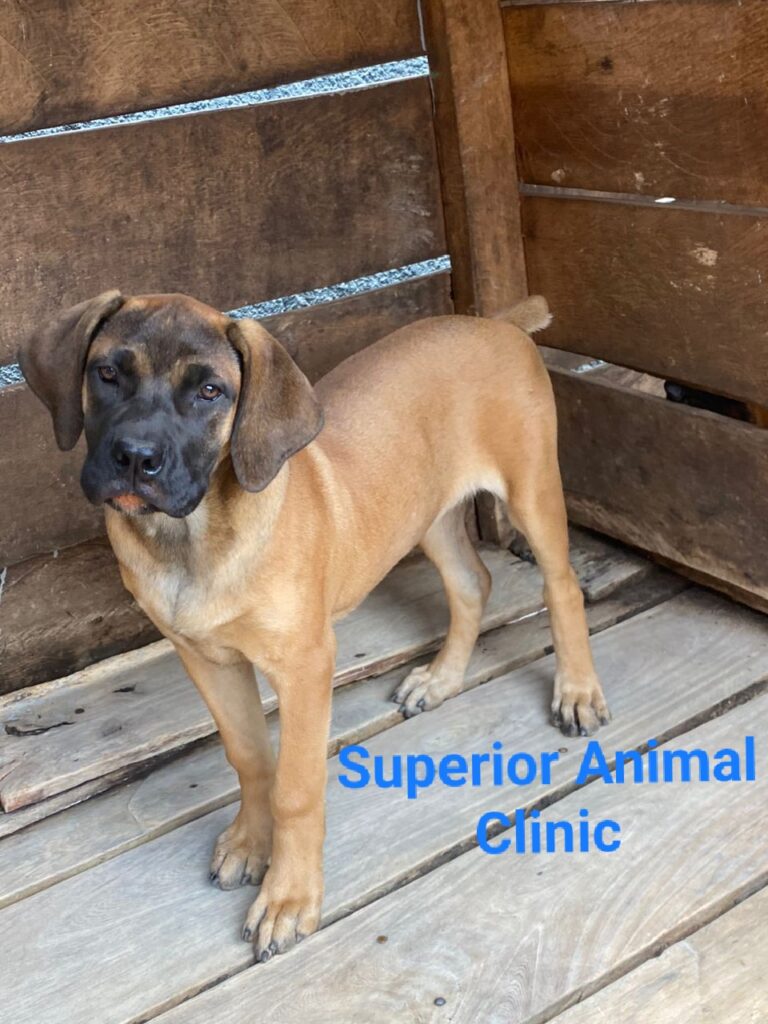
6. Bullmastiff
Why it’s good for security:
Bullmastiffs are calm, extremely powerful and naturally protective. They are less noisy but very effective at physically stopping intruders.
Best at:
- Silent guarding
- Physical deterrence
- Estate and warehouse security
When they start guarding:
Around 10–12 months after obedience training.
When they retire:
At about 7–9 years.
They are ideal for large properties in areas like Lubowa, Seguku and Kira, where silent strength is preferred over constant barking.
7. Cane Corso
Why it’s good for security:
The Cane Corso is highly territorial, loyal to its owner and intimidating in appearance, making it a strong deterrent even before engaging.
Best at:
- Perimeter guarding
- High-risk property protection
- Personal protection
When they start guarding:
From 9–11 months.
When they retire:
Around 7–9 years.
They are increasingly popular among high-end homeowners in Muyenga, Buziga and Kololo.
8. Rhodesian Ridgeback
Why it’s good for security:
Originally bred for protection and hunting in Africa, this breed handles heat very well and is naturally alert.
Best at:
- Compound guarding
- Estate patrol
- Family protection
When they start guarding:
From 10 months.
When they retire:
Between 8–10 years.
Perfect for Ugandan weather, especially in Wakiso, Entebbe Road and Munyonyo.
9. Akita
Why it’s good for security:
Akitas are quiet, fearless and extremely loyal, making them excellent for personal and residential security.
Best at:
- Indoor and compound guarding
- Personal protection
- Silent alert guarding
When they start guarding:
At around 10–12 months.
When they retire:
Between 8–10 years.
They are suitable for quiet residential areas like Naguru, Bukoto and Bugolobi.
10. Caucasian Shepherd (Caucasian Ovcharka)
Why it’s good for security:
This is one of the most powerful guard dogs in the world, built specifically to defend against intruders.
Best at:
- High-risk security
- Large property guarding
- Industrial and farm security
When they start guarding:
From 11–14 months.
When they retire:
Around 8–10 years.
Best for farms, factories and large compounds in outskirts like Wakiso, Mukono and Gayaza, rather than dense urban areas.
11. Anatolian Shepherd
Why it’s good for security:
Naturally independent, alert and territorial, this breed is excellent for protecting large spaces.
Best at:
- Farm and perimeter security
- Livestock protection
- Remote property guarding
When they start guarding:
At 10–12 months.
When they retire:
Around 9–11 years.
Very suitable for semi-rural Kampala outskirts and agricultural estates.
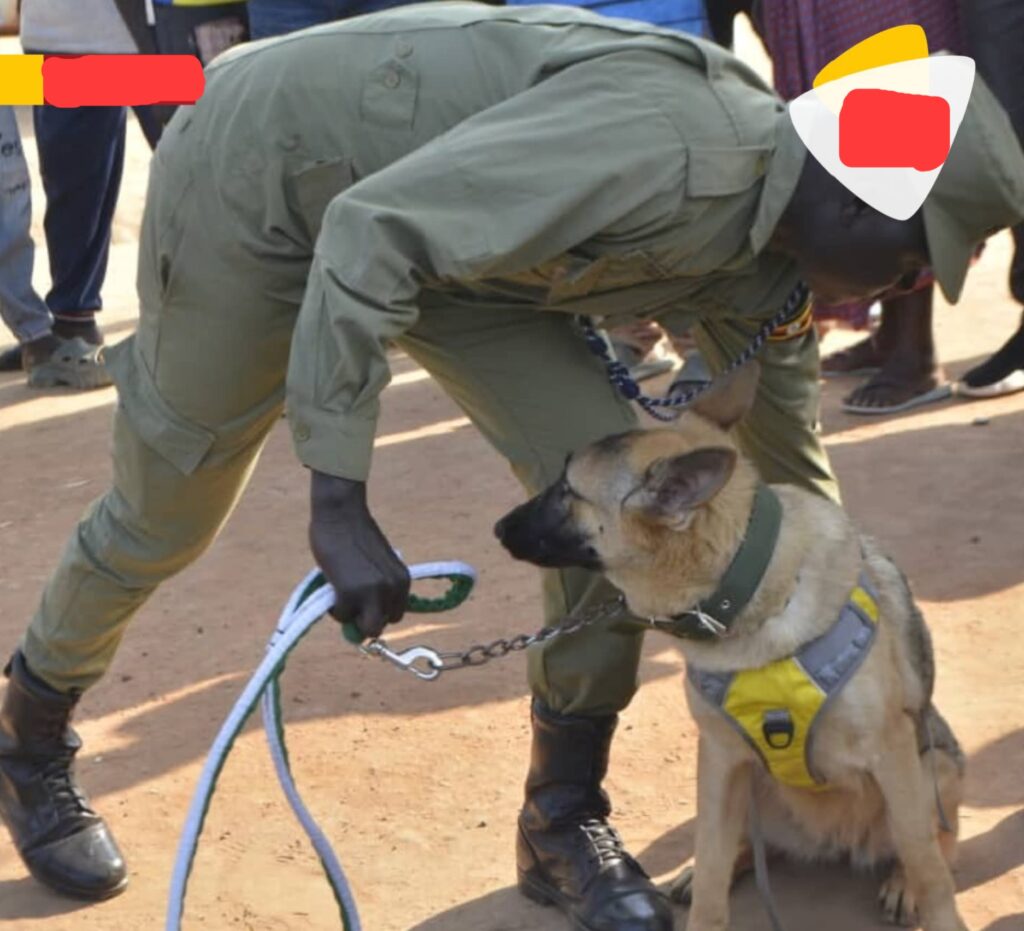
How to Feed a Guard Dog in Uganda: A Practical Feeding Guide Using Local Ingredients
A guard dog is not an ordinary pet — it is a working dog that requires strength, stamina, alertness and fast recovery after duty. Feeding your security dog correctly is just as important as training and veterinary care. In Uganda’s climate, with long hot days and active night guarding, poor feeding quickly leads to weight loss, weakness, poor immunity and aggressive or lazy behavior.
Let’s look at how to properly feed a guard dog in Uganda using locally available ingredients, the correct feeding times, how to prepare the meals, and how much to give dogs of different sizes.
Best Feeding Times for Guard Dogs in Uganda
Security dogs should be fed twice a day, not once.
Morning feeding:
👉 6:30 AM – 7:30 AM
This gives the dog enough energy for daytime alertness and movement without being too full or sluggish.
Evening feeding:
👉 6:00 PM – 7:00 PM
This is the most important meal for guard dogs, because most guarding happens at night. Feeding in the evening ensures the dog has energy, focus and stamina for night duty.
❌ Avoid feeding during the middle of the night
❌ Avoid feeding immediately before heavy activity
Always allow at least 30–45 minutes of rest after feeding before work or patrol.
The Ideal Guard Dog Recipe Using Ugandan Ingredients
This recipe is designed using foods commonly found in Kampala and across Uganda. It provides protein for strength, carbohydrates for energy, and vegetables for immunity and digestion.
Main Ingredients (Per Day)
1. Protein – The Foundation of Strength
Choose one or combine:
- Beef offals (matumbo/tripe, liver, lungs):
👉 400g – 700g depending on dog size - OR Fish (Nile tilapia remains, catfish):
👉 350g – 600g - OR Chicken parts (backs, necks, gizzards – well cooked):
👉 400g – 600g
Why protein matters:
Protein builds muscle, maintains stamina, supports immune function and speeds up healing after injury.
2. Carbohydrates – The Energy Source
Choose one:
- OR Rice: 1½ – 3 cups cooked
- OR Sweet potatoes: 2 – 4 medium sized, boiled
- OR Cassava: moderate amounts only (well cooked)
Why carbohydrates matter:
They provide energy for movement, patrolling, barking and alertness without exhausting the dog.
3. Vegetables – For Immunity & Digestion
Mix any 2–3:
- Pumpkin
- Sukuma wiki
- Cabbage
- Carrots
- Green beans
👉 1–2 cups daily (chopped and cooked)
Why vegetables matter:
They improve digestion, strengthen immunity, enhance coat quality and prevent constipation.
4. Healthy Fats
- 1 tablespoon sunflower oil or cooking oil
Why fats matter:
They increase calorie density, support skin and coat health, and improve endurance.
5. Water
Clean water must be available at all times, especially in hot areas like Katwe, Kisenyi, Bwaise and Old Kampala.
How to Prepare the Guard Dog Meal
Step-by-step Preparation
- Boil the protein (offals, fish or chicken) thoroughly
- Never feed raw offals or raw chicken
- Remove sharp bones
- Never feed raw offals or raw chicken
- Boil carbohydrates separately (rice, sweet potatoes)
- Lightly cook vegetables (do not overcook)
- Mix everything together in one bowl
- Add oil last and stir
- Let food cool before feeding
❌ Do not add salt
❌ Do not add spices
❌ Do not feed fried foods
❌ Avoid leftovers meant for humans
How Much to Feed: Based on Dog Size
For a 15kg Guard Dog
👉 Total daily food: About 800g – 1kg
Split into two meals:
Morning: 400–500g
Evening: 400–500g
Typical daily portions:
- Protein: 300–400g
- Carbohydrates: 1½ cups
- Vegetables: 1 cup
- Oil: 1 teaspoon
Suitable for smaller breeds or young working dogs.
For a 20kg Guard Dog
👉 Total daily food: About 1.1kg – 1.3kg
Split into two meals:
Morning: 500–600g
Evening: 600–700g
Typical daily portions:
- Protein: 400–500g
- Carbohydrates: 2 cups
- Vegetables: 1–1½ cups
- Oil: 1 tablespoon
This fits medium-sized working breeds like Belgian Malinois or lean German Shepherds.
For a 25kg Guard Dog
👉 Total daily food: About 1.4kg – 1.6kg
Split into two meals:
Morning: 650–750g
Evening: 700–850g
Typical daily portions:
- Protein: 500–600g
- Carbohydrates: 2½ – 3 cups
- Vegetables: 1½ – 2 cups
- Oil: 1 tablespoon
Ideal for large working dogs like Rottweilers, Boerboels and large German Shepherds.
Special Feeding Tips for Guard Dogs in Uganda
- Increase food slightly during cold rainy seasons or heavy duty periods
- Reduce portions if the dog becomes overweight
- Puppies under 6 months should be fed 3 times daily
- Avoid feeding only bones — they cause constipation and mineral imbalance
- Do not rely solely on commercial kibble unless it is high quality and properly measured
- Supplement with calcium and multivitamins for large breeds
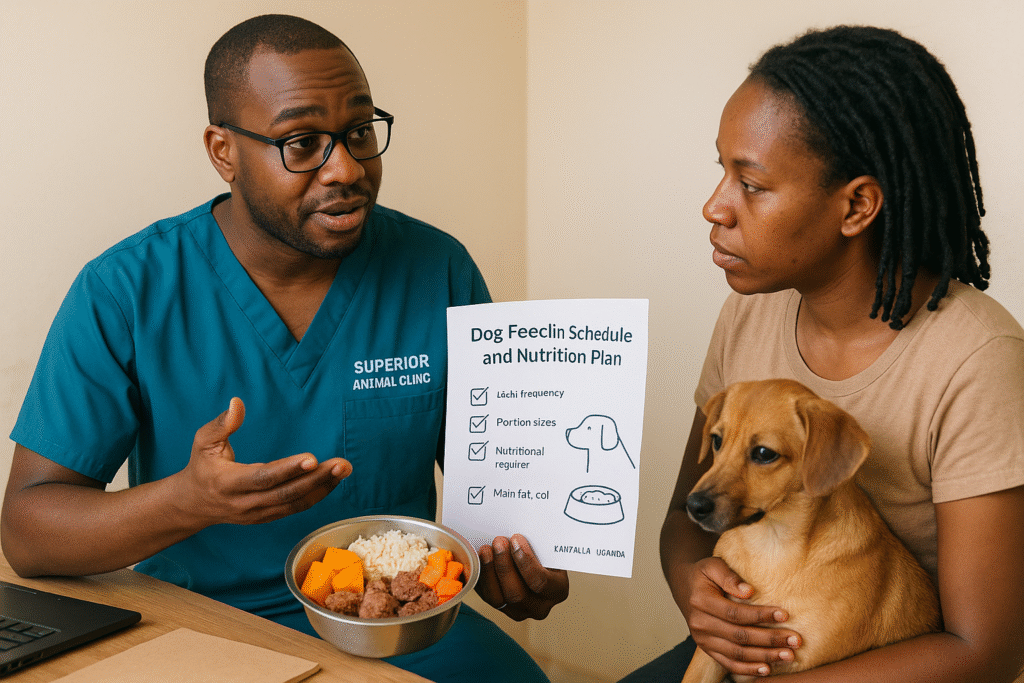
At Superior Animal Clinic Makindye, dog owners receive custom feeding plans based on breed, size, workload and health condition.
Signs Your Guard Dog is Not Being Fed Properly
- Weight loss or excessive weight gain
- Weakness or laziness
- Dull coat
- Frequent illness
- Aggression or irritability
- Poor performance during duty
Any of these signs mean the feeding program needs adjustment by a veterinarian.
Veterinary Services for Guard Dogs in Uganda: Keeping Your Security Dog Healthy and Strong
A guard dog is a working partner, not just a pet. In Uganda, security dogs face challenges such as tropical heat, parasites, high physical activity, and exposure to diseases. Regular veterinary care is essential to ensure your dog stays alert, strong, and able to perform its duties effectively.
At Superior Animal Clinic in Makindye, we understand the unique needs of security and working dogs, and we offer specialized veterinary services tailored to their lifestyle. Below is a detailed guide to the essential vet services every guard dog in Uganda needs, why they are important, and what they typically cost.
1. Vaccination Services
Purpose:
Vaccinations protect guard dogs from deadly diseases like rabies, parvovirus, distemper, hepatitis, and leptospirosis. A vaccinated dog not only stays healthy but is also less likely to transmit diseases to handlers or other dogs.
Recommended schedule for guard dogs:
- Rabies: annually
- DHPPi (Distemper, Hepatitis, Parvo, Parainfluenza): every 3 years after initial puppy series
- Leptospirosis: annually, especially for dogs near wetlands or farms
Cost in Kampala:
- Rabies: UGX 40,000 – 60,000
- DHPPi: UGX 60,000 – 80,000
- Leptospirosis: UGX 60,000 – 80,000
2. Deworming and Parasite Control
Purpose:
Guard dogs are prone to internal and external parasites due to outdoor activity and exposure to other animals. Worms, ticks, and fleas can cause anemia, skin infections, weight loss, and fatigue — all of which reduce a dog’s guarding performance.
Recommended schedule:
- Internal deworming: every 3 months
- External parasite treatment (tick/flea): monthly or as needed
Common treatments in Uganda:
Cost in Kampala:
- Deworming: UGX 20,000 – 50,000 per treatment
- Tick/flea control: UGX 40,000 – 85,000 per month
3. Routine Health Checks
Purpose:
Guard dogs need regular check-ups to detect health issues early, including heart problems, kidney issues, and joint problems. Routine checks also help monitor weight, body condition, and overall fitness for duty.
Services include:
- Physical examination
- Weight and body condition assessment
- Blood tests for anemia, infection, or organ issues
- Urinalysis if needed
- Dental and oral health assessment
Recommended schedule:
- Every 6 months for adult dogs
- Every 3 months for dogs in heavy-duty work or large breeds
Cost in Kampala:
- UGX 30,000 – 60,000 per routine check
4. Injury and Emergency Care
Purpose:
Guard dogs may get injured during training, patrols, or confrontations. Quick and professional emergency care prevents infection, speeds recovery, and saves lives.
Common emergencies:
- Bite wounds or scratches
- Broken teeth or jaws
- Sprains, fractures, or cuts
- Heat exhaustion or dehydration
Cost in Kampala:
- Minor injuries (cuts, mild bites): UGX 80,000 – 150,000
- Moderate injuries (stitches, minor fractures): UGX 200,000 – 350,000
- Severe injuries (surgery, hospitalization): UGX 400,000 – 1,000,000+
5. Orthopedic and Joint Care
Purpose:
Large and active breeds like Rottweilers, Boerboels, and German Shepherds are prone to hip dysplasia, arthritis, and joint injuries. Proper orthopedic care keeps them mobile, reduces pain, and extends their working life.
Services include:
- X-rays for hip, knee, or back issues
- Joint supplements (glucosamine, chondroitin)
- Physiotherapy and exercise plans
Cost in Kampala:
- Consultation & X-ray: UGX 150,000 – 250,000
- Supplements: UGX 100,000 – 250,000 per month
6. Behavioral and Aggression Management
Purpose:
A guard dog must be confident, alert, and controlled. Improper behavior, anxiety, or uncontrolled aggression can be dangerous to handlers or the public. Veterinary behavioral services help train dogs, correct aggression, and ensure reliability.
Services include:
- Behavioral assessment
- Aggression management
- Handler guidance and training plans
Cost in Kampala:
- UGX 100,000 – 250,000 per session
7. Dental Care
Purpose:
Healthy teeth and gums are essential for strong bites, eating, and overall health. Dental issues can reduce appetite, cause pain, and lead to infection.
Services include:
- Dental examination
- Scaling and cleaning
- Tooth extraction if needed
Cost in Kampala:
- UGX 80,000 – 200,000 per treatment
8. Nutrition and Feeding Consultation
Purpose:
Security dogs require specialized feeding plans to maintain optimal weight, stamina, and muscle mass. Veterinary consultation ensures proper diet based on breed, size, and workload.
Services include:
- Custom feeding plan using local ingredients
- Supplement recommendations
- Weight monitoring and adjustment
Cost in Kampala:
- UGX 50,000 – 100,000 per consultation
FAQs About Guard & Security Dogs in Kampala, Uganda
1. My guard dog (Poppy) was hurt by thieves — which vet do you recommend in Kampala?
If your security dog has been injured, immediate professional care is critical. We highly recommend Dr. Ssonko Ronald at Superior Animal Clinic, Makindye, Kampala. Dr. Ssonko specializes in working and guard dog injuries, from bite wounds to fractures and trauma. You can reach him directly at +256 771 909 946 for urgent veterinary care.
2. How many days a week should a security dog in Uganda work?
Security dogs are working animals, but overworking them can lead to stress, injury, or fatigue. In Uganda’s hot climate and active security environment:
- Adult dogs: 5–6 days per week with 1 full rest day for recovery.
- Puppies and young dogs: Maximum 3–4 days per week of light training and duty.
- Work duration per day: 4–6 hours of active guarding is ideal; avoid continuous night patrol without breaks.
Providing adequate rest, hydration, and nutrition ensures your guard dog performs optimally and stays healthy.
3. Where can I find the best veterinary services for security dogs in Uganda?
For professional veterinary services tailored to guard dogs in Kampala and surrounding areas, Superior Animal Clinic in Makindye is the top choice. They provide:
- Specialized treatment for guard and working dogs
- Emergency and trauma care
- Vaccinations, deworming, and parasite control
- Nutrition and fitness programs for security breeds
They serve neighborhoods including Muyenga, Buziga, Nsambya, Katwe, Munyonyo, Kololo, Nakasero, Lubowa, and Nakawa.
4. Should I sterilize my guard dog in Uganda?
Sterilization (spaying or neutering) can be beneficial even for security dogs, depending on your breeding or security needs:
- Pros: Reduces aggression, prevents unwanted litters, lowers risk of certain diseases, and helps focus on training.
- Cons: Can slightly reduce muscle mass and physical drive in some dogs if done too early.
- Recommendation: Consult a veterinarian like Dr. Ssonko Ronald to decide the right timing based on your dog’s breed, age, and security role.
5. Is there a 24/7 emergency vet line for guard dogs in Kampala, Uganda?
Yes! For emergency care for guard and working dogs in Kampala, you can contact Superior Animal Clinic 24/7 at +256 771 909 946. They handle injuries, trauma, bites, fractures, heatstroke, poisoning, and other urgent cases for security dogs throughout the city and surrounding neighborhoods.
Final Thoughts
A guard dog in Kampala is an investment that requires careful breed selection, proper feeding, consistent training and professional veterinary care. Whether you are protecting a home in Naguru, a factory in Namanve, or offices in Kololo, the health of your security dog determines the safety of your property.
For unmatched veterinary care for guard and security dogs in Uganda, Superior Animal Clinic in Makindye remains the top choice for dog owners, security firms and institutions.