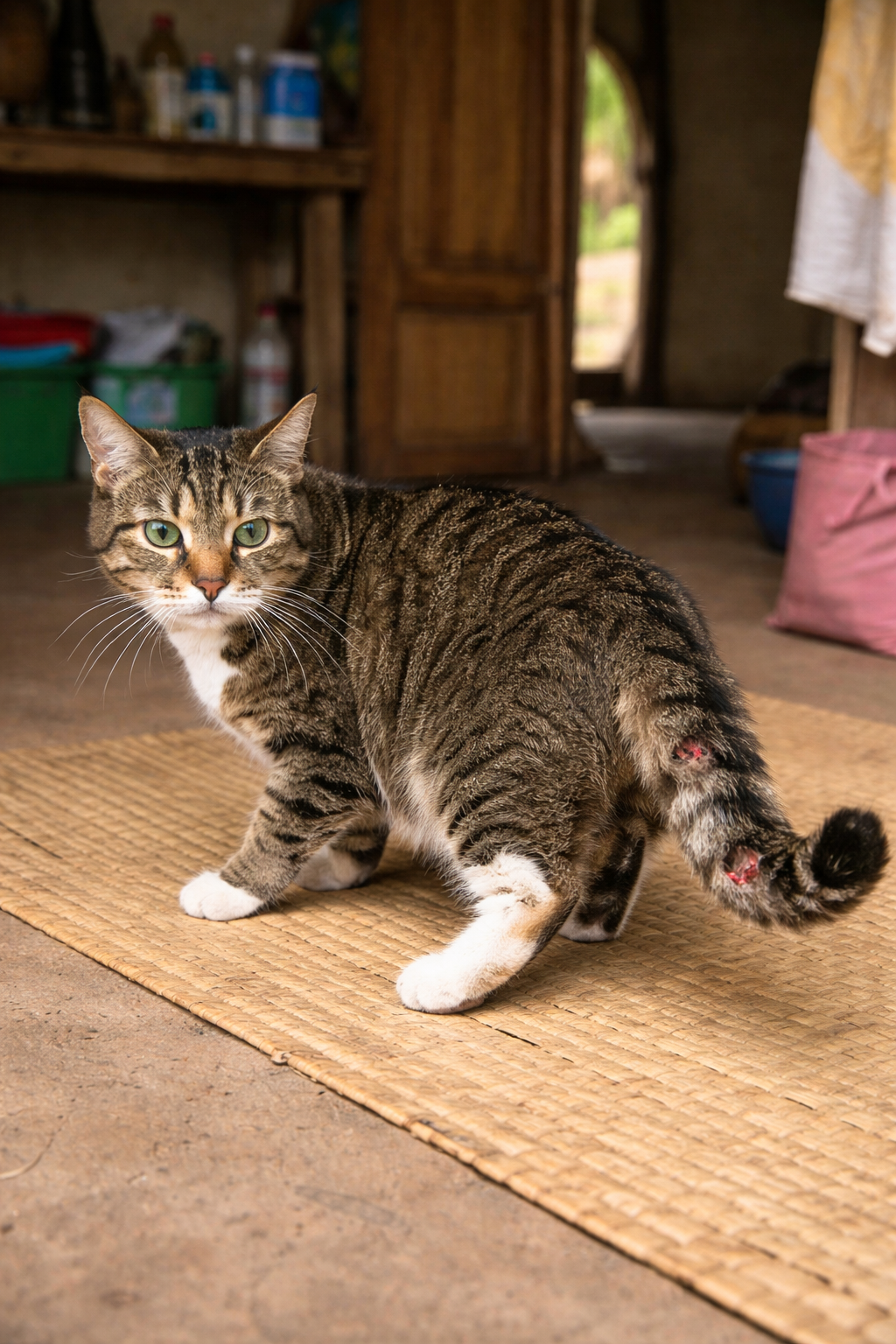
A cat’s tail is far more than just an elegant extension of its body — it is a powerful tool for balance, communication, and survival. From helping your cat land gracefully after a jump to signaling fear, excitement, or aggression, the tail plays a vital role in nearly every aspect of feline life. Yet, despite its importance, the tail is also one of the most frequently injured parts of a cat’s body.
In Uganda, and particularly in busy urban areas like Kampala, tail injuries among cats are becoming increasingly common. With heavy traffic in places such as Nakawa, Kalerwe, and Rubaga, crowded residential compounds, free-roaming pets, and a high population of stray cats, our feline companions are exposed daily to risks that can easily result in tail trauma. In rural areas around Wakiso, Mukono, and Mpigi, cats face different but equally serious threats, including livestock kicks, traps, thorny vegetation, and encounters with wild animals.
What makes tail injuries especially concerning is that they are not just “skin-deep” problems. The tail is closely connected to the spine and important nerves that control urination, defecation, and hind limb movement. A seemingly minor injury can therefore turn into a serious, life-altering condition if not handled correctly and promptly.
For cat owners in Uganda, understanding tail injuries is not only about treating wounds — it is about protecting your cat’s comfort, mobility, and dignity. Whether you keep a pedigree cat in Kololo or a rescued street cat in Katwe, knowing how tail injuries happen, how to recognize them early, and what steps to take can make the difference between a full recovery and permanent disability.
This guide is designed to equip Ugandan cat owners with practical, locally relevant knowledge on tail injuries — from causes and warning signs to the best treatment options and prevention strategies — so you can confidently safeguard your cat’s health and wellbeing.
Anatomy of a Cat’s Tail
Understanding the tail helps explain why injuries are so impactful.
Bones (Caudal Vertebrae)
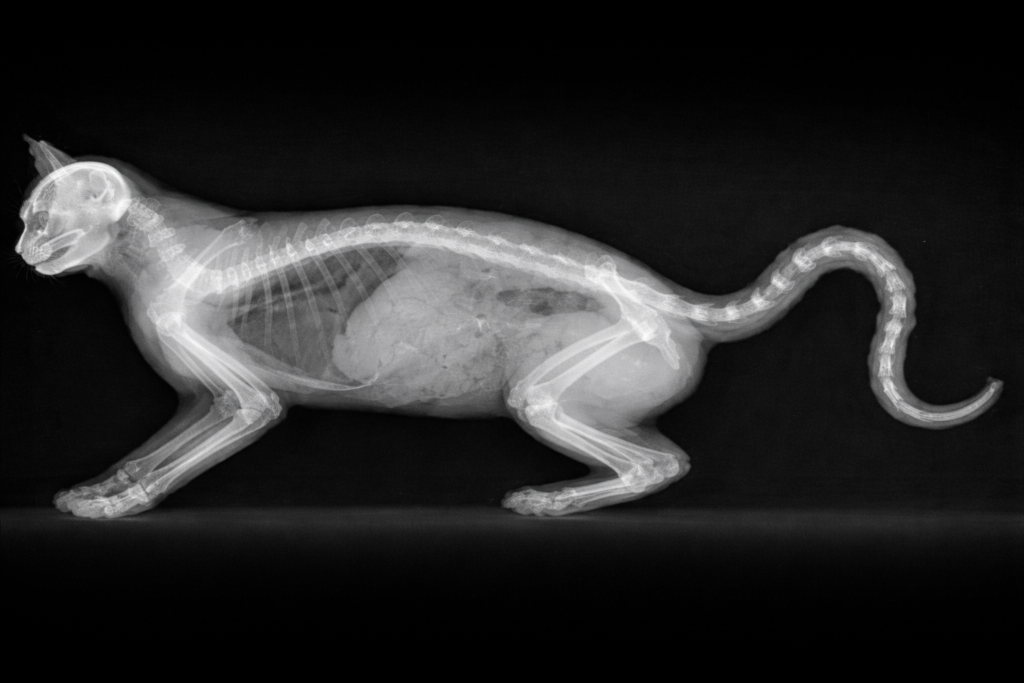
The tail is made of 18–23 small vertebrae forming a flexible extension of the spine.
Muscles & Nerves
Muscles control movement, while nerves regulate sensation and also connect to bladder and bowel control.
Functions of the Tail
- Balance while jumping and climbing
- Communication (fear, happiness, aggression)
- Assisting in turning and stability
Why the Tail Is Vulnerable
- Little protective muscle or fat
- Highly mobile and often exposed
- Frequently targeted during fights
Common Causes of Tail Injuries in Cats
Cats are agile, curious, and adventurous by nature — qualities we love about them, but which also put them at constant risk of tail injuries. In Uganda’s mixed urban and rural environments, several everyday situations can easily turn dangerous for a cat’s tail. Understanding these causes helps you actively protect your feline companion.
1. Road & Traffic Accidents
One of the leading causes of tail injuries among cats in Kampala is traffic-related trauma. Cats often dart across busy roads in areas like Nakawa, Bwaise, Kalerwe, and along Entebbe Road, misjudging the speed of approaching vehicles or boda-bodas.
Even when a cat survives a collision, the tail is frequently crushed, broken, or degloved due to its position and flexibility.
Ask yourself: Does your cat cross busy roads unsupervised or roam freely at night?
2. Doors, Gates & Human Structures
A surprisingly common cause of tail injuries is accidental crushing in doors, windows, car boots, and metal gates. In many Kampala homes with heavy steel gates and fast-closing doors, a cat’s tail can easily get caught as it slips in or out.
Children playing may also unintentionally slam doors without noticing a cat passing through.
Prevention tip: Always check behind you before closing doors or gates.
3. Fights With Other Animals
Cats are territorial animals, and conflicts are common, especially among unneutered males.
Tail injuries often result from:
- Cat-to-cat fights over territory or mates
- Dog attacks in compounds
- Encounters with wild animals like civets or genets, especially near wetlands, forests, and peri-urban areas
Bite wounds on the tail are particularly dangerous because they easily become infected.
4. Rough Handling & Tail Pulling
Tail injuries are not always accidental. In some homes, especially where children interact with pets, cats suffer injuries from tail pulling, lifting a cat by the tail, or improper restraint during bathing or medication.
This can lead to dislocations, nerve damage, or fractures — even when there are no visible wounds.
Important reminder: A cat should never be lifted or restrained by the tail.
5. Outdoor Environmental Hazards
Cats that roam outdoors in Uganda face unique tail threats, including:
- Thorny bushes and barbed wire fences
- Open drains and broken grills
- Traps meant for rodents
- Construction debris and sharp metals
These hazards can easily cause cuts, deep wounds, or even partial amputations.
6. Bicycle & Boda-Boda Accidents
In areas with heavy motorcycle traffic like Ntinda, Kyambogo, and Kawempe, cats are often struck or clipped by fast-moving boda-bodas. Even a slight hit can seriously injure the tail without affecting other parts of the body.
7. Farm & Livestock Injuries (Rural Uganda)
In rural homes and farms, cats risk:
- Being stepped on by cows or goats
- Getting their tails caught in animal pens
- Injuries from farm machinery or carts
These injuries are often severe and contaminated, requiring urgent veterinary care.
Why Understanding These Causes Matters
Most tail injuries are preventable once cat owners recognize the everyday risks around them. By becoming aware of these causes, you can:
- Modify your cat’s environment
- Supervise outdoor access
- Educate children and handlers
- Reduce unnecessary emergencies
Protecting your cat’s tail starts with understanding what threatens it most — right where you live.
How to Know If Your Cat Has a Tail Injury
Cats are masters at hiding pain, which means a tail injury can easily go unnoticed until it becomes serious. Knowing what to look for — and how to read your cat’s behavior — is key to catching tail injuries early and preventing complications.
Instead of waiting for obvious wounds, pay close attention to subtle changes in how your cat moves, behaves, and reacts to touch.
Changes You Can See
One of the first things you may notice is that your cat’s tail no longer looks or moves the way it used to.
Look out for:
- A limp or hanging tail instead of the usual upright or gently curved posture
- A crooked, bent, or oddly shaped tail
- Swelling or thickening along any part of the tail
- Wounds, scabs, or bleeding, even if small
- A tail that your cat keeps tucked tightly or avoids moving
If your cat suddenly stops flicking, lifting, or swishing its tail as it normally does, that is a strong warning sign.
Signs Your Cat Is in Pain
Your cat may not cry loudly, but pain often shows itself through reactions and behavior.
You might notice:
- Flinching or crying when the tail is touched
- Your cat turning to bite or scratch when you approach the tail area
- Reluctance to sit, jump, or climb
- Restlessness or constant shifting positions
If your normally calm cat becomes aggressive when handled, pain is often the reason.
Serious Red Flags (Emergency Signs)
Some tail injuries affect the nerves connected to vital body functions. These signs require immediate veterinary attention:
- Tail completely dragging and lifeless
- Loss of bladder or bowel control
- Inability to urinate or defecate
- Severe swelling or exposed bone
- Profuse bleeding that does not stop
If you notice any of these, do not wait — your cat’s life and long-term health may be at risk.
A Simple Home Check You Can Do Safely
If your cat allows gentle handling:
- Observe the tail visually from base to tip
- Look for swelling, wounds, or abnormal bends
- Compare both sides for symmetry
- Lightly touch and watch your cat’s reaction
If your cat reacts painfully or aggressively, stop immediately and seek veterinary care — forcing the exam can worsen the injury.
Trust Your Instincts
If something about your cat’s tail looks or feels “off,” even if you can’t clearly explain it, trust that instinct. Early veterinary care is always safer, cheaper, and more effective than delayed treatm
Types of Tail Injuries Among Cats in Kampala
Bruises & Contusions
- Swelling and pain
- Usually heal with rest and care
Cuts & Lacerations
- Superficial or deep
- Deep wounds risk infection
Fractures (Broken Tail)
- Closed: skin intact
- Open: bone exposed (emergency!)
Dislocations
- Vertebrae displaced
- May affect nerve function
Amputations
- Partial or complete loss of tail
- Often due to severe trauma or infection
What to Do Immediately: First Aid for a Cat with a Tail Injury Using Locally Available Resources in Uganda
When your cat injures its tail, your response in the first few minutes can make a big difference in how well and how fast it recovers. First aid does not replace veterinary treatment — but it can prevent the injury from worsening before you reach the clinic.
In Uganda, where traffic accidents, cat fights, and outdoor injuries are common, knowing simple and safe first aid can save your cat’s tail — and sometimes its life.
1. Put Safety First — For You and Your Cat
A cat in pain may bite or scratch, even if it is normally friendly. Before doing anything:
- Stay calm and move slowly
- Speak softly to reassure your cat
- If your cat is aggressive or very scared, wrap it gently in a towel, leaving only the injured tail exposed
- Place the cat in a basket, box, or carrier with air holes for transport
This protects both you and your cat and prevents sudden movements that could worsen the injury.
2. Assess the Injury Without Forcing
Before touching the tail:
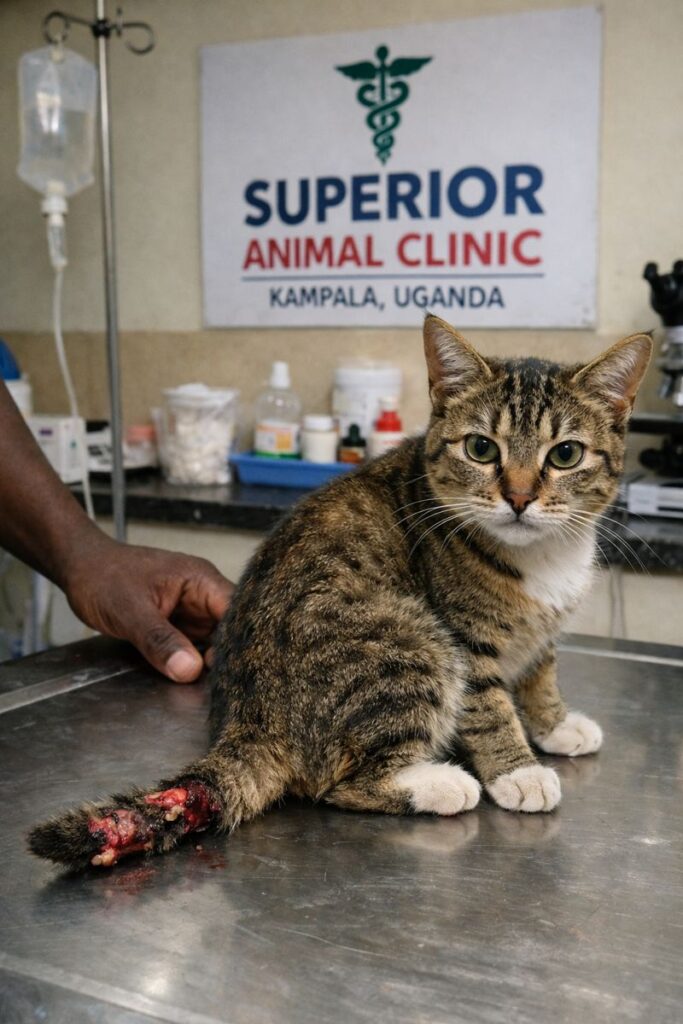
- Look carefully for bleeding, swelling, wounds, or abnormal bending
- Do not pull, straighten, or twist the tail
- If bone is visible or the tail is badly crushed, do not attempt home treatment — go immediately to a veterinary clinic
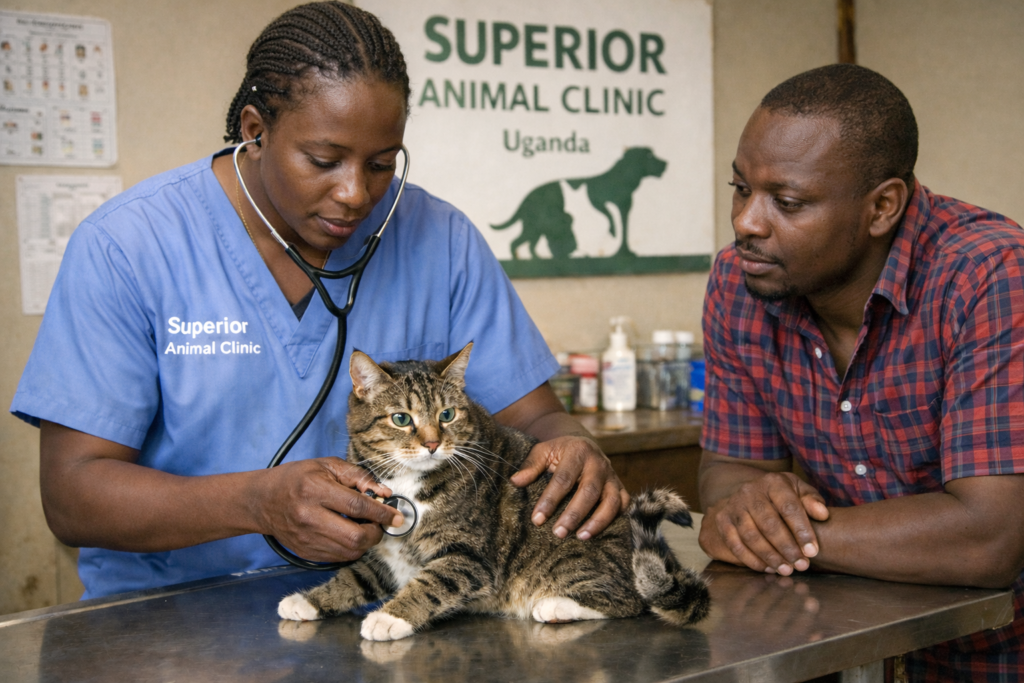
If your cat cries loudly when you touch the tail, stop and seek professional care.
3. How to Control Bleeding Safely
Bleeding is common with tail cuts and bite wounds.
To stop bleeding:
- Use a clean cloth, bandage, or sterile gauze
- Apply gentle pressure directly over the bleeding area
- Hold for 5–10 minutes without lifting to check
- If blood soaks through, place another layer on top
⚠️ Do NOT apply pressure directly on exposed bone or severe crush injuries.
If bleeding does not stop after 10 minutes of firm pressure, seek emergency veterinary help immediately.
4. Cleaning Minor Wounds (Only If They Are Superficial)
If the wound is small and not deep:
- Rinse gently with clean drinking water or saline
- You may use diluted antiseptic (such as weak iodine or chlorhexidine)
- Dry gently with a clean cloth
⚠️ Never use:
- Spirit, alcohol, hydrogen peroxide, or Dettol directly on the wound — these delay healing and cause pain
- Herbal pastes, ash, engine oil, or powder — common in local home practices but dangerous
If the wound looks deep, infected, or wide, do not clean aggressively — go straight to the vet.
5. Immobilizing the Tail (With Caution)
If the tail appears painful but not severely damaged:
- Keep the tail as still as possible
- You may gently secure it alongside the body using a soft bandage or cloth
- Do not wrap tightly — circulation must not be cut off
⚠️ Do not attempt splinting or straightening unless trained — improper handling can worsen fractures and nerve injuries.
6. Keep Your Cat Warm, Quiet, and Restrained
After injury:
- Place your cat in a quiet, warm place
- Prevent jumping, running, or playing
- Keep children and other animals away
- Avoid letting your cat roam outside
In Kampala and surrounding areas, letting an injured cat wander often leads to infection, further trauma, or complete tail loss.
7. What You Must Never Do at Home
To keep your cat safe, never:
- Give human painkillers like paracetamol, diclofenac, ibuprofen, or aspirin — these are toxic to cats
- Try to cut off damaged tail tissue
- Push bones back into place
- Ignore the injury hoping it will “heal on its own”
8. When First Aid Is Not Enough — Go to the Vet Immediately
First aid is only temporary. You must seek veterinary care urgently if:
- The tail is limp or dragging
- Your cat cannot urinate or defecate
- There is deep bleeding, exposed bone, or severe swelling
- The wound smells bad or oozes pus
- Your cat becomes weak, unresponsive, or collapses
In Kampala and across Uganda, prompt treatment at a professional veterinary clinic like Superior Animal Clinic greatly improves the chances of saving the tail and preventing long-term complications.
Best Treatment for Cats with Tail Injuries in Uganda
Treating a tail injury in a cat is not just about stopping bleeding or closing a wound — it is about relieving pain, preventing infection, protecting nerve function, and ensuring the tail heals properly. In Uganda, where cats often present late due to roaming lifestyles and limited early detection, proper veterinary treatment is especially important.
The best treatment depends on how severe the injury is, and treatment is usually grouped into medical (non-surgical) and surgical care.
1. Pain Control: The First Priority
Pain management is always the first step in treatment. A cat in pain will not heal well and may refuse food or become aggressive.
Veterinarians commonly use:
Injectable pain relievers
- Meloxicam (Metacam®) – used at safe cat doses to reduce pain and inflammation
- Buprenorphine – very effective for moderate to severe pain
- Tramadol – sometimes used orally for ongoing pain management
⚠️ Important:
Never give human painkillers like paracetamol, diclofenac, or ibuprofen — these are highly toxic to cats.
Pain medication is usually given for 3–7 days, depending on severity.
2. Treating and Preventing Infection
Because many tail injuries involve bites, road dirt, or open wounds, infection is a major risk in Uganda’s warm climate.
Commonly used antibiotics include:
Injectables (for severe cases):
- Amoxicillin + Clavulanic acid
- Ceftriaxone
- Penicillin-streptomycin combination
Oral antibiotics (for mild to moderate infections):
- Amoxicillin-clavulanate tablets or syrup
- Doxycycline
- Clindamycin (especially for bite wounds)
Antibiotics are usually given for 5–10 days, and it is important to complete the full course even if the wound looks healed.
3. Proper Wound Cleaning and Dressing
For open wounds and cuts:
Veterinary treatment includes:
- Shaving the fur around the injury
- Flushing with sterile saline
- Removing dead tissue (debridement) if necessary
- Applying antibacterial ointments
- Bandaging when appropriate
In Uganda, many tail wounds get infected because they are left dirty or treated with harmful substances like ash, herbs, or engine oil — these must be avoided.
At home, owners are advised to:
- Keep the bandage clean and dry
- Prevent licking (use an Elizabethan collar if needed)
- Return for dressing changes as advised (usually every 2–3 days)
4. Managing Fractures and Dislocations
If the tail is broken or dislocated:
Mild, stable fractures:
- Pain medication
- Rest and confinement
- Sometimes gentle tail support bandaging
Severe fractures or crushed tails:
- Surgery may be needed
- Unstable bones are either fixed or removed
- Dead or badly damaged tail segments are surgically amputated
X-rays are essential to guide these decisions, and clinics like Superior Animal Clinic in Kampala are well equipped to assess and manage such cases professionally.
5. When Tail Amputation Is the Best Option
Although frightening for owners, tail amputation often saves the cat’s life and comfort.
It is recommended when:
- The tail is severely crushed
- There is irreversible nerve damage
- The wound is deeply infected
- The tail is dead or not healing
Cats adapt very well after partial or complete tail amputation and usually return to normal activity within weeks.
Post-amputation care includes:
- Pain control
- Antibiotics
- Strict wound monitoring
- Preventing licking or jumping
6. Managing Nerve Damage
Tail injuries that affect nerves may cause:
- Tail dragging
- Incontinence
- Weak hind legs
Treatment focuses on:
- Reducing inflammation (using safe anti-inflammatories)
- Protecting bladder and bowel function
- Supportive nursing care
- Monitoring recovery over weeks
Some nerve injuries recover fully, while others may leave permanent changes — early treatment greatly improves outcomes.
7. Supportive Care: Speeding Up Healing
Alongside medical and surgical treatment, supportive care is crucial:
- Strict rest – confine your cat indoors
- Nutritious feeding – promotes tissue healing
- Hydration – supports circulation and recovery
- Parasite control – prevents wound contamination
- Regular follow-ups – to catch complications early
FAQs About Cat Tail Injuries in Kampala, Uganda
1. I accidentally crushed my cat’s tail when closing the door. Where can I take my cat for emergency treatment in Kampala?
If your cat’s tail was crushed in a door, it is a veterinary emergency. You should take your cat immediately to Superior Animal Clinic, one of the most trusted pet hospitals in Kampala for treating traumatic injuries in cats, including crushed and broken tails. Early treatment can prevent infection, nerve damage, and tail loss.
2. I am looking for a mobile vet in Kampala to treat my cat with an injured tail. Who can I call?
If you need a mobile veterinary doctor in Kampala for a cat with a tail injury, you can contact Dr. Ssonko Ronald on +256771909946. Mobile veterinary services are helpful when your cat is in too much pain to travel or when urgent care is needed at home.
3. How do I know if my cat’s tail injury is serious?
A tail injury is serious if your cat’s tail is hanging limp, bleeding heavily, badly swollen, dragging on the ground, or if your cat cannot urinate or defecate normally. These signs mean you should seek immediate veterinary care in Kampala.
4. Can a cat’s broken tail heal on its own without a vet in Uganda?
Minor bruises may heal with rest, but broken tails, deep wounds, or nerve injuries require veterinary treatment. Delaying professional care often leads to infection or permanent damage.
5. How much does treatment for a cat’s tail injury cost in Kampala?
The cost depends on severity:
- Consultation: UGX 30,000 – 60,000
- X-rays: UGX 150,000 – 250,000
- Surgery or amputation: UGX 350,000 – 800,000+
Early treatment is usually much cheaper than delayed care.
6. What is the best veterinary clinic in Kampala for treating cat tail injuries?
Superior Animal Clinic is widely recognized as one of the best veterinary clinics in Kampala for managing cat tail injuries, offering diagnostics, surgery, wound care, and emergency services for cats.
7. Can a cat live a normal life after tail amputation in Uganda?
Yes. Most cats in Uganda adapt very well after partial or complete tail amputation and go on to live happy, active lives with little to no limitation.
8. What causes tail injuries in cats in Kampala?
The most common causes include:
- Doors and gates crushing tails
- Road accidents
- Cat fights
- Dog bites
- Getting trapped in fences or grills
- Children pulling tails
9. Is a bleeding tail injury in a cat an emergency?
Yes. Any bleeding tail injury should be treated as an emergency, especially if the bleeding does not stop within 10 minutes or bone is visible.
10. Are there safe home remedies for cat tail injuries in Uganda?
Home remedies should only be used for very minor cuts, such as gentle cleaning with clean water or saline. Never apply herbs, ash, engine oil, or human medicines. Serious injuries must be treated by a vet.

11. Can I give my cat human painkillers for a tail injury?
No. Human painkillers like paracetamol, diclofenac, and ibuprofen are toxic to cats and can be fatal. Only veterinary-prescribed drugs are safe.
12. How long does it take for a cat’s tail injury to heal?
- Minor injuries: 1–2 weeks
- Fractures or surgery: 4–8 weeks
Proper veterinary care significantly speeds up healing.
13. Do tail injuries affect a cat’s ability to urinate or defecate?
Yes. Severe tail injuries can damage nerves connected to bladder and bowel control. This is a medical emergency and requires immediate veterinary attention.
14. Is it better to take my cat to a clinic or call a mobile vet for a tail injury in Kampala?
For mild injuries, a mobile vet like Dr. Ssonko Ronald (+256771909946) can help. For severe injuries, X-rays, surgery, or hospitalisation, visiting a fully equipped clinic like Superior Animal Clinic is the best option.
15. How can I prevent tail injuries in my cat in Kampala?
- Be careful with doors and car boots
- Keep cats indoors or supervised
- Neuter to reduce fights
- Remove sharp edges and tail traps at home
- Keep dogs away from cats
16. Do veterinary clinics in Kampala treat stray cats with tail injuries?
Yes. Clinics like Superior Animal Clinic also attend to injured stray and rescued cats, offering professional care and advice for animal welfare groups and Good Samaritans.
17. When should I rush my cat to the vet for a tail injury?
Immediately if:
- The tail is limp or dragging
- There is heavy bleeding
- Bone is exposed
- Your cat cannot urinate
- Your cat becomes weak or collapses
Conclusion
Tail injuries in cats are more than cosmetic problems — they can affect mobility, comfort, and even vital functions. In Uganda’s unique environment, proactive prevention and prompt veterinary care are essential.
By understanding risks, acting quickly, and seeking care from trusted facilities like Superior Animal Clinic, cat owners can ensure their feline companions live healthy, pain-free lives.
Responsible pet ownership saves tails — and lives. 🐾