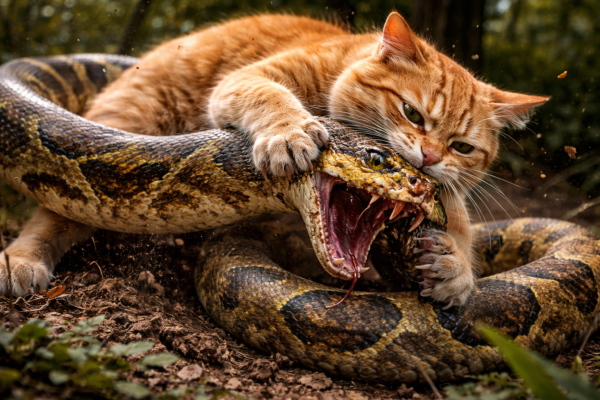
This is a surprisingly common question we get at our veterinary clinic especially from owners living in areas with snakes. Yes, cats can and often do kill snakes, but it’s not always a good thing for your cat. While their hunting instincts make them effective against small snakes, there are serious risks involved.
Why Cats Are Good at Killing Snakes
Cats are natural predators with excellent speed, agility, and sharp claws and teeth. They often:
- Cats are argile can pounce quickly and avoid strikes
- Target the head or neck of the snake
- Play with and eventually kill smaller, non-venomous snakes
Many outdoor or farm cats regularly “take care of” garden snakes, ratsnakes, or other harmless species. This is one reason why cats are sometimes welcomed on properties with snake problems.But… not all snakes are equal
Your cat’s success depends on several factors:
Size of the snake: Cats can easily handle small snakes (under 1 meter). Large snakes (pythons, large cobras, or mambas) can seriously injure or even kill a cat.
Venomous vs Non-venomous: In Uganda and many parts of Africa, venomous snakes like cobras, puff adders, black mambas, and boomslangs are common. A single bite can be fatal or cause severe swelling, tissue damage, and organ failure.
Cat’s age and health: Kittens, older cats, or sick cats are at much higher risk.
Even if your cat “wins” the fight, they may still get bitten in the process.
Have you ever wondered? Do Cats Really Have Nine Lives?
Dangers of Snake Encounters
Venomous bites: when a cat is bitten by a venomous snake, the venom can cause rapid swelling, pain, bleeding, blood clotting , difficulty in breathing, or even death if not treated immediately. Some venoms are also quick killers compared to others and so immediate action should always be taken.
Infection: Snake bites often become infected causing a series of problems to the cat.
Injuries: during the fight with a snake, a cat might suffer scratches, puncture wounds, or internal injuries.
Trauma and secondary problems: Some cats become fearful or stop hunting altogether after a bad encounter.
We’ve treated several cats with painful snake bites at the clinic. Early intervention is critical.
What Should You Do? (Best Prevention Tips)
- Keep your cat indoors especially in the mornings and evenings when snakes are active.
- Clear tall grass, wood piles, and debris around your home to reduce snake hiding spots.
- Consider snake-proof fencing or professional snake removal services in high-risk areas.
- Avoid letting your cat roam freely at night in rural or bushy areas.
If Your Cat Fights or Is Bitten by a Snake
1. Stay calm and remove your cat from the area.
2. Look for bite marks (two small puncture wounds, swelling, or bleeding).
3. Contact our clinic or the nearest emergency vet immediately.
4. Do not try to suck out venom or apply ice as these actions can make it worse.
5. Bring a photo of the snake if possible (for identification), but never risk getting bitten yourself. If you saw the sanake but didnt manage to take picture a good explanation can make treatment easy.
Bottom Line
Yes, many cats can kill small, non-venomous snakes. However, the risk of encountering a venomous one makes this a dangerous “hobby” for your cat. The safest approach is prevention and keeping your cat protected from wildlife encounters.
Book a wellness exam for your cat today. We can discuss parasite prevention, vaccinations, and tailored advice for keeping your cat safe in your specific location.
Have you ever had a cat bring home a snake (or fight one)? Share your story with us
This article is for educational purposes. In case of a snake bite, seek immediate veterinary care.