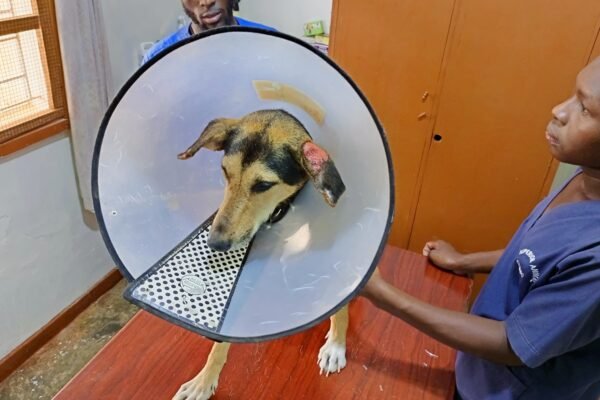
If you own a dog or cat in Uganda, there is a good chance you have already used AI to ask a question about your pet. As more Ugandan pet owners turn to ChatGPT, Google, and other AI tools for quick advice on their dogs, cats, and other animals, one important question keeps coming up: Can you really trust AI when it comes to your pet’s health? Pet onwers ask;
“Why is my dog vomiting?”
“What can I give my cat for diarrhoea?”
“Why is my dog scratching so much?”
“Can I give my dog human medicine?”
“My puppy isn’t eating. Should I be worried?”
Artificial intelligence can answer these questions within seconds. And some of the answers can be surprisingly detailed. But as a veterinarian, I want to give pet owners a very important piece of advice:
Use AI as a source of information, not as a replacement for your veterinarian.
AI can be extremely useful. It can help you understand veterinary terms, prepare questions for your vet and recognise when something might require urgent attention.
However, when it comes to diagnosing and treating a sick animal, there is something AI cannot do from a conversation alone: examine your pet. That physical touch from a vet is crucial in diagonising and treating your pet.
And that difference matters.
AI Can Give You Useful Veterinary Information
Let’s be fair to AI.
It can be genuinely helpful for pet owners.
If your veterinarian tells you that your dog has otitis, for example, you can ask AI what otitis means in simple language.
If your cat has just been diagnosed with a particular condition, AI can help explain:
- What the condition means
- Common symptoms
- General treatment approaches
- Questions you can ask your veterinarian
- How to prepare for a veterinary appointment
- Basic preventive care
- Veterinary terminology that may sound confusing
This can be especially useful when you have just left a clinic and realise you forgot half of what the veterinarian explained.
AI can also help you organise information. For example, you might tell it:
“My dog is five years old, vaccinated, has been vomiting twice today and has stopped eating.”
AI can help you understand possible reasons and suggest questions to discuss with a veterinarian.
That can be useful. But there is an important word here:
Possible. Not confirmed. This is because AI uses information on the internet to estimate or guess what could be the reasons as to why the dog is vomiting.
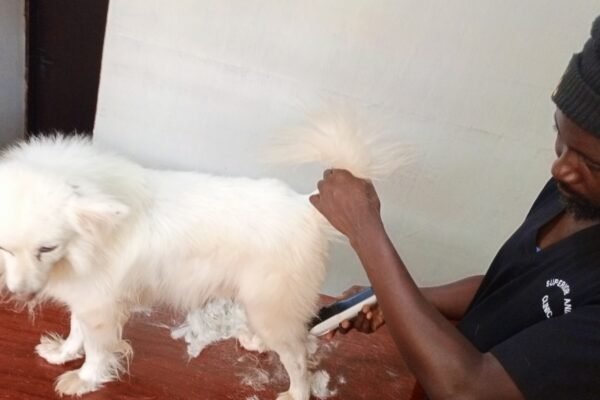
The Problem: Many Different Diseases Look the Same or Have Similar Signs
This is where things become complicated.
A dog vomiting may have eaten something inappropriate.
- It could have a stomach problem.
- It could have parasites.
- It could have an infection.
- It could have swallowed an object.
- It could have another underlying illness.
The same symptom can have many different causes.
And the treatment for one cause may be completely inappropriate for another.
This is why veterinarians don’t simply diagnose a disease based on one symptom.
When your pet comes to the clinic, we consider things such as:
- Age
- Breed
- Vaccination history
- Previous illnesses
- Diet
- Recent changes in food
- Exposure to other animals
- Parasite control
- Physical examination findings
- Temperature
- Hydration
- Heart and respiratory rate
- Abdominal examination
- Other clinical signs
Depending on the case, we may also recommend laboratory tests, imaging or other diagnostic procedures.
AI doesn’t have access to most of this information.
Your Pet Cannot Tell AI What Hurts
This is one of the biggest differences between human healthcare and veterinary medicine.
If you have stomach pain, you can tell your doctor: “The pain started yesterday. It is worse after eating. It is on the right side.”
Your dog can’t do that. Your cat can’t tell us: “I’ve been feeling weak for three days, but today the pain became worse.”
Instead, we have to interpret changes in behaviour and physical signs.
A veterinarian learns to look for these clues during an examination.
Sometimes the most important information is something the owner didn’t even notice.
That is why a physical examination can change the entire direction of a diagnosis.
Related : 10 Signs Your Pet Needs to See a Vet In Kampala Immediately
AI Can Also Be Wrong
This is something pet owners should understand very clearly. AI systems can produce answers that sound confident and professional while still being incorrect, incomplete or unsuitable for a particular animal.
The problem is that an incorrect answer can look very convincing.
Imagine asking:
“What medicine can I give my dog for vomiting?”
You may receive a list of medications.
But before giving any medication, a veterinarian needs to know why the dog is vomiting.
- If the dog swallowed a foreign object, simply trying to stop the vomiting could delay appropriate treatment.
- If the dog is severely dehydrated, the priority may be fluid therapy and treatment of the underlying problem.
- If the dog has another serious condition, completely different treatment may be required.
So the danger isn’t necessarily that AI knows nothing.
The danger is that AI may give you information without knowing enough about your particular pet.
What About AI Telling You Whether Your Pet Has a Disease?
This is where I would draw the line. AI can help you understand what could potentially cause a symptom. It should not be treated as confirmation that your pet has a particular disease.
For example:
“My puppy has diarrhoea. AI says it could be worms.”
Maybe.
But in Uganda, diarrhoea in a puppy can have several possible causes, and some can become serious quickly.
Instead of asking only:
“What disease does my puppy have?”
Use AI to help you ask better questions:
“What information should I tell my veterinarian about my puppy’s diarrhoea?”
That is a much safer use of the technology.
When AI Can Actually Be Very Helpful
I don’t believe pet owners should avoid AI.
Quite the opposite. I think it can become a useful tool when used correctly.
1. Understanding a diagnosis
Your veterinarian tells you your dog has dermatitis.
You can ask AI:
“Explain dermatitis in simple language.” That can help you understand the condition.
2. Preparing for a veterinary visit
You can ask:
“What information should I record before taking my cat to the vet?”
You may be reminded to note when the symptoms started, changes in appetite, water consumption, vomiting, diarrhoea, urination and other changes.
3. Understanding veterinary terminology
Terms such as dehydration, otitis, gastroenteritis, brachycephaly or dermatitis can sound complicated.
AI can explain them in everyday language.
4. Learning about prevention
You can use AI to learn generally about:
- Vaccination
- Flea and tick control
- Deworming
- Dental care
- Nutrition
- Exercise
- Grooming
- Puppy and kitten care
Then discuss what actually applies to your pet with your veterinarian.
What AI Should Not Replace
There are some things that should remain firmly in the hands of a veterinary professional.
AI should not replace:
- A physical examination.
- Emergency veterinary care.
- Diagnostic testing.
- Prescription decisions.
- Surgical assessment.
- Vaccination decisions for an individual animal.
- Treatment of serious or worsening illness.
- Professional interpretation of laboratory or imaging results.
And perhaps most importantly:
It should not be used to delay veterinary care when your pet is seriously ill.
AI Is a Tool. Your Veterinarian Is the Decision-Maker.
I often compare AI to a very knowledgeable assistant.
It can search through enormous amounts of information and explain things quickly.
But veterinary medicine is not simply about knowing information.
It is about applying that information to a particular animal.
Your dog isn’t a textbook case. Your cat isn’t a Google search result.
Every animal has its own history, examination findings, environment and individual response to disease.
That is why two dogs with the same symptom may receive completely different treatment.
The Bottom Line
So, can you trust AI information about your pet’s health?
Yes, but with limits.
Trust it for education, explanations, general information and preparing questions.
Don’t trust it to independently diagnose, prescribe or treat your pet.
AI has become an incredibly powerful tool, and I expect it to become even more useful in veterinary medicine.
But there is still something very important about bringing your dog or cat into a veterinary clinic:
We ( SUperior Animal Clinic) can actually examine the patient.
- We can feel the abdomen.
- We can check the gums.
- We can assess hydration.
- We can listen to the heart and lungs.
- We can examine the skin, eyes and ears.
- We can run appropriate tests.
And most importantly, we can put all those findings together to make a clinical decision about your particular animal.
So by all means, ask AI questions.
Just don’t let the chatbot become your pet’s doctor.
Use AI to become a better-informed pet owner. Use your veterinarian to make decisions about your pet’s health.
Need Veterinary Advice in Uganda?
If your pet is sick, injured, behaving unusually or showing symptoms that concern you, speaking directly with a qualified veterinarian is the safest approach.
At Superior Animal Clinic, our veterinary team provides professional consultation, diagnosis, treatment and preventive healthcare for dogs, cats and other companion animals in Uganda.
Whether you found the information on Google, Facebook, TikTok or AI, you are always welcome to bring your questions to the veterinary team.
Because when it comes to your pet’s health, information is useful. Examination is better.