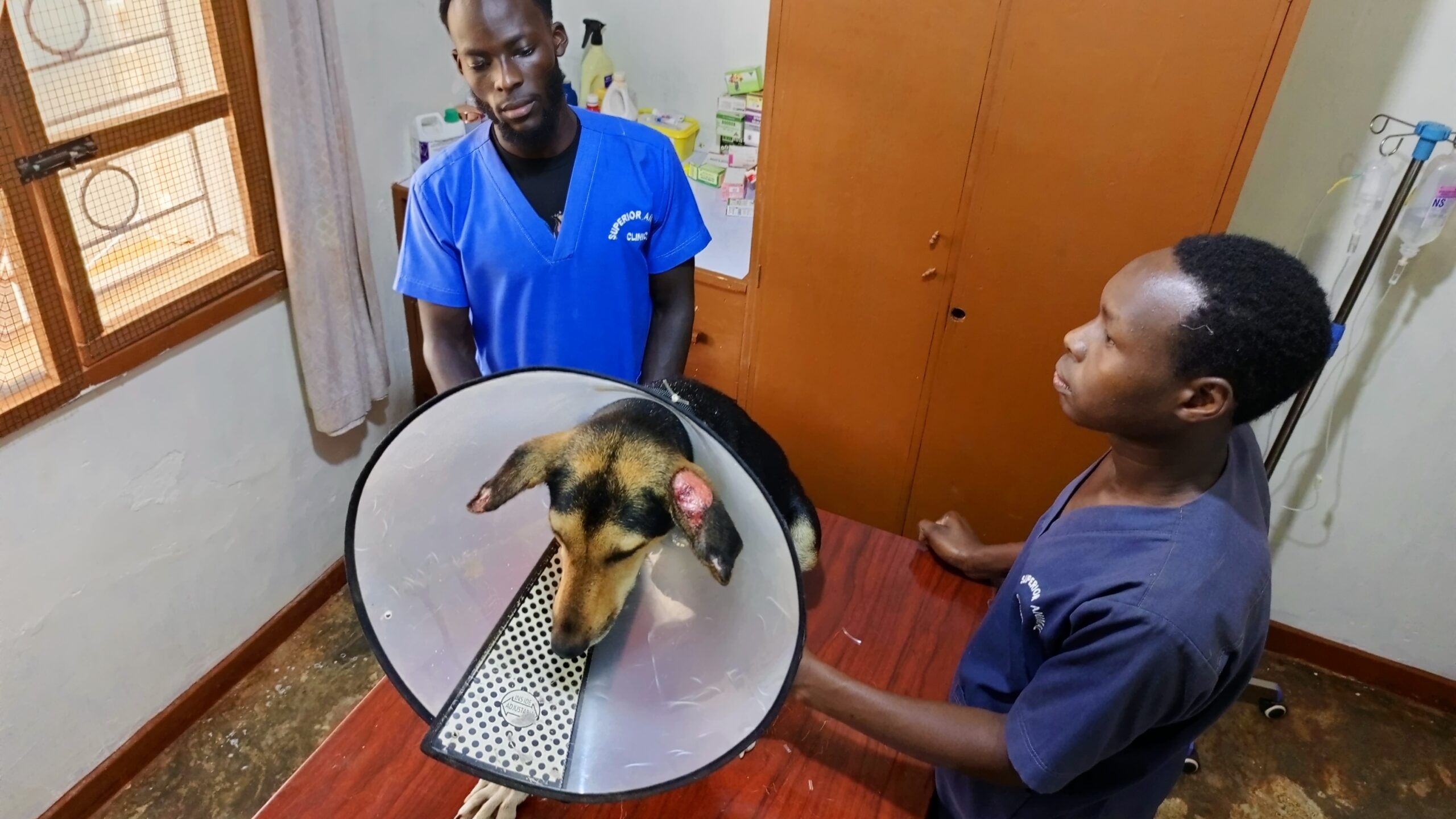
Ear wounds are a common problem seen in dogs across Uganda, yet many dog owners do not realize how serious they can become if they are ignored. A small cut, scratch, or swelling on a dog’s ear may not look like a big problem at first. However, because a dog’s ear has many blood vessels and is constantly moving, even minor injuries can bleed a lot and easily become infected.
In many parts of Uganda, especially in urban areas like Makindye, Kabalagala, Nsambya, Buziga, Muyenga, Rubaga, and Ntinda in Kampala, dogs are often kept as guard animals and spend a lot of time outdoors. This exposes them to many risks such as dog fights, tick infestations, ear infections, and injuries from barbed wire or sharp fencing around compounds. These situations make ear wounds one of the most frequently treated injuries in veterinary clinics.
Another challenge is Uganda’s warm and humid climate, which allows bacteria and parasites to thrive. When a dog scratches its ears due to ticks, fleas, or infections, the skin can quickly break and develop wounds. If the injury is not treated early, it may become infected, painful, and much harder to heal.
Many dog owners also delay seeking veterinary help, hoping the wound will heal on its own. Unfortunately, untreated ear wounds can worsen over time and lead to serious complications such as severe infections, ear hematomas, permanent ear damage, or even hearing problems.
Understanding the causes, warning signs, and proper treatment of ear wounds can help dog owners act quickly and protect their pets. With timely veterinary care and proper prevention, most ear wounds can heal well and dogs can return to their normal, active lives.
.
What Are Ear Wounds in Dogs?
Ear wounds refer to any injury affecting the ear of a dog. These injuries may involve cuts, scratches, swelling, or infections affecting different parts of the ear.
The most commonly affected parts include:
Ear Flap (Pinna)
The ear flap is the outer visible part of the ear. It is thin and contains many blood vessels, making it prone to bleeding and tearing.
Ear Canal
The ear canal is the inner passage leading to the eardrum. Injuries here may occur due to infections, mites, or excessive scratching.
Base of the Ear
The area where the ear attaches to the head can develop wounds from bites, infections, or repeated scratching.
Minor vs Serious Ear Injuries
Minor ear wounds include small scratches or superficial cuts that may heal quickly with proper care.
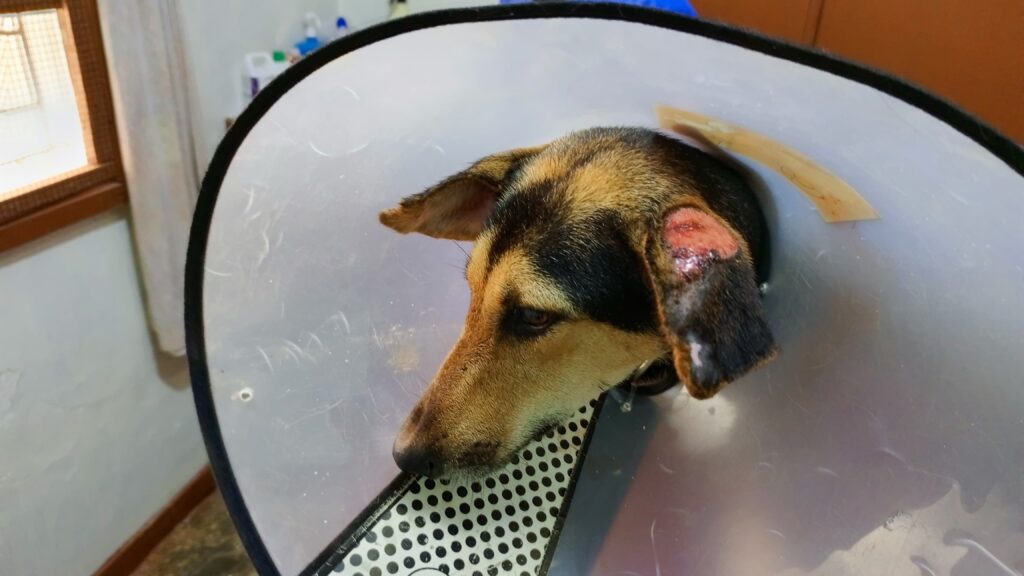
Serious ear injuries include deep lacerations, bite wounds, infected wounds, or ear hematomas that require professional veterinary treatment.
Common Causes of Ear Wounds in Dogs in Uganda
Ear wounds in dogs rarely happen without an underlying reason. In Uganda, several environmental, behavioral, and health factors contribute to these injuries. Because dogs rely heavily on their ears for communication and awareness, they often scratch, shake, or injure them when something is irritating. Below are some of the most common causes of ear wounds seen in dogs across Kampala and other parts of Uganda.
Dog Bites and Fighting
One of the leading causes of ear wounds among dogs in Uganda is biting during fights. Many dogs in Kampala are kept as guard dogs and are naturally territorial. When unfamiliar dogs enter their territory, fights can break out quickly.
During these fights, dogs often target the ears, face, and neck because they are exposed and easy to grab. The ear flap is thin and full of blood vessels, so even a small bite can lead to bleeding or deep cuts.
This is particularly common in areas where dogs roam freely or where compounds are close together, such as Makindye, Katwe, Rubaga, Nsambya, Buziga, and Kabalagala. Stray dogs may also attack domestic dogs, causing bite wounds that easily become infected if not treated quickly.
Allergies
Allergies are another major cause of ear wounds in dogs in Uganda. Dogs may develop allergies from several sources including:
- Food ingredients
- Dust and environmental allergens
- Certain shampoos or grooming products
- Flea bites
When a dog has an allergic reaction, the ears often become very itchy and inflamed. The dog will repeatedly scratch or rub its ears against the ground, furniture, or walls. Over time, this constant scratching can break the skin and create wounds.
In Kampala’s warm climate, allergies can also worsen because parasites such as fleas and ticks are common throughout the year.
Mange (Skin Mite Infestation)
Mange is a common skin disease in dogs in Uganda and can cause severe irritation around the ears. It is caused by microscopic mites that live in the skin.
Dogs suffering from mange usually experience intense itching, especially around the ears, face, and neck. Because the itching is so severe, dogs scratch continuously, sometimes until they create open wounds.
Mange is frequently seen in:
- Stray dogs
- Poorly nourished dogs
- Dogs living in crowded environments
In areas with many stray animals such as Kisenyi, Bwaise, Kawempe, and parts of Makindye, mange-related ear wounds are especially common.
Tick and Flea Infestations
Ticks and fleas thrive in Uganda’s tropical climate. These parasites often attach around the ears, where the skin is thin and blood supply is good.
When ticks or fleas bite the ear area, they cause irritation and itching. Dogs respond by scratching aggressively with their hind legs or rubbing their ears on rough surfaces. This behavior can easily lead to wounds.
Sometimes ticks also hide at the base of the ear, where they are not easily noticed by owners.
Sun Sensitivity (Sunburn)
Sun sensitivity is an often overlooked cause of ear wounds, especially in dogs with light-colored or thin ear skin.
In Uganda, the sun can be very strong, especially during dry seasons. Dogs that spend long hours outdoors without shade may develop sunburn on the ear tips.
Sunburned ears may:
- Become red and irritated
- Develop scabs or sores
- Crack or form wounds over time
Breeds with light or thin ears such as Boerboels, Pitbull-type dogs, and mixed breeds with pale skin are more vulnerable to sun-related ear injuries.
Excessive Scratching Due to Ear Infections
Ear infections caused by bacteria or yeast are another common trigger for ear wounds.
When a dog has an ear infection, the ear becomes:
- Itchy
- Painful
- Inflamed
Dogs will constantly shake their heads and scratch their ears to relieve the discomfort. Unfortunately, this scratching can damage the ear flap and create wounds that may later become infected.
Injuries from Sharp Objects Around the Compound
Many homes in Uganda use barbed wire, metal sheets, or wooden fences for security. Dogs running around the compound may accidentally cut their ears on these sharp surfaces.
Because dogs often squeeze through small openings in fences while chasing animals or exploring, their ears can easily get torn or cut.
Rough Ear Cleaning
Some well-meaning dog owners try to clean their dogs’ ears using sharp objects, sticks, or cotton buds pushed too deeply into the ear canal. This can accidentally injure the ear canal or the delicate skin of the ear flap.
Proper ear cleaning should always be done carefully and preferably under veterinary guidance.
Parasites Like Ear Mites
Ear mites are tiny parasites that live inside the ear canal. They cause severe irritation, leading dogs to scratch constantly.
Dogs with ear mites often shake their heads repeatedly and scratch their ears until wounds develop around the ear edges.
This condition is especially common in puppies and stray dogs that have not received regular parasite control.
Rough Grooming
Some dog owners attempt to clean their dogs’ ears using sticks, cotton buds pushed too deeply, or other sharp objects. Unfortunately, this can injure the delicate skin of the ear canal.
Improper ear cleaning can create small wounds that later become infected.
Road Accidents and Trauma
Dogs that roam freely in busy areas may be injured by vehicles, bicycles, or motorcycles. During these accidents, the ears may get cut or torn.
Road-related injuries are more frequently reported in high-traffic areas of Kampala such as Nakawa, Wandegeya, Nateete, and Kalerwe.
Ear Hematoma from Excessive Head Shaking
Sometimes ear wounds develop indirectly due to ear hematoma, a condition where blood vessels inside the ear flap burst.
This usually happens when a dog shakes its head violently because of irritation from parasites or infections. The swelling stretches the ear skin, and if the dog scratches aggressively, wounds may develop.
Thorns, Bushes, and Environmental Injuries
Dogs that spend time in bushy areas, gardens, or farms may injure their ears on thorns or rough vegetation.
In peri-urban areas around Kampala such as Seguku, Ndejje, and Lubowa, dogs often explore bushes and tall grass, which can scratch the ear skin and cause wounds.
Poor Nutrition and Weak Skin Health
Dogs that do not receive proper nutrition may develop weak skin and poor healing ability. This makes their ears more vulnerable to injuries and infections.
Poor nutrition is sometimes seen in stray dogs or dogs fed mainly on leftovers without balanced nutrients.
Types of Ear Wounds in Dogs
Ear wounds can appear in several forms depending on the cause and severity.
Minor Cuts and Scratches
These are superficial injuries that affect only the outer layer of the skin. They may heal quickly if kept clean.
Deep Lacerations
These are deeper cuts that penetrate through the ear tissue and may require stitches to heal properly.
Bite Wounds
Bite wounds are common after dog fights. They often become infected because bacteria from the attacking dog’s mouth enter the wound.
Ear Hematoma
An ear hematoma occurs when blood vessels inside the ear flap burst, causing swelling and fluid accumulation.
This condition often results from intense scratching or shaking of the head.
Infected Ear Wounds
When bacteria enter a wound, infection may develop, causing swelling, pus, pain, and foul odor.
Signs and Symptoms of Ear Wounds
Dog owners should watch for the following symptoms:
- Bleeding from the ear
- Visible cuts or tears on the ear flap
- Swelling of the ear
- Bad smell coming from the ear
- Dog shaking its head frequently
- Excessive scratching
- Pain when the ear is touched
- Pus or discharge from the wound
If any of these signs appear, veterinary attention should be sought immediately.
Veterinary Treatment for Ear Wounds in Dogs in Uganda
Treating ear wounds in dogs requires more than just cleaning the injury. Because the ear has many blood vessels and is constantly moving when dogs shake their heads, proper veterinary care is very important for healing and preventing infection. In Uganda’s warm climate, untreated wounds can become infected quickly, so early treatment by a veterinarian is always recommended.
At a professional veterinary clinic such as Superior Animal Clinic in Makindye, Kampala, treatment usually follows several important steps.
1. Careful Examination of the Ear
The first step is a thorough physical examination. The veterinarian carefully checks:
- The ear flap (pinna)
- The ear canal
- The base of the ear
- The surrounding skin
This helps determine how deep the wound is and whether there are underlying problems such as tick infestations, ear mites, or bacterial infections. In some cases, the vet may also check the dog’s temperature and general health to rule out infection spreading.
2. Cleaning and Disinfecting the Wound
Before any medication is applied, the wound must be properly cleaned. This step is extremely important because many ear wounds in Uganda are contaminated with dirt, bacteria, or parasites.
The veterinarian usually cleans the wound using:
- Normal saline (sterile salt water) to flush away dirt and debris
- Diluted povidone iodine to disinfect the wound
- Chlorhexidine solution as a safe antiseptic for skin wounds
This gentle cleaning removes bacteria and reduces the risk of infection.
If there is hair around the wound, the vet may carefully trim it to allow proper cleaning and healing.
3. Pain Control and Sedation (If Needed)
Some ear wounds are very painful, especially deep cuts or bite injuries. In these cases, the dog may need mild sedation so the vet can properly treat the wound without causing further stress or pain.
Pain relief drugs may include:
- Meloxicam injection or tablets to reduce inflammation and pain
- Carprofen in some cases for pain management
These medications help keep the dog comfortable during recovery.
4. Stitches for Deep Ear Cuts
If the wound is deep or the ear flap is torn, stitches may be necessary. The veterinarian will carefully close the wound using sterile sutures.
Common suture materials used include:
- Nylon sutures for strong skin closure
- Absorbable sutures in certain areas
Stitching helps:
- Stop bleeding
- Speed up healing
- Prevent infection
- Reduce scarring
In most cases, stitches are removed after 10 to 14 days once the wound has healed.
5. Antibiotics to Prevent Infection
Because ear wounds are very prone to infection, antibiotics are often prescribed. These help eliminate bacteria and prevent the wound from becoming infected.
Common antibiotics used by veterinarians in Uganda include:
Injectable antibiotics (for severe wounds):
- Oxytetracycline injection
- Penicillin-streptomycin injection
These injections are usually given once daily or every 48 hours depending on the drug.
Oral antibiotics (tablets or syrup):
- Amoxicillin-clavulanic acid tablets
- Cephalexin tablets
These are typically given twice daily for 5 to 7 days depending on the severity of the wound.
The veterinarian will advise the correct dosage based on the dog’s weight.
6. Topical Wound Medication
After cleaning the wound, topical medications are often applied to help the skin heal faster and prevent infection.
Common wound sprays and creams include:
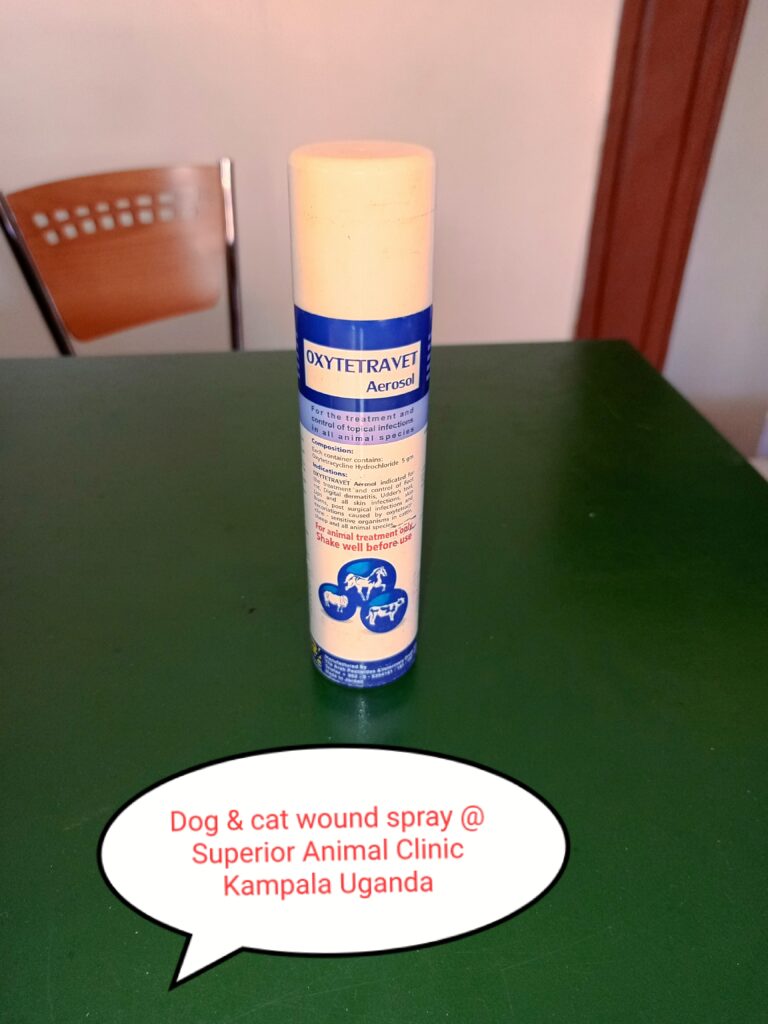
- Oxytetracycline wound spray (commonly called blue spray)
- Gentian violet spray for antiseptic protection
- Antibiotic wound creams containing neomycin or bacitracin
These medications are usually applied once or twice daily until the wound heals.
7. Treating the Underlying Cause
Many ear wounds occur because of other problems such as parasites or infections. If the root cause is not treated, the dog may keep scratching and reopen the wound.
Treatment may include:
Tick and Flea Control
Veterinarians often recommend parasite control medications such as:
- Simparica tablets given once monthly
- Bravecto chewable tablets which protect for up to 3 months
- Acaricide sprays or dips to kill ticks on the skin
These medications stop itching caused by parasites.
Treatment for Ear Mites
If ear mites are present, the vet may prescribe:
- Ivermectin injection
- Ivermectin ear drops
These kill the mites and reduce irritation.
Treatment for Ear Infections
If a bacterial or yeast infection is detected, medicated ear drops may be prescribed, such as:
- Gentamicin ear drops
- Antifungal ear medications
These are usually applied once or twice daily for 7 to 10 days.
8. Preventing the Dog from Scratching the Ear
Dogs often try to scratch or shake their heads after treatment, which can reopen the wound.
To prevent this, veterinarians may recommend:
- An Elizabethan collar (E-collar), also called a cone
- Bandaging the ear if necessary
This protection allows the wound to heal properly.
9. Follow-Up Veterinary Visits
Follow-up visits are important to monitor healing. The vet may check the wound after 3 to 5 days to ensure there is no infection and that the dog is healing well.
If stitches were placed, they are usually removed after 10 to 14 days.
Healing Time
Most ear wounds heal within 7 to 21 days, depending on the severity of the injury and how well the dog is cared for at home.
With proper veterinary treatment, dogs usually recover quickly and return to normal activity.
Where to Treat Ear Wounds in Dogs in Kampala
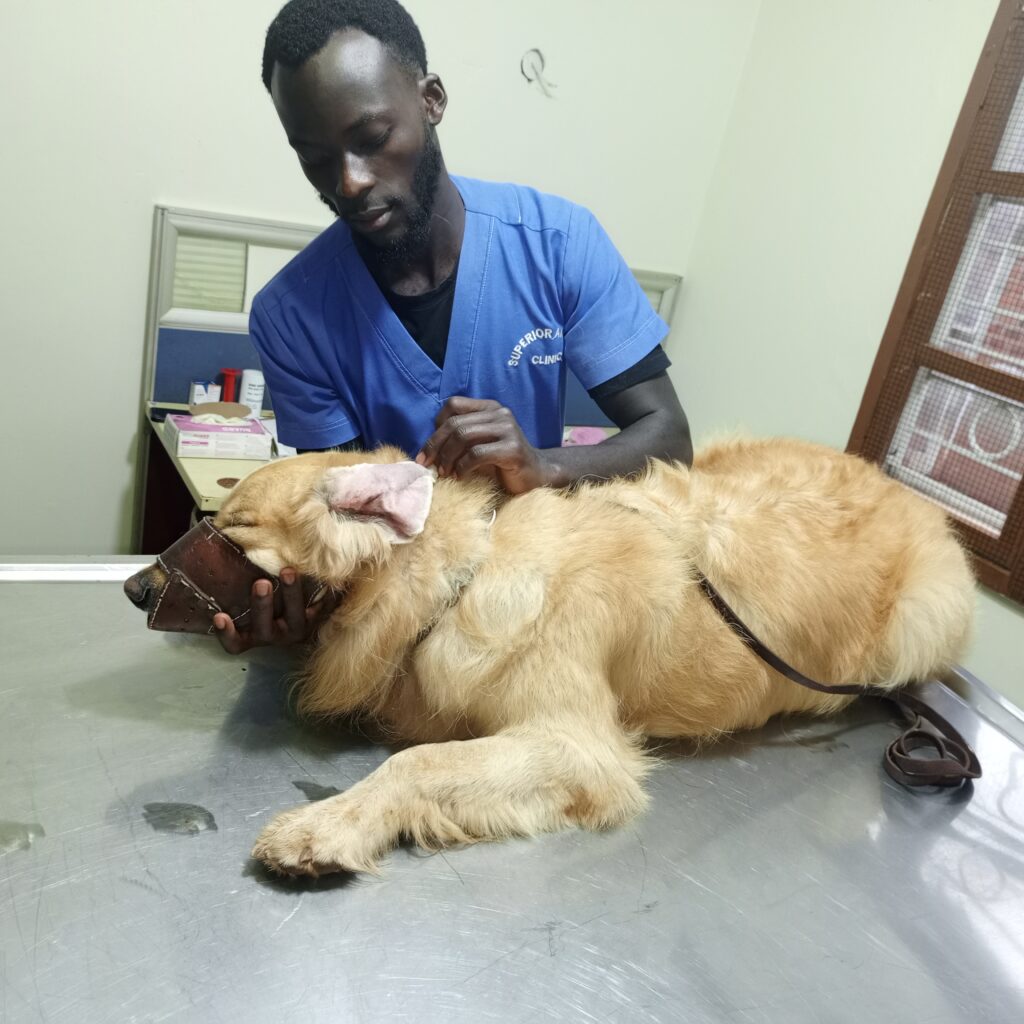
Dog owners in areas such as Makindye, Muyenga, Nsambya, Buziga, Seguku, Rubaga, and Kabalagala commonly bring dogs with ear injuries to Superior Animal Clinic.
The clinic provides professional wound cleaning, stitching, infection treatment, and parasite control to ensure dogs heal quickly and comfortably.
Dog Breeds More Prone to Ear Problems in Uganda
Certain dog breeds in Uganda are more prone to ear wounds.
German Shepherds
These dogs are commonly used as guard dogs and often get into territorial fights.
Rottweilers
Rottweilers are protective and may fight with other dogs, increasing the risk of ear injuries.
Boerboels
Because of their large size and guarding instincts, Boerboels may sustain bite wounds during territorial conflicts.
Local Mixed Breeds with Floppy Ears
Many Ugandan local dogs have floppy ears that trap moisture and parasites, leading to infections and scratching injuries.
FAQs About Ear Wounds in Dogs in Uganda
1. My dog has had a wound on its ear for 2 months and wound spray is not helping. Which veterinary hospital do you recommend in Kampala?
If your dog’s ear wound has lasted more than a few weeks, it likely means there is an underlying problem such as infection, parasites, or a deeper injury that needs professional treatment. Wound sprays alone may not be enough.
Dog owners in Kampala, Makindye, Muyenga, Nsambya, Rubaga, Buziga, Kabalagala, and Seguku commonly seek treatment at Superior Animal Clinic, which is well known for diagnosing and treating ear wounds in dogs. A veterinarian can properly clean the wound, check for infection, prescribe antibiotics, and treat the root cause so the wound can finally heal.
2. How much does it cost to treat a dog with ear wounds in Uganda?
The cost of treating ear wounds in dogs in Kampala, Uganda usually ranges between 85,000 and 125,000 Ugandan shillings, depending on the severity of the wound.
The price may include:
- Veterinary examination
- Professional wound cleaning and disinfection
- Antibiotics or anti-inflammatory medication
- Wound sprays or creams
- Follow-up care if needed
More severe injuries that require stitches may cost slightly more.
3. What is the cost of a dog wound spray in Uganda and where can I get it?
A good veterinary dog wound spray in Kampala usually costs around 25,000 Ugandan shillings.
You can get high-quality wound sprays for dogs at Superior Animal Clinic in Makindye along Salaama Road. These sprays help prevent infection, dry wounds, and promote faster healing when used correctly.
4. Can a dog ear wound heal on its own?
Small superficial wounds may heal on their own, but many ear wounds in dogs do not heal properly without veterinary treatment. Dogs often scratch or shake their heads, which keeps reopening the wound.
If the wound has not healed within 5 to 7 days, it is best to visit a veterinary clinic in Kampala for proper treatment.
5. Why does my dog keep scratching its ear wound?
Continuous scratching usually indicates an underlying problem, such as:
- Tick or flea infestation
- Ear mites
- Bacterial or yeast infection
- Allergies
- Pain from the wound
A veterinarian must treat the root cause; otherwise, the wound may keep worsening.
6. How long does it take for a dog ear wound to heal?
Most ear wounds in dogs heal within 7 to 21 days with proper treatment.
However, deeper wounds, infected injuries, or bite wounds may take 3 to 4 weeks to fully heal.
Early treatment always speeds up recovery.
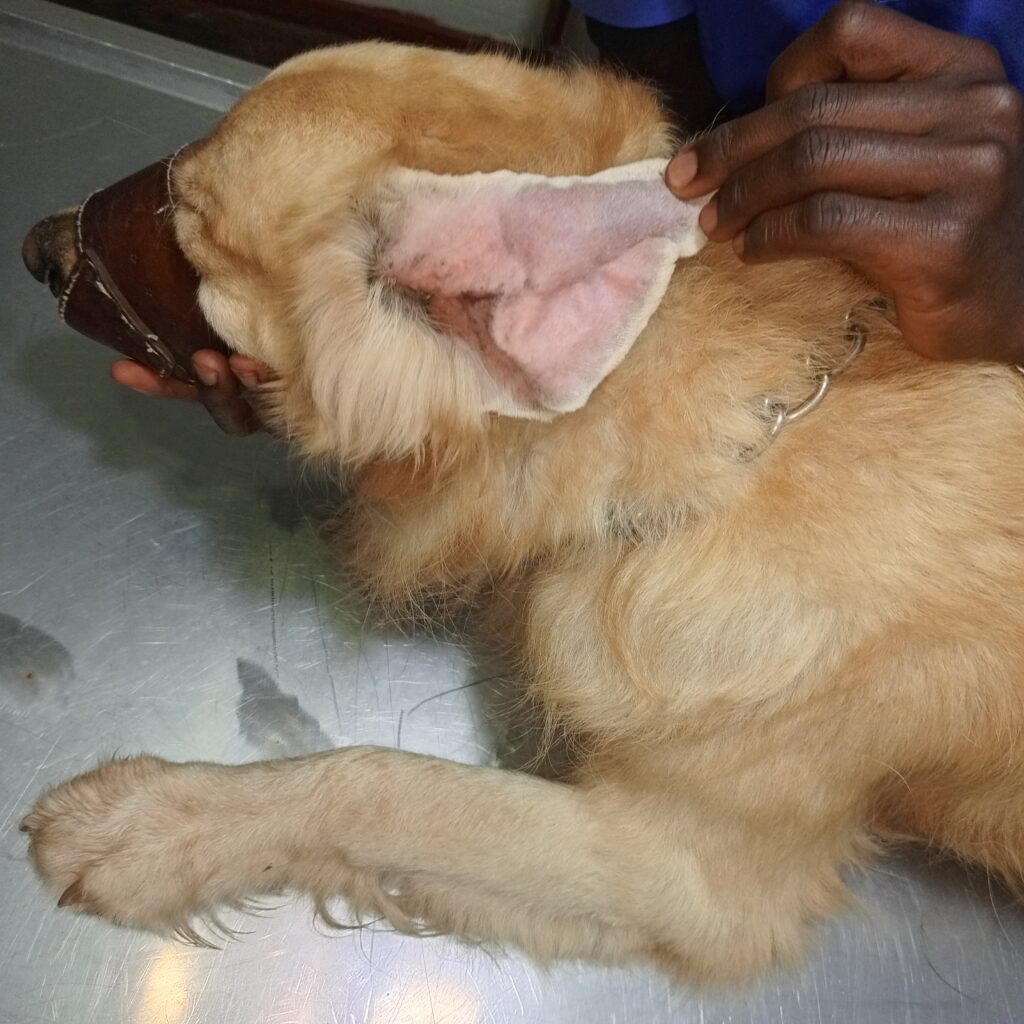
7. What should I do immediately if my dog gets an ear wound?
If your dog gets an ear injury:
- Stay calm and gently restrain the dog
- Stop bleeding with a clean cloth or gauze
- Rinse the wound with clean water or saline
- Avoid applying harsh chemicals
- Take the dog to a veterinary clinic as soon as possible
Early treatment prevents infection and complications.
8. Are ear wounds in dogs common in Kampala?
Yes. Ear wounds are quite common among dogs in Kampala areas such as Makindye, Buziga, Kabalagala, Nsambya, Rubaga, and Ntinda.
This is mainly due to:
- Dog fights
- Tick infestations
- Ear infections
- Injuries from fencing or barbed wire
Because many dogs are kept as guard dogs, ear injuries happen frequently.
9. Can ticks cause ear wounds in dogs?
Yes. Ticks can cause severe irritation around the ears. Dogs scratch intensely to relieve the itching, which can create wounds.
Using tick control medications such as Simparica or Bravecto helps prevent these problems.
10. When should I take my dog with an ear wound to a vet?
You should take your dog to a veterinary clinic immediately if you notice:
- Heavy bleeding
- Swelling of the ear flap
- Pus or discharge
- A bad smell from the wound
- Severe pain when touching the ear
- A wound that is not healing
Prompt treatment helps prevent serious infection and long-term ear damage.
Conclusion
Ear wounds are a common but often overlooked health problem affecting dogs in Uganda. These injuries may result from dog fights, parasite infestations, infections, or accidents around the home.
Because Uganda’s climate favors bacterial growth, even small ear wounds can quickly become infected if not treated early.
Dog owners should regularly check their dogs’ ears, control parasites, and seek veterinary care immediately when injuries occur.
Professional treatment ensures proper wound healing, prevents complications, and keeps dogs healthy.
For dog owners in Kampala, Makindye, Muyenga, Nsambya, Rubaga, Buziga, Seguku, Ndejje, Ntinda, and surrounding areas, Superior Animal Clinic is widely trusted for expert diagnosis and treatment of ear wounds and other veterinary conditions affecting dogs.
Early care can make the difference between a quick recovery and a serious health problem. Always prioritize your dog’s ear health and seek professional veterinary help when needed.