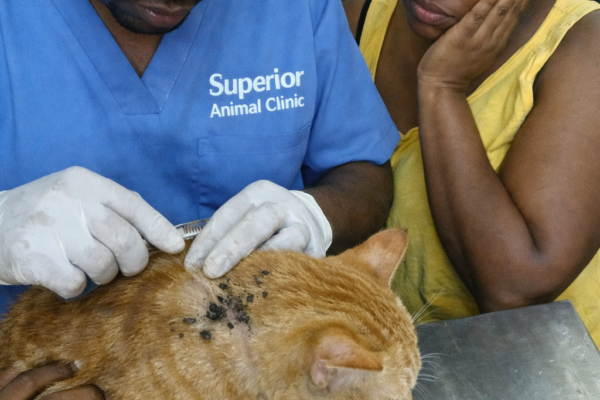
In Uganda, one of the most common external parasite on cats is fleas. They are tiny blood sucking insects that make both the pet owner and pet uncomfortable as they crawl and bite.
They might look like a small problem, but I don’t recommend ignoring them.
A few fleas can quickly become a much larger infestation. Flea eggs and other stages can also be found in the environment, including bedding, carpets, furniture, and other areas where your cat spends time.
As a veterinarian, my approach is simple: treat the cat and disinfect the environment where your cat lives and plays.
How Do I Know If My Cat Has Fleas?
Sometimes fleas are easy to see, but cats are excellent groomers and may remove many of the adult fleas before you notice them.
You may instead notice:
- Frequent scratching
- Excessive grooming or licking
- Small scabs on the skin
- Hair loss
- Restlessness
- Red or irritated skin
- Tiny dark particles in the coat
Those dark particles are sometimes called flea dirt. They are flea droppings and can be a useful clue that fleas are present.
If you’re unsure whether your cat has fleas, a veterinary examination can help confirm the problem.
Why Are Fleas a Problem?
Fleas don’t simply make cats and you uncomfortable. A significant infestation can cause persistent itching and skin irritation. Some cats can also develop flea allergy dermatitis, where their immune system reacts strongly to flea bites.
This can lead to intense itching, hair loss, scabs, and damaged skin. Heavy flea infestations can also be particularly concerning in young kittens, because significant blood loss may contribute to anemia.
Fleas can also become a problem in your house moving from the cat to the couch , bed and clothes. They can cause diseases to humans too.
Why Treating Only the Cat May Not Be Enough
This is one of the biggest things I explain to pet owners. You may treat your cat today and notice fewer fleas tomorrow, only to find them again a few days later.
That doesn’t necessarily mean the treatment failed. Fleas have a life cycle, and immature stages can remain in the environment.
Your cat may therefore become exposed again after treatment. That’s why effective flea control often involves:
- Treating the affected pet with an appropriate veterinary flea-control product.
- Cleaning areas where the pet sleeps and spends time.
- Washing bedding where appropriate.
- Treating other pets in the household when necessary.
- Maintaining ongoing parasite prevention.
Should I Use Any Flea Medicine I Find?
This is where I strongly advise caution.
Never assume that a flea product made for dogs is automatically safe for cats.
Cats process certain chemicals differently from dogs, and some products that are suitable for dogs can be dangerous to cats.
I have seen pet owners choose a product because it was cheaper, easier to find, or recommended by someone else.
My advice is simple:
Check with a veterinarian before putting a flea treatment on your cat.
The correct product depends on factors such as:
- Your cat’s age
- Body weight
- Health status
- Pregnancy or nursing status
- Other medications
- Severity of the infestation
You can check our Pet shop for some recommedations of Flea medicine
How I Approach Flea Problems at the Clinic
When a cat comes to Superior Animal Clinic with suspected fleas, I don’t just look for the insects.
I also want to know:
- How long the problem has been present.
- Whether other pets have fleas.
- Whether the cat is scratching or losing hair.
- Whether there are wounds or skin infections.
- Whether the cat has been treated previously.
- What flea-control products have already been used.
- Whether the cat is showing signs of other health problems.
Sometimes what looks like a simple flea problem may actually involve allergies, mites, fungal infections, bacterial infections, or another skin condition.
That’s why proper examination is valuable.
Superior Animal Clinic Can Help
At Superior Animal Clinic, we help pet owners manage both common and more complicated parasite problems.
Our veterinary services include:
- Flea and tick control
- Deworming
- Skin examinations
- Treatment of flea-related skin problems
- Veterinary consultations
- Vaccinations
- Nutritional advice
- Diagnostic services
- General cat and dog health care
- Preventive health programmes
We also provide veterinary pet health products, so you can get professional advice about which product is appropriate for your cat rather than choosing blindly.
My Advice as a Veterinarian
If you’ve noticed fleas on your cat, don’t panic. But don’t ignore them either.
Treat the problem properly, protect your cat from future infestations. And please don’t use a random dog flea product or household remedy on your cat.
If you’re unsure what to use, bring your cat to Superior Animal Clinic.
We can examine your pet, identify the problem, recommend an appropriate flea-control product, and help you establish a prevention plan.
Healthy cats aren’t just about treating illness when it appears. Good veterinary care is about preventing problems before they become bigger ones.