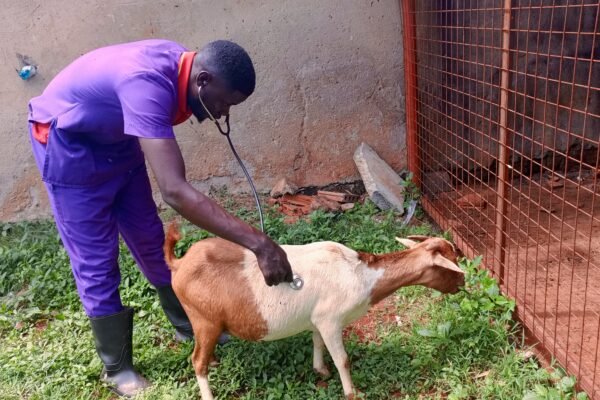
Seeing your goat with diarrhoea can be worrying, especially for farmers in Kampala and the surrounding areas of Uganda. Many people ask, “My goat has diarrhea. Should I be worried?”
My answer is usually: don’t panic, but don’t ignore it either.
Diarrhea can sometimes be caused by something relatively simple, such as a sudden change in feed. But in goats, persistent or severe diarrhea can also be a sign of parasites, infection, poor nutrition, poisoning, or other health problems.
The important thing is to look at the whole goat, not just the stool.
First, Look at the Goat, Not Just the Diarrhea
When a farmer tells me, “The goat has diarrhea,” the next things I want to know are:
- Is the goat still eating?
- Is it drinking water?
- Is it active or becoming weak?
- Is it losing weight?
- Is there blood in the droppings?
- Is the goat young or adult?
- How long has the diarrhea been going on?
- Has anything recently changed in its diet?
These details help us determine whether we are dealing with a mild digestive upset or something that needs urgent veterinary attention.
What Does Goat Diarrhea Look Like?
Normal goat droppings are usually small, firm pellets.
When these become soft, watery, or poorly formed, something may be affecting the digestive system.
The appearance can provide clues, but you cannot reliably diagnose the cause simply by looking at the stool.
For example, diarrhea may occur because of parasites, infection, dietary problems, or other conditions. In Uganda ,it is aslo belived that a goat might get diarrhea after eating a certain type of frog while its grazing.
Common Causes of Diarrhea in Goats
1. Worm Infestation
Internal parasites are one of the problems I consider when examining a goat with diarrhea, particularly if the goat is losing weight or looking weak.
Heavy internal parasite in goats can affect digestion, nutrition, and blood levels.
Other signs may include:
- Weight loss
- Poor growth
- Weakness
- Pale gums or inner eyelids
- Rough or dull coat
- Reduced appetite
This is one reason I don’t recommend farmers simply deworming every time a goat has diarrhea without first considering the likely cause.
2. Coccidiosis
Coccidiosis is often affects young goats.
It is caused by microscopic parasites that affect the intestinal tract. Kids kept in crowded or unhygienic conditions can be at greater risk.
Affected goats may develop:
- Diarrhea
- Poor growth
- Loss of appetite
- Weakness
- Dehydration
In severe cases, the condition can become life-threatening.
3. Sudden Changes in Feed
Goats have sensitive digestive systems.
If you suddenly change what a goat is eating, introduce large amounts of concentrates, or allow it to consume unusual amounts of certain feeds, digestive upset can occur. For example goats might get diarrhea when they eat alot of sweet potatoe leaves.
When advising farmers, I usually emphasize gradual feed changes rather than changing the diet overnight.
4. Poor-Quality or Contaminated Feed
Moldy, spoiled, or contaminated feed can cause digestive problems and potentially expose goats to harmful substances.
Feed should be stored properly and protected from moisture and contamination.
Clean drinking water is equally important.
5. Infections
Some bacterial, viral, and other infections can cause diarrhea.
This becomes particularly concerning when diarrhea is accompanied by:
- Fever
- Severe weakness
- Loss of appetite
- Blood in the stool
- Dehydration
- Rapid deterioration
These goats should be examined by a veterinarian rather than treated randomly at home.
Related: Best Goat Veterinary Services in Kampala
The Biggest Danger: Dehydration
When I examine a goat with severe diarrhea, one of my biggest concerns is dehydration.
The goat is losing water and electrolytes through the diarrhea. If this continues, the animal can become weak, stop eating, become unable to stand, and eventually die.
This is particularly dangerous in young kids, because they have fewer reserves and can deteriorate much faster.
A goat that is still eating, drinking, and active is very different from one that is lying down and becoming weak.
When Should I Call a Veterinarian?
I recommend getting veterinary help promptly if your goat:
- Has severe or persistent diarrhea.
- Has blood in the stool.
- Stops eating.
- Stops drinking.
- Becomes very weak.
- Is unable to stand.
- Is rapidly losing weight.
- Has a fever.
- Shows signs of dehydration.
- Is a young kid with significant diarrhea.
- Has several goats developing diarrhea at the same time.
If multiple goats become sick around the same time, I become particularly interested in feed, water, parasites, hygiene, and infectious causes.
That situation deserves proper investigation rather than treating each goat separately without finding the underlying problem.
Should I Give My Goat Antibiotics?
This is where I advise farmers to be careful. Not every case of diarrhea is caused by bacteria. Giving antibiotics unnecessarily may not solve the problem and can contribute to inappropriate antimicrobial use.
The correct treatment depends on the cause. A veterinarian may need to examine the goat, assess hydration, look at its history, and in some cases perform diagnostic tests or examine a stool sample.
Should I Deworm a Goat With Diarrhea?
Sometimes parasites are responsible, but diarrhea does not automatically mean the goat needs a dewormer.
Repeatedly giving dewormers without proper assessment can contribute to drug resistance, making parasite control more difficult in the future.
This is why I prefer to look at the goat’s age, body condition, symptoms, management system, parasite risk, and treatment history before recommending a parasite-control programme.
What Can Farmers Do to Prevent Diarrhea?
Prevention starts with good management.
I advise goat farmers to:
- Provide clean drinking water.
- Keep feeding areas clean.
- Avoid sudden changes in diet.
- Store feeds properly.
- Prevent goats from eating spoiled or moldy feed.
- Reduce overcrowding.
- Keep young kids in clean, dry areas.
- Maintain an appropriate parasite-control programme.
- Monitor goats regularly for weight loss and weakness.
- Seek veterinary advice when illness keeps recurring.
Good management may seem simple, but it can prevent many expensive problems.
What I Look For as a Veterinarian
When a goat comes to me with diarrhea, I don’t want to look at the stool alone.
I want to understand the entire animal.
I look at its:
- Appetite
- Hydration
- Body condition
- Temperature
- Gum and eyelid color
- Activity level
- Coat condition
- Abdomen
- Weight and growth
- Feeding history
- Deworming history
- Environment and management
Sometimes the diarrhea is the most obvious sign, but the real problem is somewhere else.
That is why veterinary examination matters.
How Superior Animal Clinic Can Help
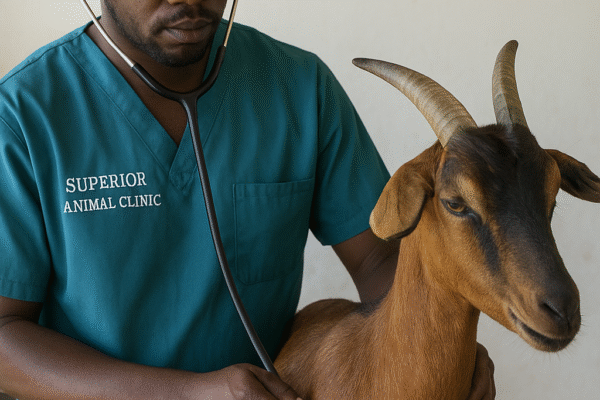
At Superior Animal Clinic, we provide veterinary care not only for dogs and cats, but also for livestock such as goats.
Our veterinary services can include:
- Goat health examinations
- Diagnosis and treatment of diarrhea
- Parasite assessment and control
- Deworming programmes
- Treatment of infections
- Nutritional advice
- Pregnancy and reproductive care
- Newborn kid health checks
- Farm visits and veterinary advice
- Preventive herd health programmes
Whether you keep a few goats at home or manage a larger herd, getting veterinary advice early can protect both your animals and your investment.
Final thought
If your goat has diarrhea but is still bright, eating, drinking, and behaving normally, monitor it closely and review recent changes in feed and management.
But if the diarrhea persists, becomes severe, or is accompanied by weakness, blood, dehydration, loss of appetite, or other signs of illness, don’t wait for the goat to become critically sick before seeking help.
As a veterinarian, I would much rather examine a goat early and tell a farmer, “You’ve brought it in at the right time,” than see the same animal after it has become severely dehydrated and weak.
If your goat is unwell, contact Superior Animal Clinic for professional veterinary advice and treatment. Healthy animals mean healthier herds and better returns for farmers.