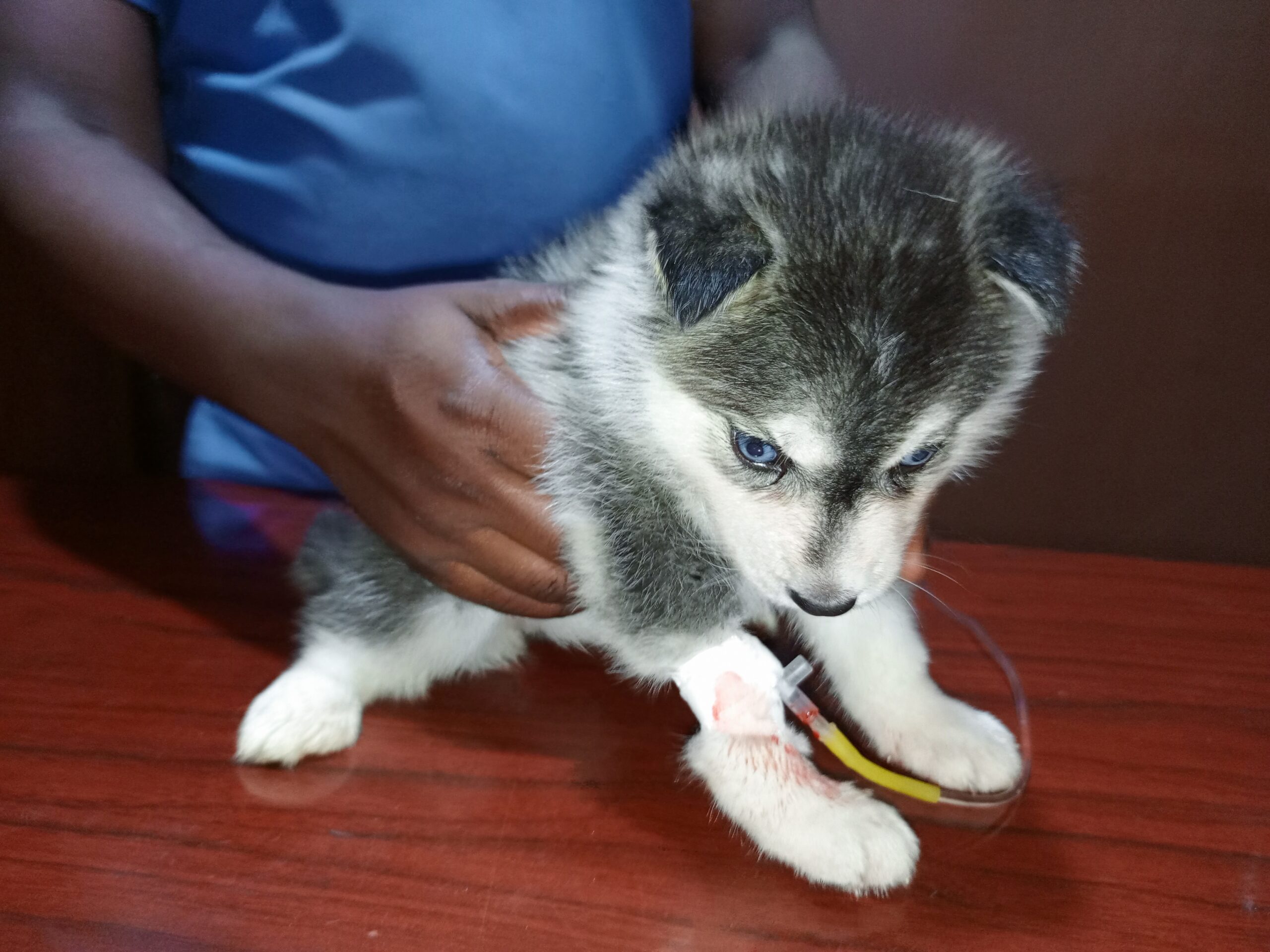
Few things are more alarming for a dog owner than seeing a puppy suddenly lose strength. A puppy that was playful in the morning may, within hours, become weak, unable to stand, trembling, or lying quietly and refusing to feed. This sudden change is frightening—and in many cases, it is a sign of a serious medical emergency.
Sudden weakness in puppies is not a normal part of growing up. It is the body’s urgent warning that something is going wrong internally. Puppies are delicate, with immature immune systems and very small energy reserves. When illness strikes, their condition can worsen extremely fast—sometimes within a single afternoon.
In Uganda, the risk is even higher. Our warm climate encourages parasites, infectious diseases spread easily among unvaccinated dogs, and many puppies are exposed to poor nutrition, early weaning, and environmental toxins. Diseases such as parvovirus, distemper, severe worm infestation, tick-borne infections, dehydration, and low blood sugar are common causes of sudden weakness in Ugandan puppies, especially in busy urban and peri-urban areas of Kampala.
What makes sudden weakness particularly dangerous is how quickly it can become fatal if ignored or treated at home. Waiting to “see if the puppy improves” or relying on traditional remedies often leads to delayed treatment—when the puppy is already in shock. Early veterinary intervention, on the other hand, can mean the difference between recovery and loss.
This article is written to help puppy owners in Uganda understand what sudden weakness really means, how to recognize it early, what causes it in our local environment, and what to do immediately. With the right knowledge and timely care from an experienced veterinary team such as Superior Animal Clinic, many puppies with sudden weakness can survive and go on to live healthy lives.
What Sudden Weakness Looks Like in Puppies in Uganda
Sudden weakness in puppies often starts quietly and worsens very fast. Many owners in Uganda say, “He was fine in the morning, but by evening he couldn’t even stand.” This rapid change is one of the most important warning signs that something serious is happening inside the puppy’s body.
Unlike normal tiredness, true weakness does not improve with rest. Instead, the puppy becomes less active, less responsive, and may collapse completely if treatment is delayed.
Common Signs Puppy Owners Notice
A puppy with sudden weakness may show one or several of the following signs:
- Difficulty standing or walking
The puppy may try to stand but fall over, drag the hind legs, or wobble as if dizzy. - Sudden lethargy or collapse
A normally playful puppy becomes quiet, lies down constantly, or collapses when trying to move. - Shaking or trembling
This is often mistaken for cold but may be due to low blood sugar, fever, pain, or poisoning. - Pale, white, or light-colored gums
Healthy puppy gums should be pink. Pale gums suggest anemia, blood loss, or shock and are very dangerous. - Poor feeding or refusal to suckle
Weak puppies stop nursing or refuse food completely, especially newborns and young puppies. - Crying, whining, or unusual silence
Some puppies cry continuously due to pain, while others become unusually quiet and unresponsive. - Cold body or cool ears and paws
This can indicate shock, dehydration, or severe illness. - Labored or fast breathing
Weak puppies may breathe faster as the body struggles to get enough oxygen.
Weakness vs Normal Puppy Tiredness
It is important for owners to know the difference:
- A tired puppy rests, sleeps, and later becomes active again.
- A weak puppy continues to worsen, struggles to move, refuses food, and becomes less alert even after resting.
If a puppy does not improve after resting for a short time, this is not normal and should be treated as an emergency.
Age Groups Most at Risk in Uganda
Certain age groups are more vulnerable to sudden weakness:
- Newborn puppies (0–2 weeks)
They can weaken suddenly due to infections, low blood sugar, cold stress, or poor milk intake. - Young puppies (3–12 weeks)
This is the highest-risk period for parvovirus, worms, dehydration, and hypoglycemia. - Weaning puppies
Sudden diet changes, stress, and poor-quality food can cause weakness very quickly.
Why Puppies Decline So Fast
Puppies in Uganda deteriorate faster because:
- Their bodies have very little energy reserve
- Heat, parasites, and infections are common
- Fluid loss from diarrhea or vomiting becomes fatal quickly
This is why sudden weakness should never be monitored at home. Immediate veterinary attention gives the puppy the best chance of survival.
Common Causes of Sudden Weakness in Puppies in Uganda
Sudden weakness in puppies rarely happens without a serious underlying problem. In Uganda, the warm climate, high parasite burden, infectious diseases, and feeding challenges make puppies especially vulnerable. Below are the most common causes, explained clearly with what happens in the body and what signs owners usually see.
1. Canine Parvovirus Infection
Cause:
Canine parvovirus is a highly contagious viral disease that mainly affects unvaccinated puppies, especially between 6 weeks and 6 months of age.
Parvovirus attacks the intestines and immune system. It causes severe damage to the gut lining, leading to massive fluid loss, dehydration, blood loss, and infection entering the bloodstream. Puppies weaken very fast, sometimes within hours.
Signs to Watch For:
- Sudden extreme weakness or collapse
- Vomiting
- Bloody or foul-smelling diarrhea
- Loss of appetite
- Rapid dehydration
- Cold body and pale gums
2. Canine Distemper
Cause:
A viral disease commonly seen in unvaccinated puppies in Uganda.
Distemper affects multiple body systems — respiratory, digestive, and nervous. The virus weakens the puppy’s body while causing fever and secondary infections, leading to progressive weakness.
Signs to Watch For:
- Weakness with fever
- Nasal and eye discharge
- Coughing
- Loss of appetite
- Muscle twitching or seizures
- Gradual collapse
3. Severe Worm Infestation (Intestinal Parasites)
Cause:
Heavy infection with worms such as hookworms and roundworms, which are very common in Uganda.
Hookworms suck blood from the intestines, causing severe anemia. Roundworms interfere with digestion and nutrient absorption. Puppies become weak because their bodies lack enough blood and nutrients.
Signs to Watch For:
- Pale gums
- Sudden weakness or inability to stand
- Pot-bellied appearance
- Poor growth
- Diarrhea, sometimes dark or bloody
4. Tick-Borne Diseases (Babesiosis)
Cause:
Infection transmitted by ticks, common in Kampala and surrounding areas.
Babesiosis destroys red blood cells, causing rapid anemia. When oxygen delivery drops, the puppy collapses and becomes extremely weak. Without urgent treatment, death can occur.
Signs to Watch For:
- Sudden collapse
- Very pale or yellow gums
- Dark or red-brown urine
- Fever
- Lethargy and weakness
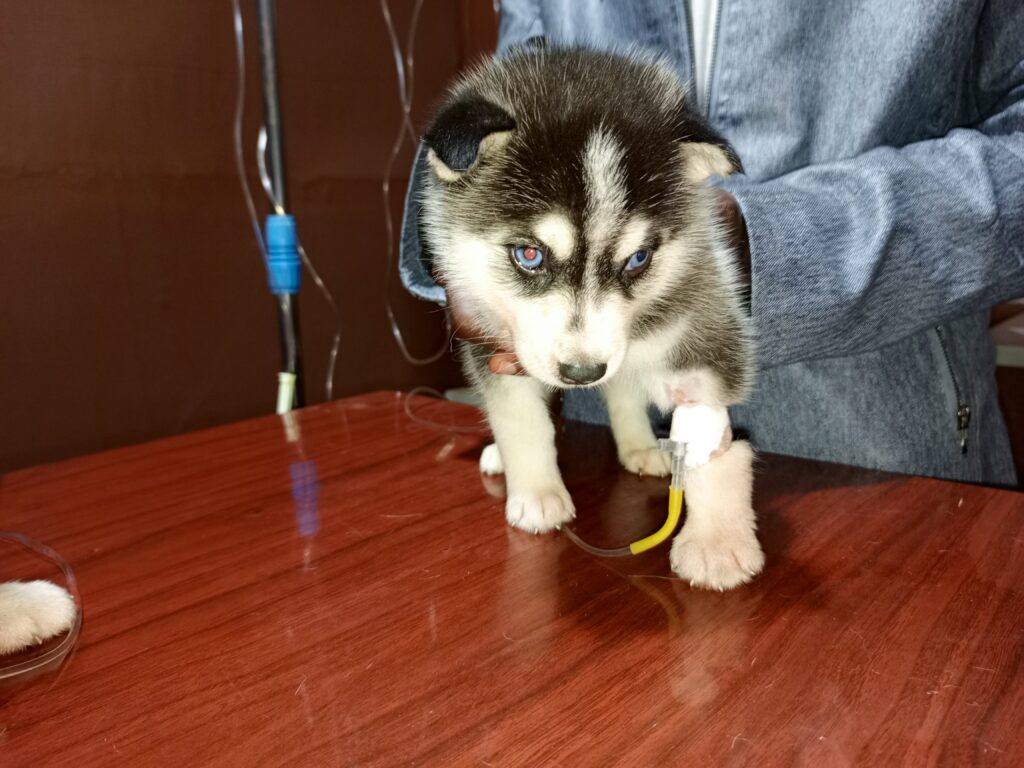
5. Hypoglycemia (Low Blood Sugar)
Cause:
Low blood sugar, especially in very young puppies, small breeds, or puppies not feeding well.
Puppies have small energy reserves. Long gaps between meals, illness, stress, or cold nights quickly drop blood sugar levels, leading to brain and muscle failure.
Signs to Watch For:
- Sudden weakness
- Shaking or tremors
- Crying or confusion
- Seizures
- Collapse or coma
6. Dehydration and Heat Stress
Cause:
High temperatures, diarrhea, vomiting, or inadequate fluid intake.
Puppies lose fluids faster than adult dogs. In Uganda’s warm climate, dehydration develops quickly, reducing blood volume and circulation, causing weakness and shock.
Signs to Watch For:
- Lethargy and weakness
- Dry gums
- Sunken eyes
- Poor skin elasticity
- Reduced urination
7. Bacterial Infections (Sepsis)
Cause:
Serious bacterial infection, often in newborn puppies or those living in unhygienic environments.
Bacteria enter the bloodstream, overwhelming the immune system. The body goes into shock, causing rapid loss of strength and collapse.
Signs to Watch For:
- Sudden weakness
- Fever or abnormally low body temperature
- Poor suckling
- Crying or unusual silence
- Rapid breathing
8. Poisoning and Toxic Exposure
Cause:
Exposure to rat poison, pesticides, insecticides, or human medications.
Toxins damage the nervous system, liver, or blood clotting mechanisms, leading to weakness and collapse. Some poisons act very fast.
Signs to Watch For:
- Sudden weakness
- Tremors or seizures
- Vomiting
- Excessive drooling
- Bleeding or difficulty breathing
9. Trauma and Internal Injuries
Cause:
Falls, being stepped on, rough handling, or road accidents.
Internal bleeding or organ damage may not be visible externally. Blood loss and pain quickly lead to weakness and collapse.
Signs to Watch For:
- Sudden weakness after an accident
- Crying when touched
- Difficulty breathing
- Pale gums
- Lying still or unwilling to move
10. Nutritional Deficiencies
Cause:
Poor-quality diets, early weaning, or unbalanced homemade feeding.
Lack of essential nutrients such as calcium, iron, and vitamins weakens muscles, bones, and blood, causing gradual or sudden collapse.
Signs to Watch For:
- Poor growth
- Weak legs or trembling
- Bone pain or deformities
- Pale gums
- Low energy levels

Best Treatment for Sudden Weakness in Puppies in Uganda
Treating sudden weakness in puppies is not about giving one drug. Successful treatment depends on rapid stabilization, identifying the exact cause, and giving targeted therapy as early as possible. In Uganda, delays of even a few hours can cost a puppy its life.
At well-equipped facilities like Superior Animal Clinic, treatment follows a structured emergency approach.
1. Immediate Stabilization (First Priority)
Weak puppies often arrive dehydrated, hypoglycemic, anemic, or in shock. The first goal is to stabilize the puppy before addressing the underlying disease.
a) Intravenous (IV) or Subcutaneous Fluids
Used to correct dehydration, shock, and electrolyte imbalance.
Commonly used fluids:
- Ringer’s Lactate
- Normal Saline
How it’s used:
- Given IV in severely weak or collapsed puppies
- Given under the skin (subcutaneous) in mild cases
- Rate depends on body weight and level of dehydration
This alone can dramatically improve a puppy’s strength within hours.
2. Treating Hypoglycemia (Low Blood Sugar)
Hypoglycemia is extremely common in Ugandan puppies, especially small breeds, sick puppies, and those not feeding well.
a) Dextrose (Glucose) Supplementation
- 5% or 10% dextrose added to IV fluids
OR - 50% dextrose diluted and given slowly IV in emergency cases
For home first aid (temporary only):
- A small amount of honey or glucose solution rubbed on the gums
- This is not treatment, only to buy time before reaching a clinic
Once blood sugar is corrected, many puppies become more alert very quickly.
3. Antibiotics for Infection & Sepsis
Because many weak puppies in Uganda are unvaccinated and exposed to poor hygiene, bacterial infections are common.
Commonly used antibiotics:
- Amoxicillin–clavulanic acid
- Ceftriaxone (for severe infections)
- Enrofloxacin (used carefully in young puppies)
- Metronidazole (especially if diarrhea is present)
How they’re used:
- Given by injection initially in weak puppies
- Switched to oral medication once stable
- Always dosed based on body weight
Early antibiotics prevent infections from spreading into the bloodstream.
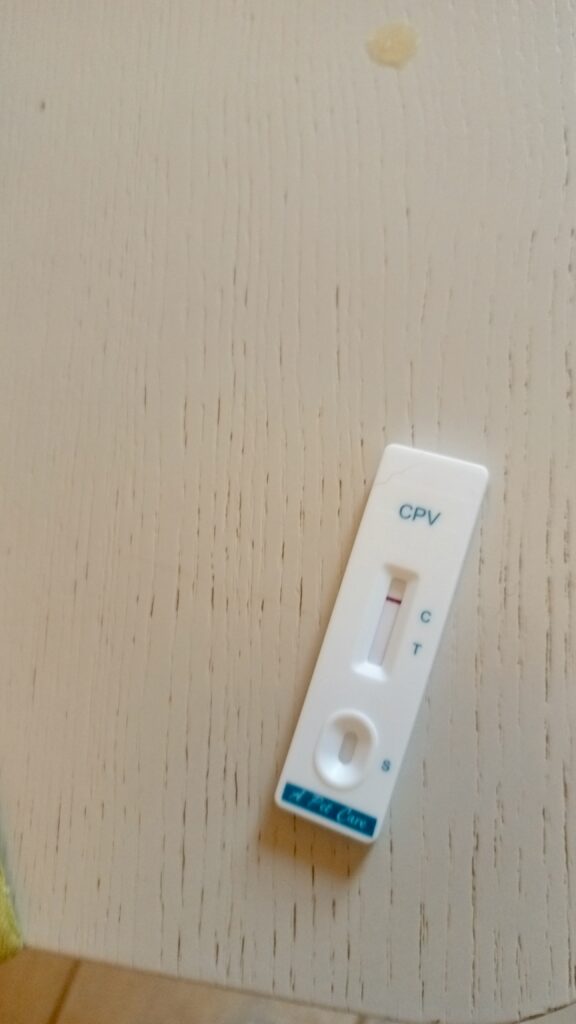
4. Treatment for Parvovirus (Supportive but Aggressive)
There is no direct cure for parvovirus, but aggressive supportive care saves lives.
Treatment includes:
- IV fluids with electrolytes
- Dextrose supplementation
- Broad-spectrum antibiotics
- Anti-vomiting drugs such as metoclopramide or ondansetron
- Vitamin support (B-complex)
With early hospitalization, many puppies survive parvo even in Uganda.
5. Deworming & Parasite Control
Parasites are a major cause of anemia and weakness.
a) Intestinal Worms
Drugs commonly used:
- Albendazole
- Fenbendazole
- Pyrantel pamoate
Used based on:
- Age of the puppy
- Severity of infestation
b) Tick-Borne Diseases (Babesiosis)
If babesiosis is suspected:
- Imidocarb dipropionate injection
- Supportive therapy with fluids and vitamins
Severely anemic puppies may require blood transfusion, which is available at advanced clinics like Superior Animal Clinic.
6. Treating Dehydration & Heat Stress
- IV fluids
- Cooling measures (never ice-cold baths)
- Monitoring body temperature
Heat stress is common in Kampala and surrounding areas during hot seasons.
7. Management of Poisoning
If poisoning is suspected:
- Activated charcoal (if presented early)
- IV fluids to flush toxins
- Supportive drugs depending on the poison
Never induce vomiting at home, as it can worsen the situation.
8. Nutritional & Vitamin Support
Weak puppies benefit from:
- Vitamin B-complex injections
- Iron supplementation if anemic
- Gradual reintroduction of feeding with easily digestible puppy food
Force-feeding is avoided until the puppy is stable.
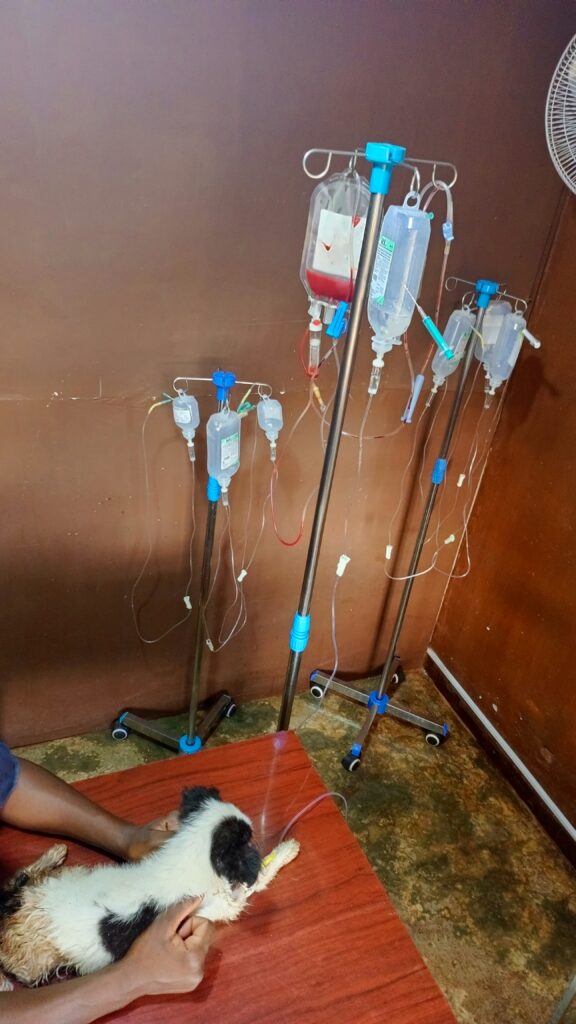
9. Hospitalization & Monitoring
Many weak puppies need:
- 24–72 hours of hospitalization
- Continuous monitoring of temperature, glucose, hydration, and response to treatment
This level of care significantly improves survival and is one reason Superior Animal Clinic is trusted for emergency puppy treatment in Uganda.
Key Takeaway for Puppy Owners in Uganda
Sudden weakness is never something to “watch and wait.”
Early fluids, glucose, antibiotics, and parasite control save lives.
The sooner a weak puppy receives professional veterinary treatment, the higher the chance of full recovery and a healthy future.
FAQs About Weak Puppies in Uganda
Q1. My puppy is weak, which veterinary hospital do you recommend in Uganda?
If your puppy is weak, collapsing, or not feeding well, the most recommended veterinary hospital in Uganda is Superior Animal Clinic. The clinic is well known for handling emergency puppy cases such as sudden weakness, parvovirus, severe worm infestation, dehydration, and low blood sugar. Superior Animal Clinic serves puppy owners from Makindye, Salaama, Nsambya, Katwe, Rubaga, Muyenga, Buziga, and all parts of Kampala, offering timely diagnosis, emergency treatment, and hospitalization when needed.
Q2. How much will it cost me to treat a weak puppy in Kampala, Uganda?
The cost of treating a weak puppy in Kampala, Uganda usually ranges between UGX 85,000 to UGX 125,000, depending on the cause of the weakness. This cost may include consultation, basic diagnostic tests, fluids, glucose support, antibiotics, and initial treatment. More severe cases such as parvovirus, babesiosis, or severe dehydration may require hospitalization, which can increase the overall cost. Early treatment is always more affordable and improves survival.
Q3. Who is the best vet for puppies in Kampala, Uganda?
One of the most trusted and experienced veterinarians for treating puppies in Kampala, Uganda is Dr. Sssonko Ronald. He is well known for managing emergency puppy cases including sudden weakness, infections, parasite-related anemia, and nutritional problems. He practices at Superior Animal Clinic and can be reached on +256 771 909 946 for urgent puppy care and professional veterinary advice.
Q4. Is sudden weakness in puppies an emergency in Uganda?
Yes. Sudden weakness in puppies is a medical emergency in Uganda. Puppies can deteriorate very quickly due to parvovirus, hypoglycemia, dehydration, or severe worm infestation. Delaying veterinary care, even for a few hours, can lead to death. Immediate presentation to a veterinary clinic greatly improves the chances of recovery.
Q5. Can a weak puppy recover fully with treatment?
Yes, many weak puppies in Uganda recover fully if they receive early and appropriate veterinary treatment. Puppies treated promptly with fluids, glucose, antibiotics, and parasite control often regain strength within 24–72 hours, depending on the underlying cause.
Q6. Is parvovirus the most common cause of puppy weakness in Kampala?
Parvovirus is one of the most common causes of sudden weakness in puppies in Kampala, especially in unvaccinated puppies aged 6–12 weeks. However, other causes such as worms, tick-borne diseases, low blood sugar, dehydration, and poisoning are also very common in Uganda.
Q7. What should I do at home if my puppy suddenly becomes weak?
If your puppy suddenly becomes weak, keep it warm and quiet and do not give human medicine. If low blood sugar is suspected, a small amount of honey or glucose can be rubbed on the gums as a temporary measure. The puppy should then be taken immediately to a veterinary clinic such as Superior Animal Clinic for proper treatment.
Q8. Can worms cause severe weakness in puppies in Uganda?
Yes. Worms, especially hookworms, are a major cause of severe weakness and anemia in puppies in Uganda. Heavy worm infestation can cause pale gums, collapse, and even death if not treated early with proper deworming and supportive care.
Q9. How fast can a puppy’s condition worsen once weakness starts?
A puppy’s condition can worsen within hours. Because puppies have small body reserves, dehydration, infection, or low blood sugar can progress very rapidly. This is why immediate veterinary attention is strongly advised.
Q10. Are traditional or herbal remedies safe for weak puppies?
No. Traditional or herbal remedies are not safe for treating weak puppies. They often delay lifesaving veterinary treatment and may worsen the puppy’s condition. Professional veterinary care is always the safest option.
Q11. Do weak puppies always need hospitalization?
Not always. Mild cases may improve with outpatient treatment. However, severely weak puppies, those with parvovirus, severe dehydration, or anemia often require hospitalization for monitoring, IV fluids, and supportive care, which significantly improves survival.
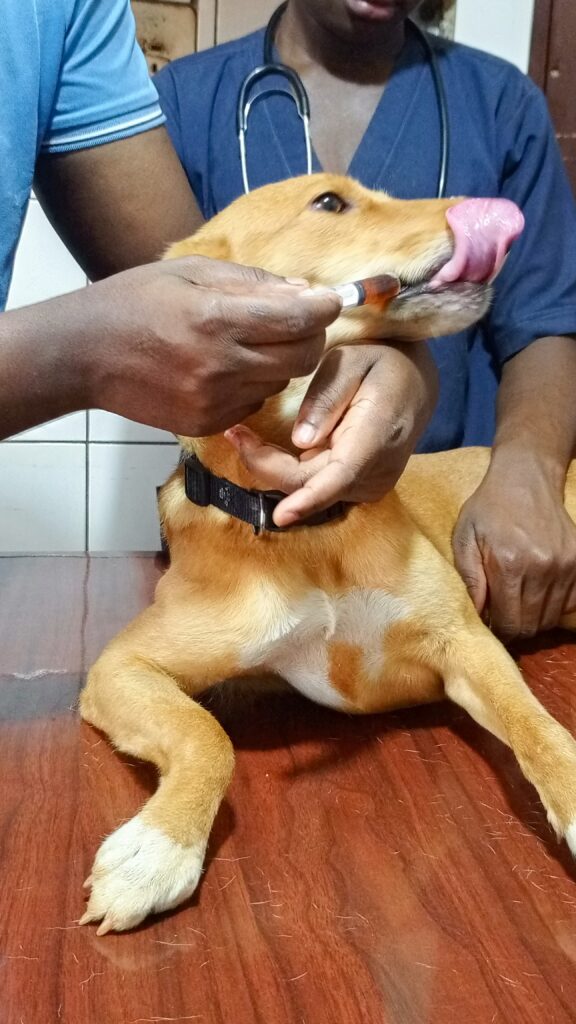
Q12. How can I prevent my puppy from becoming weak in the future?
You can prevent puppy weakness by ensuring proper vaccination, regular deworming, tick control, feeding high-quality puppy food, and scheduling early veterinary check-ups. Clinics like Superior Animal Clinic in Kampala offer preventive care plans tailored to puppies in Uganda.
Conclusion
Sudden weakness in puppies in Uganda is serious, fast-progressing, and often life-threatening. Common causes include infections, parasites, hypoglycemia, dehydration, poisoning, trauma, and poor nutrition.
Early recognition, prevention, and immediate veterinary care save lives.
If your puppy becomes weak, collapses, or behaves unusually, do not wait. Prompt professional treatment at a trusted facility like Superior Animal Clinic gives your puppy the best chance at recovery and a healthy future.