Why Dog Fever Should Never Be Ignored
When your dog suddenly becomes quiet, stops eating, loses interest in play, or starts shivering, it’s natural to worry. These are often the first signs dog owners in Kampala notice when their pet develops a fever or another underlying health problem.
One of the common signs that something may be happening inside your dog’s body is fever.
A fever in dogs is not a disease by itself. It is a warning sign that the body is fighting something, such as an infection, inflammation, injury, or another health problem.
In Kampala and many parts of Uganda, some of the most common causes of fever in dogs include:
- Tick-borne diseases such as ehrlichiosis and babesiosis
- Viral infections like parvovirus and distemper
- Bacterial infections
- Wounds and abscesses
- Ear and skin infections
- Kidney or liver infections
- Fever after vaccination
The good news is that many causes of fever can be successfully treated when diagnosed early. However, delaying veterinary care can allow a simple problem to become life-threatening.
If your dog has a fever, the most important step is finding out why the fever is happening, not only trying to reduce the temperature.
What Is Dog Fever?
A fever happens when a dog’s body temperature rises above the normal range because the immune system is responding to a problem.
Just like humans, dogs can develop fever when their body is fighting infection or inflammation.
Normal Dog Temperature vs Fever
A healthy dog’s normal body temperature is usually:
38.0°C to 39.2°C
A dog is generally considered to have a fever when its temperature rises above:
39.3°C
A temperature of:
- 39.3°C – 40°C may indicate fever that needs monitoring and veterinary advice.
- Above 40°C can become dangerous and requires urgent veterinary attention.
A very high temperature can damage organs and place stress on the heart, brain, and other body systems.
Why Do Dogs Develop Fever?
Fever is the body’s natural defense mechanism.
When your dog’s immune system detects a threat, it releases substances that tell the brain to increase body temperature. This creates an environment that can make it harder for some bacteria and viruses to survive.
However, fever also tells you that something needs attention.
A dog with fever may look like it is simply tired, but the underlying cause could be serious.
Can You Tell If a Dog Has Fever Just By Touching Its Nose?
Many dog owners in Uganda believe:
” If my dog’s nose is hot or dry, it has fever.”
This is one of the most common myths.
A dog’s nose temperature changes naturally throughout the day. A warm or dry nose does not always mean your dog has fever.
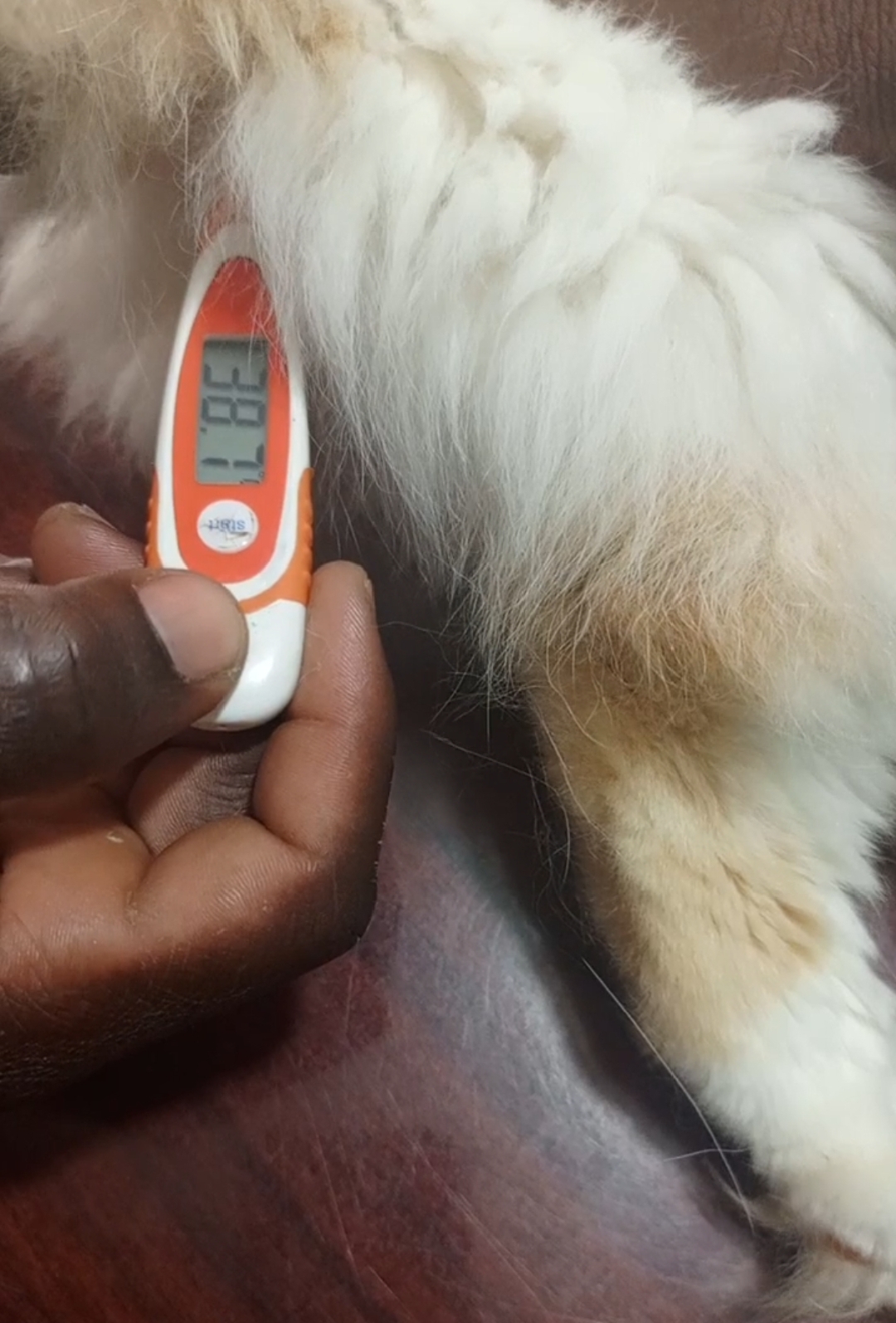
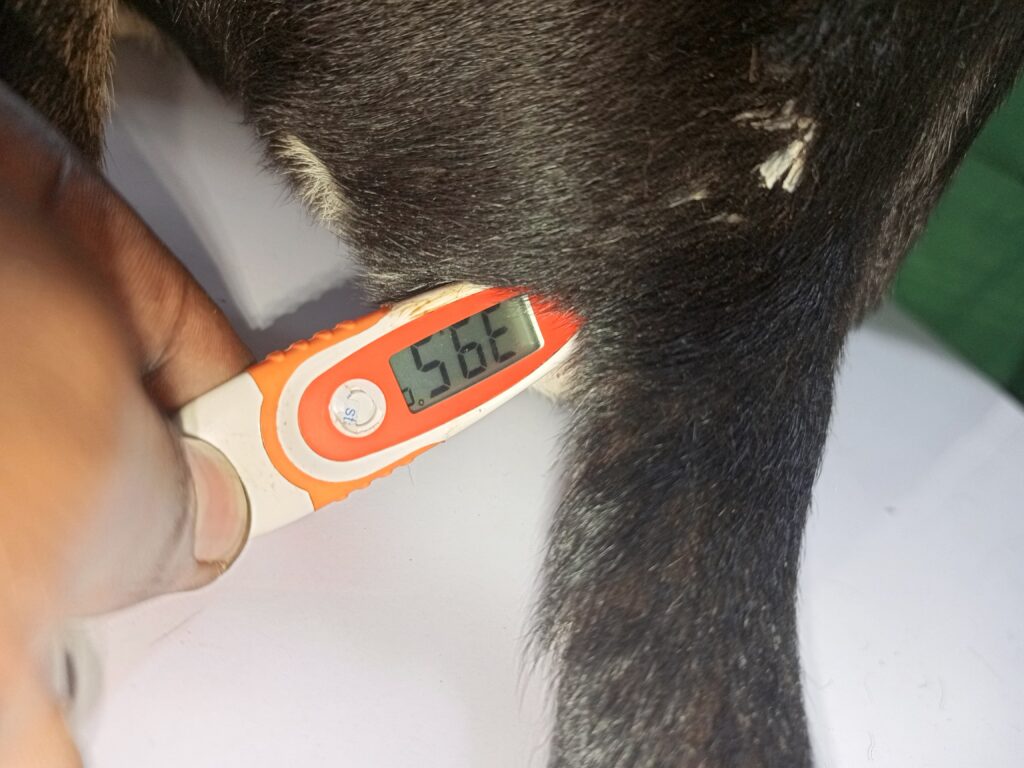
The only reliable way to confirm fever is by measuring your dog’s temperature using a thermometer.
Other signs such as weakness, appetite changes, shaking, vomiting, diarrhea, or breathing changes are often more useful indicators that your dog may be sick.
Signs and Symptoms of Fever in Dogs
The signs of fever can vary depending on the cause. Some dogs show mild symptoms, while others become seriously ill within a short time.
Early Warning Signs
1. Sleeping More Than Usual
A dog with fever may become less active and spend more time lying down.
You may notice that your normally playful dog:
- Does not greet you normally
- Avoids movement
- Sleeps for longer periods
2. Loss of Appetite
Many dogs with fever lose interest in food.
A dog refusing food should always be taken seriously, especially puppies, because they can become weak quickly.
3. Reduced Interest in Walking or Playing
If your dog suddenly stops enjoying activities it normally loves, it may be a sign that something is wrong.
Advanced Signs of Fever in Dogs
As the illness progresses, you may notice:
Shivering
Dogs can shake when they have fever because the body is trying to regulate temperature.
However, shivering can also happen due to pain, fear, anxiety, or cold weather.
Fast Breathing
Rapid breathing can occur when the body is under stress.
It may indicate fever, pain, infection, or another serious condition.
Vomiting and Diarrhea
Fever accompanied by vomiting or diarrhea can occur with infections such as parvovirus or bacterial diseases.
Dehydration
A sick dog may drink less water or lose fluids through vomiting and diarrhea.
Signs of dehydration include:
- Dry gums
- Weakness
- Sunken eyes
- Reduced skin elasticity
Weakness or Collapse
A dog that cannot stand, struggles to walk, or collapses needs urgent veterinary attention.
Common Causes of Fever in Dogs in Kampala and Uganda
1. Tick-Borne Diseases
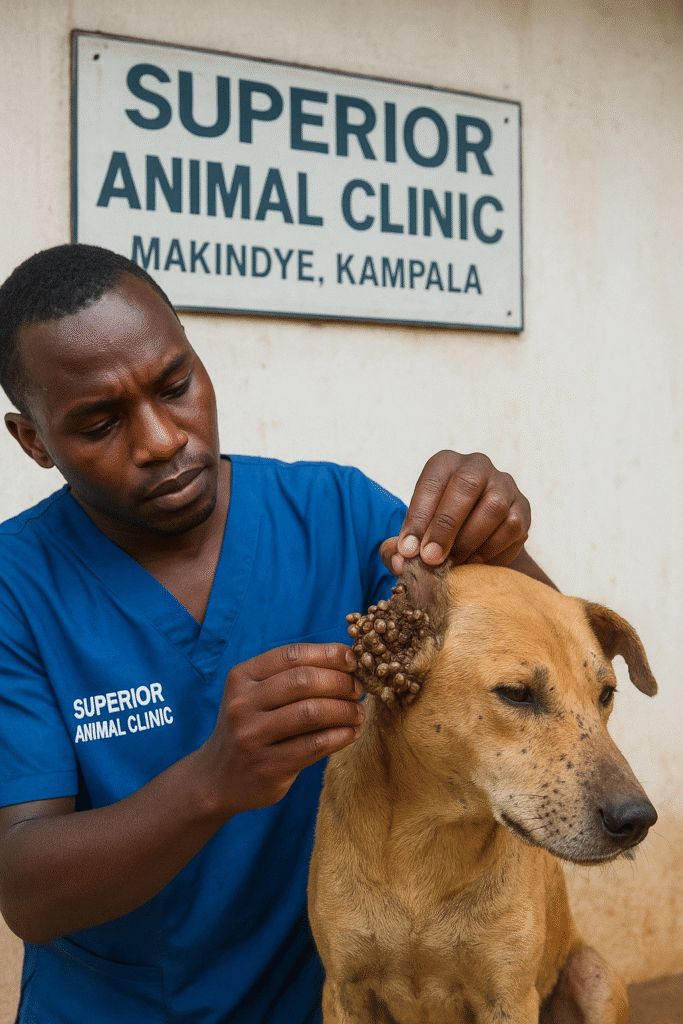
Ticks are one of the biggest health challenges affecting dogs in Uganda.
Warm weather, outdoor environments, and inadequate tick control make tick infections common.
Common tick-borne diseases include:
Ehrlichiosis
This disease affects the dog’s blood cells and can cause:
- Fever
- Weakness
- Loss of appetite
- Pale gums
- Weight loss
- Bleeding problems
Babesiosis
Babesiosis destroys red blood cells and may cause:
- Fever
- Weakness
- Anemia
- Dark urine
- Loss of appetite
Anaplasmosis
This can cause:
- Fever
- Joint pain
- Weakness
- Reduced activity
Regular tick prevention is one of the most important ways to protect dogs in Kampala.
2. Viral Infections
Parvovirus
Parvovirus is a serious and highly contagious disease, especially in puppies.
Signs may include:
- Fever
- Severe vomiting
- Bloody diarrhea
- Extreme weakness
- Loss of appetite
Young puppies can deteriorate quickly without treatment.
Distemper
Canine distemper may cause:
- Fever
- Nasal discharge
- Coughing
- Eye discharge
- Nervous system problems
Vaccination is the best protection against these diseases.
3. Bacterial Infections
Bacterial infections are another common cause of fever.
Examples include:
Wounds and Abscesses
A bite wound, scratch, or infected injury can allow bacteria to enter the body.
Signs include:
- Swelling
- Pain
- Pus
- Fever
Skin Infections
Severe skin infections can also cause fever, especially when bacteria spread deeper.
Ear Infections
A serious ear infection may cause:
- Fever
- Head shaking
- Ear scratching
- Pain
4. Internal Organ Infections
Problems affecting internal organs may also cause fever.
Examples include:
- Kidney infections
- Liver infections
- Urinary infections
These conditions often require veterinary tests to identify the exact problem.
Fever After Vaccination: Is It Normal?
Some dogs develop mild fever after vaccination.
This happens because the immune system is responding to the vaccine.
A mild temperature increase, tiredness, or reduced appetite for a short period can occur.
However, contact a veterinarian if your dog develops:
- High fever
- Severe weakness
- Difficulty breathing
- Facial swelling
- Vomiting
- Collapse
My Dog Has Fever But Is Still Eating. Should I Worry?
Yes, you should still monitor your dog carefully.
Some dogs continue eating despite having an infection or illness.
Eating does not always mean a dog is healthy.
Look for other signs:
- Weakness
- Temperature increase
- Vomiting
- Diarrhea
- Pale gums
- Breathing changes
Can I Give Human Medicine To My Dog?
No.
Many human medicines can be dangerous for dogs.
Avoid giving:
- Paracetamol
- Ibuprofen
- Diclofenac
These medicines can cause poisoning, stomach ulcers, kidney damage, or liver problems in dogs.
Always consult a veterinarian before giving medication.
My Dog Is Shivering. Does That Mean It Has Fever?
Not always.
Shivering can happen because of:
- Fever
- Pain
- Fear
- Anxiety
- Cold temperatures
The temperature must be checked to know whether fever is present.
How To Check Your Dog’s Temperature At Home
You need:
- Digital thermometer
- Lubricant
The safest method is usually checking temperature rectally.
Steps:
- Apply lubricant to the thermometer.
- Gently insert it into the rectum.
- Wait for the reading.
- Record the temperature and time.
Do not force the thermometer if your dog becomes aggressive or stressed.
What To Do If Your Dog Has Fever
Step 1: Keep Your Dog Comfortable
Provide:
- Clean drinking water
- A cool shaded area
- Rest
Avoid excessive exercise.
Step 2: Monitor Changes
Record:
- Temperature
- Appetite
- Water intake
- Vomiting or diarrhea
- Energy levels
Step 3: Contact a Veterinarian
Finding the cause is the most important step.
A veterinarian may recommend:
- Physical examination
- Blood tests
- Tick disease testing
- Other diagnostic tests
Step 4: Avoid Dangerous Home Remedies
Do not use:
- Alcohol baths
- Cold water shocks
- Human medicines
- Random antibiotics
These can delay proper treatment or cause harm.
When Is Dog Fever an Emergency?
Seek veterinary help immediately if your dog:
- Has a temperature above 40°C
- Cannot stand
- Stops eating completely
- Has seizures
- Has difficulty breathing
- Has pale gums
- Is vomiting repeatedly
- Becomes extremely weak
Preventing Fever in Dogs in Uganda
Vaccination
Keep your dog protected against preventable diseases through:
- Parvovirus vaccination
- Distemper vaccination
- Rabies vaccination
Tick Prevention
Use reliable tick prevention methods and maintain regular schedules.
Tick control should include:
- Checking your dog regularly
- Treating the environment
- Using recommended tick products
Routine Veterinary Checkups
Regular checkups help identify problems before they become serious.
Good Nutrition and Hygiene
A healthy immune system helps your dog fight infections.
Provide:
- Balanced meals
- Clean water
- Proper shelter
- Regular grooming
FAQs About Dog Fever in Kampala, Uganda
1. What is considered a fever in dogs in Kampala?
A dog is considered to have a fever when its body temperature rises above 39.3°C. In Kampala’s warm climate, symptoms like tiredness or panting are often mistaken for fever, so confirmation with a thermometer or veterinary examination is important.
2. What causes fever in dogs in Uganda?
Common causes include tick-borne diseases, viral infections such as parvovirus and distemper, bacterial infections, wounds, and sometimes reactions after vaccination. Areas like Makindye, Ntinda, Najjera, Muyenga, and Kira report many tick-related cases due to high exposure.
3. Can ticks really cause fever in dogs?
Yes. Ticks are one of the leading causes of fever in dogs in Uganda. Diseases like ehrlichiosis and babesiosis are transmitted through tick bites and can quickly cause fever, anemia, and weakness if not treated early.
4. How do I know if my dog has a fever without a thermometer?
You cannot confirm fever without a thermometer. However, signs such as weakness, loss of appetite, shivering, vomiting, and fast breathing may suggest illness that requires veterinary attention.
5. Is dog fever an emergency?
Yes, in many cases. If your dog has a temperature above 40°C, cannot stand, stops eating completely, has seizures, or shows severe weakness, immediate veterinary care is required.
6. Can dog fever go away on its own?
Mild fever may sometimes improve, but most cases in Kampala are linked to infections or tick-borne diseases that require treatment. Delaying care can make the condition worse and more expensive to treat.
7. Can I treat dog fever at home?
You can only provide supportive care such as water, rest, and a cool environment. Do not give human medicines like paracetamol or ibuprofen, as they can be toxic to dogs. Always consult a veterinarian.
8. How long does dog fever last?
It depends on the cause. Mild infections may resolve within a few days of treatment, while serious conditions like tick fever or parvovirus may require longer care and monitoring.
9. Can puppies get fever easily?
Yes. Puppies are highly vulnerable due to weak immunity. Fever in puppies should always be treated as urgent, especially if linked to parvovirus or tick-borne infections.
10. Does vaccination cause fever in dogs?
Yes, mild fever may occur after vaccination as part of the immune response. This usually resolves within 24–48 hours. Persistent fever should be checked by a veterinarian.
11. Can dog fever spread to humans?
No, fever itself is not contagious. However, some underlying infections may carry zoonotic risks, so hygiene and proper veterinary care are important.
12. When should I take my dog to a vet in Kampala?
You should visit a vet immediately if your dog shows fever, vomiting, weakness, refusal to eat, or suspected tick infestation. Early diagnosis improves recovery outcomes.
13. How much does it cost to treat dog fever in Kampala?
The cost of treating dog fever in Kampala depends on the severity and cause:
- One-off consultation & treatment: UGX 85,000 – 125,000
- Hospital admission cases: UGX 250,000 – 450,000
More severe cases such as tick-borne diseases or parvovirus may require additional diagnostics, fluids, and supportive care.
14. Where can I take my dog for fever treatment in Kampala?
If your dog is showing signs of fever, weakness, or illness, you can take them for professional diagnosis and treatment at:
Superior Animal Clinic
The clinic provides:
- Fever diagnosis and treatment
- Tick-borne disease testing and management
- Emergency veterinary care
- Hospital admission for critical cases
- Home veterinary visits across Kampala
Home visits are available in areas including Muyenga, Munyonyo, Buziga, Ntinda, Naalya, Kira, Najjera, Bukoto, Kololo, Naguru, Lubowa, Makindye, and surrounding neighborhoods.
Conclusion
Dog fever is a warning sign that should never be ignored.
A fever is not the disease itself; it is the body’s response to an underlying problem.
Whether caused by ticks, infections, wounds, or internal disease, early diagnosis gives your dog the best chance of recovery.
If your dog has fever, weakness, loss of appetite, shaking, vomiting, or unusual behavior, seek veterinary advice as soon as possible.
Need Help With A Dog Showing Fever In Kampala?
Superior Animal Clinic provides dog fever diagnosis and treatment services in Kampala, including veterinary consultations, laboratory testing, medication, and home veterinary visits.
Home visits are available in areas including:
Muyenga, Munyonyo, Buziga, Ntinda, Naalya, Kira, Najjera, Bukoto, Kololo, Naguru, Lubowa, Makindye, and surrounding Kampala areas.
Early treatment can save your dog’s life.