In my previous article, I wrote about common diseases that affect dogs in Uganda. One of the the most common disease is Parvo.
Parvovirus is one of the most serious diseases a puppy can develop. It can progress quickly, especially in young, unvaccinated puppies, and without proper veterinary treatment it can become life-threatening.
At Superior Animal Clinic, parvovirus is among the conditions encountered in dogs during veterinary care and home visits.
What Is Parvo in Dogs?
Canine parvovirus, commonly called parvo, is a highly contagious viral disease that mainly affects dogs.
Puppies are particularly vulnerable, especially when they have not completed their vaccination schedule. Parvo can cause severe vomiting, diarrhoea, dehydration, weakness and it is one of the reasons parvo is so dangerous to a puppy as it can deteriorate quickly.
A puppy that seemed playful in the morning may become noticeably weak and stop eating later in the day. This is why pet owners should not simply wait several days to see whether the puppy improves.
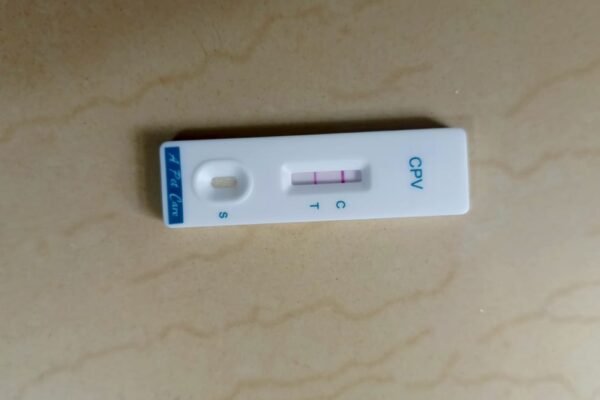
Positive parvo test kit
What Causes Parvo in Puppies?
Parvo spreads when a dog comes into contact with the virus. The virus can be carried through contaminated faeces, saliva and contaminated environments. It can also be transferred indirectly on contaminated objects, surfaces, footwear or other items.
This means a puppy does not necessarily need to have direct contact with a visibly sick dog to be exposed. For example, a puppy could potentially encounter contaminated material in an area where other dogs have passed.
This is one reason why taking an unvaccinated puppy to places where many dogs gather can increase its exposure risk.
Parvo Symptoms in Puppies
The symptoms can vary in severity, but some of the common warning signs include:
1. Vomiting
A puppy with parvo may vomit repeatedly. Continued vomiting is concerning because it dehydrates the puppy.
2. Severe diarrhoea
Diarrhoea is another major warning sign. It may become frequent and severe. If a puppy develops significant diarrhoea together with vomiting and weakness, veterinary attention should not be delayed.
3. Loss of appetite
A normally energetic puppy may suddenly refuse food. A puppy that is not eating while also vomiting or having diarrhoea can become weak and dehydrated rapidly.
4. Weakness and lethargy
Instead of playing, running around or responding normally, the puppy may spend much of its time lying down or in hiding.
5. Dehydration
Vomiting and diarrhoea can cause substantial fluid loss.
Signs of dehydration can accompany serious illness, particularly when the puppy is unable to keep fluids down.
6. Rapid deterioration
Perhaps the most important thing for owners to understand is that parvo can become serious quickly. Do not wait until a puppy is extremely weak before contacting a veterinarian.
How Is Parvo Treated?
Treatment generally focuses on supporting the puppy while its body fights the infection and addressing complications such as dehydration and weakness.
Depending on the puppy’s condition, veterinary treatment may involve:
- Fluid therapy
- Medication to control vomiting
- Medication and supportive treatment for diarrhoea
- Nutritional support
- Deworming where appropriate
- Monitoring of the puppy’s condition
- Hospital admission for severe cases
The treatment required depends on how sick the puppy is.
A puppy that is still relatively stable may be managed differently from one that is severely dehydrated or unable to keep anything down.
How Much Does Parvo Treatment Cost in Uganda?
Veterinary treatment costs vary according to the severity of the disease, the treatment required and whether the puppy is treated at home or admitted.
Based on the treatment information provided for Superior Animal Clinic, the indicative costs are:
Home or one-off treatment
UGX 120,000–165,000
The indicated package includes injections on the treatment day, tablets to be administered at home for approximately 14 days and deworming.
Admission for 8–14 days
Approximately UGX 450,000
The indicated admission package includes:
- Feeding
- IV fluid treatment
- Deworming
- Routine bathing
These are indicative costs rather than a guaranteed quotation. A severely ill puppy may require additional medication, investigations or longer admission.
Can Parvo Be Treated at Home?
This is one of the most important questions puppy owners ask.
Some veterinary cases may be managed at home after assessment, particularly where the veterinarian determines that the puppy is stable enough and the owner can administer the prescribed treatment correctly.
However, do not attempt to manage suspected severe parvo entirely on your own.
A puppy that is repeatedly vomiting, severely weak, dehydrated or unable to eat may require intensive veterinary support and possibly hospital admission.
Giving random human medicines or waiting several days for the puppy to “get better” can delay appropriate treatment.
How to Prevent Parvo in Puppies
Prevention is extremely important because puppies are particularly vulnerable.
1. Vaccinate your puppy
Vaccination is one of the most important protections against canine parvovirus.
Follow the vaccination schedule recommended by your veterinarian and make sure your puppy receives all the necessary doses.
Do not assume that one vaccination immediately means the puppy is fully protected.
Your veterinarian can advise you on the appropriate vaccination schedule based on the puppy’s age and vaccination history.
2. Be Careful Where Your Puppy Goes
Young puppies that have not completed their vaccinations should be handled carefully around environments where many dogs gather.
This is especially important when taking a new puppy around busy neighbourhoods, dog parks, kennels or other places with high dog traffic.
For a puppy living in Muyenga, Buziga, Makindye or Lukuli and other sub- urban areas of Kampala, avoid unnecessary exposure to potentially contaminated areas until your veterinarian advises that the puppy is adequately protected.
3. Keep the Puppy’s Environment Clean
Good hygiene is an important part of disease prevention. Clean areas where your puppy eats, sleeps and spends time, and dispose of dog faeces responsibly.
If a dog in the household has been diagnosed with parvo, speak to a veterinarian about appropriate cleaning and isolation procedures because the virus can persist in the environment.
4. Avoid Contact With Sick Dogs
If another dog is showing signs such as severe vomiting and diarrhoea, keep your puppy away from it until the cause has been established.
This is particularly important if your puppy has not completed its vaccinations.
When Should You Take a Puppy to a Vet?
Take your puppy for veterinary assessment if you notice:
- Repeated vomiting
- Severe or persistent diarrhoea
- Refusal to eat
- Extreme weakness
- Signs of dehydration
- Sudden deterioration
- A combination of vomiting and diarrhoea
- A young puppy becoming unusually quiet or unresponsive
If a young puppy has both vomiting and diarrhoea, don’t wait several days before seeking veterinary advice.
Early veterinary assessment gives the veterinarian a better opportunity to determine what is happening and start appropriate supportive care.
Final thought
Parvo isn’t something that only happens to dogs in rural areas. Puppy owners across Kampala, including Makindye, Buziga, Muyenga, Nsambya, Kabalagala, Lukuli, Katwe and surrounding areas, need to take it seriously.
The good news is that responsible puppy ownership can significantly reduce the risk.
Vaccinate your puppy, practise good hygiene, limit unnecessary exposure before vaccination is complete and seek veterinary attention quickly when symptoms appear.
If your puppy suddenly stops eating, starts vomiting or develops severe diarrhoea, don’t simply assume it ate something bad.
Contact a veterinarian and have the puppy assessed.
Need veterinary help in Kampala?
Superior Animal Clinic provides veterinary care for dogs and other pets in Kampala, including veterinary consultations and treatment for conditions affecting puppies and adult dogs.
Call or contact the clinic to arrange a veterinary consultation or ask about home veterinary services.