
If you’ve ever looked into your pet’s eyes and felt they’re part of your family — this article is for you.
In Uganda, our dogs and cats don’t just guard our homes or chase mice — they share our beds, our meals, and our hearts. They greet us at the gate, comfort us when we’re sad, and never judge us no matter what life throws our way.
But as loving as we are, many of us unknowingly follow myths that have been passed down from neighbors, relatives, or boda riders — beliefs that could quietly harm the very pets we love so much. From “teething kills puppies” to “cats don’t need vets,” these old sayings have shaped how Ugandans care for their animals for generations.
At Superior Animal Clinic in Makindye, Kampala, we’ve seen firsthand how small misunderstandings can lead to big health problems. That’s why this article is here — to help every pet owner in Uganda separate fact from folklore and learn the real truth about dog and cat care.
So grab a cup of tea, call your furry friend to your side, and let’s explore the most common pet myths Ugandans still believe — and what your vet really wants you to know.
🐶 Dog Myths in Uganda
1. “Dogs don’t need vaccines if they stay at home.”
Why people believe it: Many owners think only street dogs catch diseases.
Truth: Deadly viruses like parvovirus and rabies spread through people, shoes, or other pets.
Vet says: All dogs — even indoor ones — must be vaccinated yearly.
2. “Local dogs don’t get sick.”
Origin: Local breeds are seen as “strong” or “immune.”
Reality: Local or mixed-breed dogs can still get tick fever, worms, and mange.
Vet tip: Strength isn’t immunity. Regular vet checks and deworming save lives.
3. “Giving garlic kills worms.”
Truth: Garlic damages a dog’s red blood cells and can cause anemia.
Vet says: Always use vet-prescribed dewormers — never herbs or human medicine.
4. “Bathing dogs daily keeps them healthy.”
Why it’s wrong: Too much bathing removes natural skin oils, leading to itching and dandruff.
Vet advice: Bathe once every 2–3 weeks using mild dog shampoo.
5. “Dogs feel hot, so they must have a fever.”
Reality: Normal dog temperature is warmer than humans — around 38–39.2°C.
Vet tip: Use a thermometer, not your palm. Visit a vet if your dog is weak or shivering.
6. “Female dogs should have puppies before spaying.”
Origin: Old breeder beliefs.
Truth: Spaying before first heat prevents cancers and infections.
Vet says: Spay from 6 months for best health benefits.
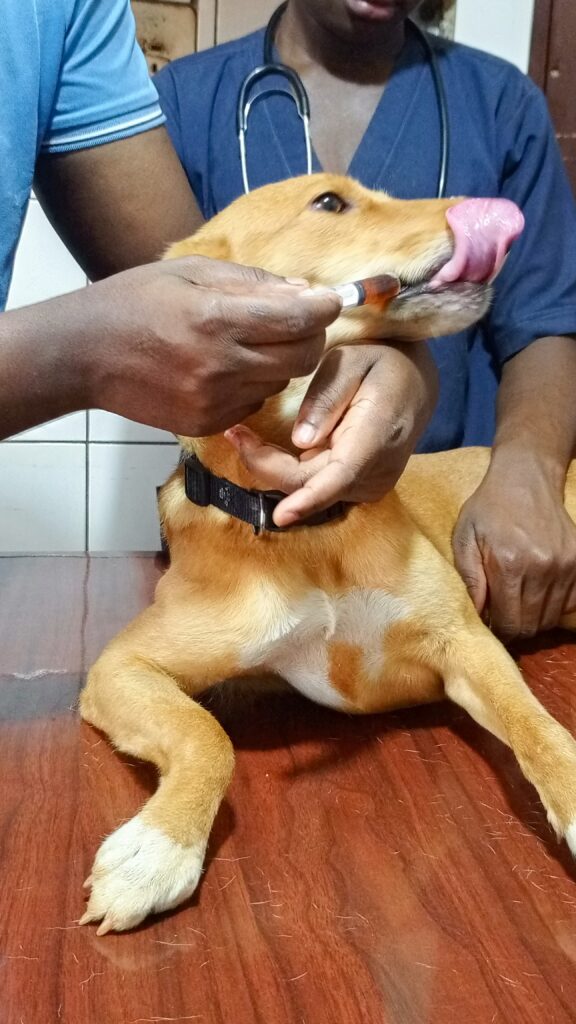
7. “Deworming once a year is enough.”
Reality: Kampala’s soil and streets are full of parasite eggs.
Vet tip: Deworm every 3 months for adult dogs and monthly for puppies.
8. “Giving bones makes dogs stronger.”
Truth: Cooked bones can splinter and choke your dog.
Vet says: Use safe chew toys or rawhide alternatives.
9. “If a dog eats grass, it’s sick.”
Reality: Occasional grass eating helps digestion.
Vet says: Only worry if your dog vomits or eats grass daily — it may signal a stomach issue.
10. “Ticks can be removed by hand or kerosene.”
Truth: Pulling ticks leaves their heads inside and using kerosene burns the skin.
Vet tip: Use vet-approved tick treatments — sprays, tablets, or collars.
11. “Dogs don’t need vet visits unless they’re sick.”
Reality: Preventive care saves money and lives.
Vet says: A check-up every 6 months keeps your dog safe from hidden problems like worms or heart disease.
Vet says: Visit your vet every 6 months for preventive checks and parasite control.
12. “Teething kills puppies.”
Where it came from: Many Ugandans grew up hearing that when puppies lose baby teeth, some die — so teething is blamed.
Truth: Teething itself does not kill puppies. What actually happens is that during the teething stage (around 3–6 months), puppies often lose appetite and immunity slightly drops — making them more vulnerable to parvovirus, worms, or infections if they aren’t vaccinated.
Vet advice:
- Make sure your puppy is fully vaccinated before 12 weeks.
- Deworm regularly and feed well.
- Give safe chew toys to soothe gums.
Vet says: If a puppy dies during teething, the real cause is usually infection or poor care, not teething itself.

🐱 Cat Myths in Uganda
1. “Cats don’t need to see a vet.”
Origin: Cats hide pain, so owners assume they’re fine.
Truth: Cats often suffer from eye infections, fleas, and worms unnoticed.
Vet tip: Schedule annual vet visits and regular deworming.
2. “Cats are independent and don’t need care.”
Reality: Cats depend on you for food, shelter, and protection from disease.
Vet says: Independence doesn’t mean immunity — they still need love and medical care.
3. “Cats can drink milk daily.”
Truth: Most adult cats are lactose intolerant — milk causes diarrhea and dehydration.
Vet advice: Give clean water and balanced cat food instead.
4. “Cats always land on their feet.”
Myth origin: Seen in movies or TV.
Reality: Cats can break bones or injure their spine when falling.
Vet tip: Keep balconies and windows secured with mesh.
5. “Cats don’t need grooming.”
Truth: Even short-haired cats need brushing to remove loose fur and prevent hairballs.
Vet says: Brush once or twice weekly to keep coats shiny and healthy.
6. “Cats can eat leftover food.”
Reality: Human leftovers lack nutrients and may contain salt, spices, or bones.
Vet tip: Feed vet-approved cat food or cooked unseasoned chicken/fish.
7. “Cats can’t get worms if they stay indoors.”
Truth: Worm eggs can enter your home through shoes, insects, or food.
Vet advice: Deworm indoor cats every 3 months.
8. “Pregnant women shouldn’t touch cats.”
Origin: Linked to toxoplasmosis fears.
Truth: With proper hygiene and regular vet care, cats are safe.
Vet says: Pregnant women can safely handle cats — just let someone else clean the litter box.
9. “Cats bring bad luck.”
Origin: Old cultural superstition.
Reality: Cats are symbols of comfort, not curses.
Vet tip: Treat them with love — they reduce stress and keep homes rodent-free.
10. “Cats can find their way home from anywhere.”
Truth: Not always — lost cats often panic and hide nearby.
Vet advice: Microchip your cat or attach a collar tag for safety.
11. “Cats don’t show love.”
Reality: Cats express affection by rubbing, slow blinking, or purring.
Vet says: Understand their language — your cat might love you more than you think.

❤️ Final Thoughts from Superior Animal Clinic
Uganda’s pet culture is growing fast — but with growth comes misinformation. These myths often come from old traditions, lack of access to vets, or online rumors.
At Superior Animal Clinic Makindye, we believe education is just as important as treatment. When pet owners know the truth, pets live longer, healthier, and happier lives.
📍 Find us: Makindye along Salaama Road, Kampala, Uganda
📞 Call/WhatsApp: 0771909946
🌐 Website: superioranimalclinicvet.com