
If your cat has suddenly stopped eating you are not alone . A cat that wont eat is one of the most common and stressful issue among cat owners. Unlike dogs, cats cant survive long without eating . Just 24- 48 hours without eating can cause health issues to your cat.
“Not eating” can vary depending on the situation. Your cat might be skipping meals , only licking the gravy or soup , or completely ignoring the food bowl completely.
The reasons for this range from simple stress to medical emergencies.
In this guide I will break down common reasons cats stop eating and how to overcome them, and the signs that need you to call a veterinarian immediately.
Common Reasons Why Cats Stop Eating.
A cat refusing to eat food should never be ignored as it is a sign that something is wrong .
1. Medical conditions or pain.
Illness is the top reason as to why a cat loses appetite and stops eating . Since many diseases or infections cause nausea , discomfort, and loss of appetite .
Digestive or Gastrointestinal issues
Stomachache ,pancreatitis, inflammatory bowel disease, parasites, constipation, or foreign body can cause a lot of discomfort. With an upset stomach , cats stop eating food.
Dental problems.
Just like humans , eating becomes hard when a cat has Tooth resorption, gingivitis, broken teeth, oral infections, or abscesses. Dental problems make chewing food painful, forcing a cat to stop eating .
Cats with dental problems might just leak food , or eat only the soft or wet food.
Kidney disease.
Most common in older cats , it causes nausea, increased thirst and other signs that make a cat lose appetite.
Related: Cat Kidney Disease Treatment in Kampala
Respiratory infections
Colds and other infections that attack the cat’s breathing and smelling system can cause a cat to stop eating . Since cats rely on smell to assess food, if the nose is congested or blocked , cats will lose appetite.
Other conditions.
Liver issues, heart disease, hyperthyroidism, diabetes, cancer, or fever/inflammation can all be reasons why cats can stop eating .
Important: cats that are in pain or feeling unwell often hide the symptoms until the issue advances to critical stages . 24 hours without eating warrants a visit to the vet .
2. Stress, Anxiety, or Environmental Changes.
Cats are creatures of habit and are very sensitive to disruptions. Stress can cause loss of appetite in cats . Causes of stress can be ;
- New people or pets in the home.
- Moving houses , change of feeding bowl , rearranging furniture.
- Loud noises.
- Change in routines, feeding time .
- Social conflicts with other cats .
- Boarding or unfamiliar environment.
3. Food related issues
Dislike of new food: cats don’t take well to sudden change in diet. New foods need a gradual transition of about 7-10 days .
Spoilt or unappealing food: food that has been left out for too long , Wrong temperature (it should be room temperature or slightly warmed ) , or poorly prepared food .
Picky eating : cats can also choose not to eat certain foods even those that are meant for cats . This usually comes from the way they were raised .
Social behavior : Outdoor cats might simply be full from hunting or from eating food scraps outside as they roam the environment.
4. Age related
Older cats may experience low metabolism making them take longer to become hungry again
They might also have age related issues like arthritis pain, or reduced sense of smell/taste that cause a low appetite.
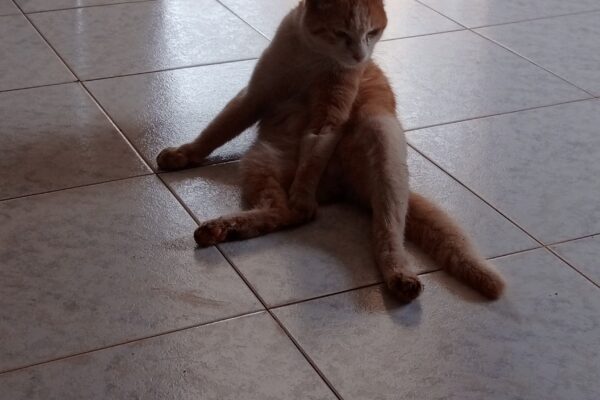
Limping senior cat with arthritis receiving care in Kampala, Uganda
Signs Your Cat Needs Immediate Attention
Don’t wait to act if you notice ;
- Not eating for more than 24 hours
- General body weakness , isolation or hiding.
- Weight loss
- Vomiting or diarrhea
- Drooling or difficulty chewing
If you notice the above signs , immediately call a vet as cats can quickly deteriorate without food.
How to Encourage Your Cat to Eat
When the cat stops eating , the first step is to identify the cause then address it accordingly.
1 . Enhance the appeal and taste of food.
Warm it slightly: since cats hate cold food, gently warming it can help release the taste that will stimulate appetite. Don’t over heat as this can cause burns, room temperature or slightly warmed is ideal.
Add some appetizers: add a small amount of chicken or meat soup to improve taste and aroma.
Optimize the feeding environment.
Choose the right bowl: wide , shallow glass or ceramic bowls reduce whisker fatigue compared to narrow and deep bowls.
Quiet and safe feeding spot: Place the cat’s feeding bowl away from the litter box, noisy areas , other pets and high human activity spots. Many cats prefer eating alone.
Fresh and clean: The feeding spot should be free from waste. Also, avoid leaving out food in the bowl for too long. Offer small fresh proportions through multiple times a day rather than big portions expecting the cat to eat it throughout the day.
Separate resources: its a wild life instinct for cats to eat and drink from different areas. Keep food , water and litter in different spots around the house.
2. Feeding strategies.
Small , frequent meals : 3-6 small meals throughout the day are better than 1-2 large meals.
Hand-feeding and interaction : most especially kittens, cats respond well to being gently stroked or hand fed while mature cats prefer privacy. So watchout with interactions and observe what best works for your cat.
Timing is key: feed your cat when it is most active such as playtime. It is also advisable to keep a routine and specific time if possible.
Encourage hydration: place drinking spots with clean water/broth for the cat to hydrate.
Important: these suggestions might offer mild or short term solutions. Continuous refusal to eat is a veterinary emergency. Always consult your vet if feeding habits change especially if your cat has health issues. Your quick action can make all the difference in keeping your cat healthy and happy!
Effective Treatments for Loss of Appetite in Cats
Treatment depends on the cause, but common solutions include:
- Fenbendazole – used to treat worms, given orally for 3 days. Get it at Superior Animal Clinic vet shop.
- Praziquantel – effective against tapeworms, given as a single tablet.
- Amoxicillin – treats bacterial infections, given orally
- Vitamin B Complex – helps boost appetite and recovery
Always follow guidelines from the veterinary for the right dosage. Self medication might make things worse if done incorrectly.
Where to Get Treatment in Kampala
For professional diagnosis and care, visit:
Superior Animal Clinic
📞 0771909946
You’ll get:
- Proper diagnosis of the problem
- Safe and effective treatment
- Guidance on feeding and recovery